

How to Get Faster Hands in Pickleball (Real Fix)
If you want to know how to get faster hands in pickleball, here's the part nobody tells you: hand speed at the kitchen line has almost nothing to do with reflexes. The players who win hand battles aren't reacting faster than you. They're set up better than you, and they're swinging at the right ball.
That's good news. Reflexes are mostly genetic and they slow down with age. Positioning, paddle setup, and shot selection are skills you can build at any age, at any level. I'm a 4.0 amateur in my 40s, and I lose hand battles to players with worse "natural" reflexes than mine when I get lazy with my position. When I do the boring fundamentals right, I beat people who are quicker than me.
This article breaks down what actually makes hands fast at the kitchen, the specific mistakes that make you slow, and a drill that builds the skill faster than mindless wall-banging.
Watch: Fast Hands Drilling At The Kitchen - Briones Pickleball
Why Fast Hands Aren't About Reflexes
A hand battle at the kitchen line happens in a tiny window of time. The ball is traveling maybe seven feet between paddles at high speed. If you're trying to see the ball, decide, and then start your swing, you've already lost. There isn't enough time to react from scratch.
So how do good players counter shots that look impossible to reach? They aren't reacting from scratch. Their paddle is already in roughly the right place before the ball is hit, so the only thing left to do is a small, fast adjustment. The "speed" you're seeing is mostly the distance their paddle didn't have to travel.
This is why two players can have identical reflexes and completely different hand speed. The faster-looking one keeps the paddle up and in front, reads the speed-up early from body language, and makes a compact move. The slower one drops the paddle between shots, gets surprised, and has to swing the paddle halfway across their body just to make contact. Same reflexes, totally different result.
Once you accept that hand speed is built and not born, the path forward gets a lot clearer. You stop trying to be quicker and start removing the things that make you slow.
Keep Your Paddle Up and In Front
The single biggest source of slow hands is a resting paddle. A lot of players let the paddle drift down to their hip or thigh between dinks. Then a speed-up comes, and they have to lift the paddle up and out before they can even think about countering. That travel time is the difference between a clean counter and a ball off your chest.
Your default position at the kitchen should be paddle up, out in front of your body, roughly between chest and chin height, with the tip pointing up and the face slightly closed. From there, almost any attackable ball is a short move away. A ball at your backhand hip, your forehand shoulder, your chest -- all of them are reachable with a few inches of movement instead of a foot.
This feels tiring at first because you're holding your arms up instead of letting them hang. That's normal. After a few sessions it becomes your resting state and you stop noticing it. Think of it as ready position, not rest position. The kitchen line is not where you take a break -- it's where the fastest exchanges in the game happen, and you want to be loaded the entire time you're there.
One cue that helps: keep the paddle where you can see it in your peripheral vision. If the paddle has dropped out of your sightline, it's too low to counter quickly.
Shorten Your Swing to a Punch
The second thing that kills hand speed is too much swing. Players try to counter a fast ball with a full backhand or forehand stroke, complete with a backswing. In a hand battle, a backswing is suicide. It's too slow, and it sprays the ball long because you're adding uncontrolled pace to a ball that already has pace on it.
A counter is a punch, not a swing. No backswing. The motion is short and compact, coming from a firm wrist and a small push, with the paddle face doing most of the work. You're not generating power -- the incoming ball already has plenty. Your job is to redirect it, add a little, and keep it low.
A good mental image: imagine there's a wall a few inches behind your paddle that stops any backswing. Everything happens in front of that wall. The shorter the motion, the faster you can fire the next one, which matters because hand battles are often two, three, four balls in a row. If your first counter takes a big swing, you'll never recover in time for the second ball.
Keeping the wrist firm matters too. Flicking the wrist feels powerful but adds unpredictable angle and pace, and it's a big reason counters fly out. Let the firm paddle face and a compact punch do the work, and your counters get more consistent immediately.
Win the Hand Battle by Aiming, Not Swinging Harder
When players lose a hand battle, their instinct is to swing harder next time. Almost always wrong. The way you win an exchange isn't more pace -- it's better placement. The best target in a hands battle is the opponent's body, specifically the dominant-side hip or the gap where the paddle has to flip from backhand to forehand.
Why the body? Because a ball aimed at someone's hip jams them. They can't fully extend the arm, they have to decide backhand or forehand under pressure, and the paddle has nowhere comfortable to go. A ball aimed into open court, by contrast, gives them room to take a clean swing right back at you.
This changes how you think about counters. You're not trying to blow the ball past anyone. You're trying to hit a firm, controlled ball at the most uncomfortable spot on their body and let them make the error. In my experience this is the biggest mindset shift for amateurs: the hand battle is won by the player who stays compact and aims, not the player who swings the hardest. The hard swinger usually hands you the point by spraying it out or popping it up.
When you do get a ball you can attack cleanly, the same rule applies -- pick the body or the open feet, not a low-percentage sideline.
Know Which Ball to Attack (And Which to Leave)
Here's the part that separates 4.0 hand battles from 3.5 ones. Faster hands won't help you if you're speeding up the wrong ball. The most common error at the kitchen is attacking a ball that's too low. When you speed up a ball that's below the height of the net, you have to hit up on it, which means you're feeding your opponent a rising ball at a comfortable height -- exactly what they want for their counter.
Only speed up a ball you can take at net height or above, ideally one that's slightly out in front of you. A ball above the net lets you drive down and through, which is far harder to counter. A ball below the net should be kept soft -- dink it, reset it, and wait for a better one.
This is why patient players often win hand battles they technically shouldn't. They don't initiate from bad positions. They keep dinking until they get a ball sitting up, and then they attack the right one with a compact, well-aimed punch. If you find yourself losing exchanges constantly, the problem might not be your hands at all -- it might be that you keep starting fights you can't win. Track it honestly for a few games: how many of your speed-ups came off a ball below the net? Most players are shocked by the answer.
The Fast Hands Drill That Actually Works
Banging volleys against a wall builds some reaction, but it doesn't replicate a real hand battle. The drill that does is a kitchen-line hands battle with a partner, and it's the one Briones Pickleball demonstrates well in the clip above.
Set up: both players at the kitchen line, directly across from each other. Start with controlled dinks. Either player can speed up at any time, but only off a ball that's high enough to attack. Once someone speeds up, it's live -- counter, re-counter, until someone wins the point or makes an error. Reset and go again.
Two rules make this drill work. First, keep the pace at maybe 60 to 75 percent at the start. You're not trying to win with power, you're training paddle position and compact counters. If you go full speed immediately, you'll just reinforce big panicked swings. Second, keep your paddle up and in front the entire time -- if you catch yourself dropping it between dinks, that's the exact habit the drill is fixing.
Do this for ten minutes a session and your hands will get noticeably faster within a few weeks -- not because your reflexes changed, but because your paddle is now in the right place and your motion got compact. That's the whole secret. Fast hands are a setup, not a gift.
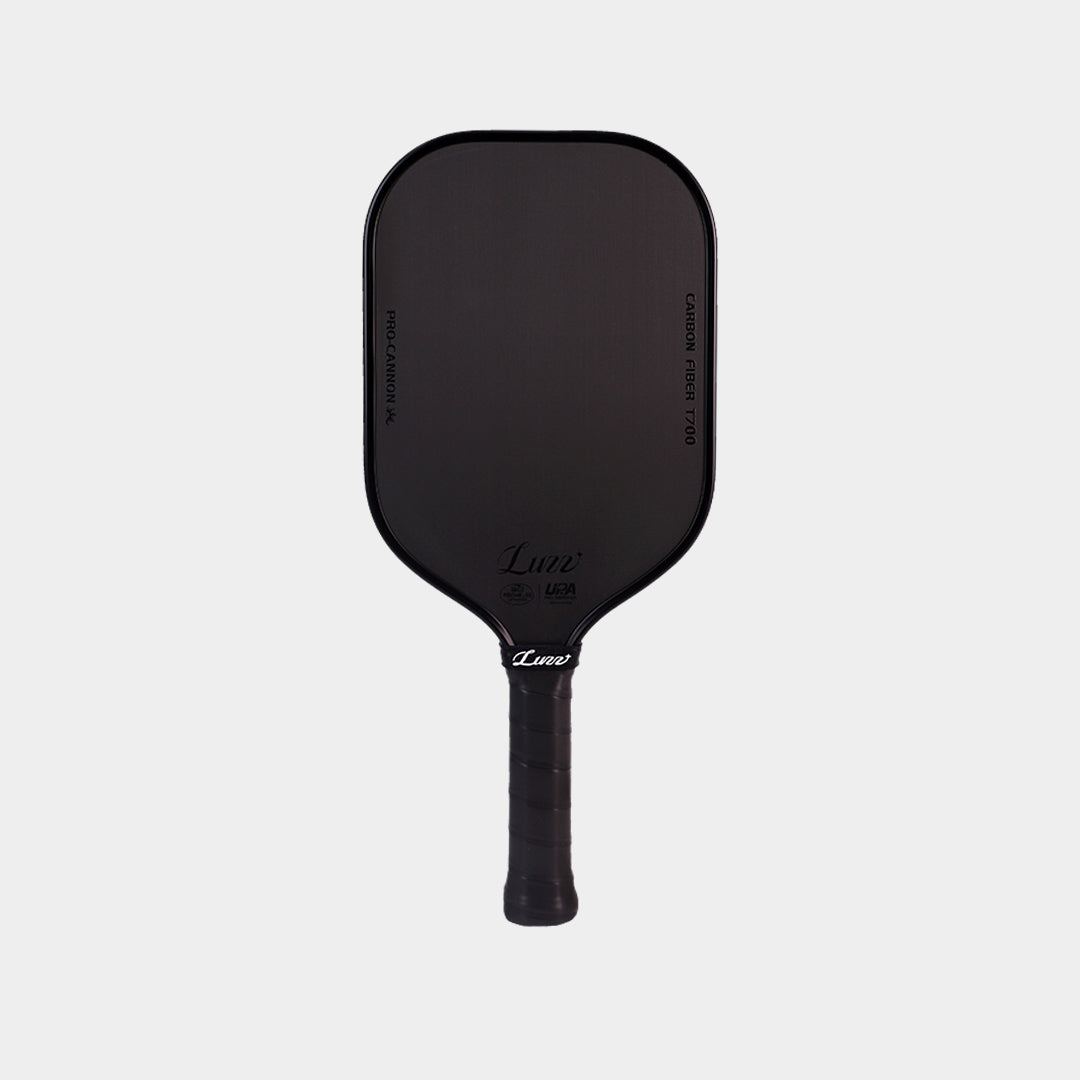
One equipment note, since it comes up with counters: a maneuverable paddle with a quick face genuinely helps in hand battles -- you can get it in front and fire compact counters without fighting the swingweight. I've been playing with a Luzz paddle lately and the balance of pop and control at the kitchen has been dialed in for exactly this kind of fast exchange.
Key Takeaways
Fast hands in pickleball aren't reflexes -- they're position and decisions. Keep your paddle up and in front so you have less distance to travel. Counter with a compact punch, not a swing. Win the exchange by aiming at the opponent's hip instead of swinging harder. And only speed up balls you can take at net height or above. Do those four things and you'll start beating quicker players who never learned them.
For a visual on the compact counter and the hands-battle drill, watch the Briones clip above, and check out the Backpaddle Pickleball YouTube channel for more kitchen-line breakdowns.
Frequently Asked Questions
How do you get faster hands in pickleball?
Keep your paddle up and in front of your body at the kitchen line, shorten your counter to a compact punch with no backswing, and only attack balls at net height or above. Hand speed comes mostly from cutting down how far your paddle has to travel, not from reacting faster.
Why do I keep losing hand battles at the kitchen?
Usually one of three reasons: your paddle is resting too low between dinks, you're using too big a swing to counter, or you're speeding up balls that are below the net and feeding your opponent easy attacks. Fix position and shot selection first.
Where should I aim my counter in a hand battle?
At the opponent's body, specifically the dominant-side hip or the spot where they have to switch between backhand and forehand. Jamming the body forces errors. Aiming into open court gives them room to swing back.
Is a firm wrist or a flicking wrist better for counters?
A firm wrist. Flicking adds unpredictable pace and angle and is a major cause of counters flying out. Keep the wrist firm and let a compact paddle-face punch redirect the ball.
How long does it take to develop faster hands?
With consistent hands-battle drilling, most players notice a real difference within a few weeks. You're building a habit, not waiting on physical changes, so progress is faster than people expect.