

When to Speed Up in Pickleball: How to Attack the Right Ball Every Time
Here's the short answer on when to speed up in pickleball: attack when the ball is at net height or higher, when you can take it out in front of your body while balanced, and when you have a specific target picked before you swing. If any one of those three is missing, you're not attacking - you're gambling.
Most players who search this question think their speed-up is the problem. It usually isn't. The swing is fine. What's broken is the decision. At the 3.5 to 4.5 level, the majority of failed speed-ups were lost before the paddle ever moved, because the ball was too low, the body was stretched, or the target was "somewhere over there." I'm a 4.0 amateur, and when I started paying attention to which of my attacks actually won points, the pattern was embarrassing: almost every speed-up I lost came off a ball I had no business attacking.
This article gives you the decision framework: the three green lights that have to line up, the net-height rule that filters out most bad attacks, where to aim, when to stay soft, and a drill that trains the judgment instead of the swing.
Watch: When Should You Speed Up in Pickleball? - John Cincola Pickleball
The Three Green Lights: Ball, Body, Target
Every good speed-up decision comes down to three checks, and they have to all pass at once.
Ball: the ball is at net height or above when you make contact. This is the big one, and it gets its own section below. A ball you can hit down on, or at least flat, is attackable. A ball you have to lift is not.
Body: you're balanced, and you can take the ball out in front of you. If you're reaching, lunging, leaning back, or taking the ball beside your hip instead of in front of your chest, your "attack" will come out slower and floatier than you think, and you won't be reset for the counter that's coming back.
Target: you've picked a specific spot before you swing. Dominant-side hip, the shoulder of the paddle arm, or the gap in the middle. "Hard and at them" is not a target. Players who speed up without a target hit the one place that doesn't jam anyone - center of the paddle - and then wonder why the counter came back twice as fast.
Two green lights out of three isn't a yellow light. It's a red one. The whole framework only works if you treat it as all-or-nothing, because each missing piece feeds your opponent exactly the ball they want.
The Net-Height Rule (Why Low Balls Are a Trap)
If you only take one thing from this article, take this: stop speeding up balls that are below the top of the net.
The physics don't care how good your flick is. When the ball is below net height, you have to hit up on it to clear the net. Hitting up means the ball is rising as it reaches your opponent, arriving at chest or shoulder height - which is the single easiest ball to counter in pickleball. You've done the hard work of generating pace, and you've delivered that pace to their paddle at a comfortable height. They don't even need a swing. They just need to be there.
A ball above net height flips all of that. Now you can drive flat or down, the ball arrives at their knees or feet, and their counter has to travel up - which means it comes back slower and higher, and now you're the one attacking a sitting ball.
The frustrating part is that low speed-ups feel like they work sometimes, especially against players with slow hands. That's what makes them a trap. They win you a few cheap points at 3.5 and then get punished relentlessly the moment you play anyone with a compact counter. If you're stuck losing hand battles you feel like you should win, the first thing to audit isn't your hands - it's how many of your attacks started below the net.
Read the Opponent, Not Just the Ball
Ball height is the first filter, but the best attackers add a second read: what is the opponent doing right now?
Some balls at net height still shouldn't be attacked, and some marginal balls become great attacks because the opponent has already lost the point with their body. Look for these tells while you dink: a paddle that drops below their waist between shots, weight rocked back on their heels, eyes down at the ball they just hit, a player drifting or still recovering from the previous dink, or someone camped so far to their forehand side that the backhand shoulder is wide open.
Any one of those turns a decent attacking ball into a great one, because your speed-up isn't racing their paddle - it's racing their recovery. Against a player who keeps the paddle up, stays on the balls of their feet, and watches you instead of the ball, the bar for attacking should go way up. That's the player you beat with patience, not pace.
This is also the honest answer to "why does my partner get away with speed-ups I can't?" They're not faster. They're picking on the right ball and the right moment, and those two reads together are the whole skill.
Where to Aim Your Speed-Up
Once the green lights line up, placement decides whether the point ends now or turns into a firefight.
The best first target for most players is the dominant-side hip, sometimes called the chicken wing. It's the spot where your opponent has to decide - backhand or forehand - with no time to decide, and where the paddle physically can't get comfortable. A ball there jams even players with fast hands, because the problem isn't speed, it's geometry.
The second target is the paddle-side shoulder, for the same reason: the backhand can't get across in time and the forehand has no room to swing.
The third is the middle gap in doubles, especially between two players who haven't sorted out who covers it. Middle balls also give you the most net clearance and the most margin for error, which matters more than most players think - a speed-up into the net is the worst outcome in the game, because it's a free point you handed over at a moment you had the advantage.
What you should mostly stop doing is headhunting with maximum pace toward open court. Open-court speed-ups give a balanced opponent room to take a full, clean swing - you're not jamming anyone, you're feeding them. Placement at 80 percent power beats a wild ball at 100 percent, every time, at every level I've played.
When Not to Speed Up in Pickleball
Here's the counterintuitive part: the players who attack best attack less than you think. Watch a high-level rec game and count the speed-ups. The strongest player on the court usually initiates the fewest attacks - and wins the highest percentage of the ones they start. The weakest player initiates constantly and loses most of them. Attacking too often isn't aggression, it's impatience wearing an aggression costume.
Don't speed up when the ball is below the net - covered above, but it's rule one for a reason. Don't speed up when you're stretched wide or lunging, even if the ball is high, because you won't be reset for the counter. Don't speed up from a dead-ball position just because the rally has gone eight dinks and you're bored - long dink rallies are where impatient players donate points. And think twice before initiating against a team whose whole game is counterattacking; some players are genuinely hard to speed up against because paddle-up-and-in-front is their default state, and they want you to swing first.
There's a related skill that decides what happens when you attack the wrong ball anyway, or when your opponent attacks you: winning the exchange after the speed-up. I wrote a full breakdown of that in how to get faster hands in pickleball - the short version is that hand speed is paddle position and compact counters, not reflexes, and the two articles are really two halves of the same decision: when to start the fight, and how to win it once it starts.
The Second Ball Matters More Than the First
A mistake almost everyone makes: treating the speed-up as the end of the point. Swing, admire, get hit in the chest by the counter.
At any level above 3.5, your first attack is coming back. Plan for it. The speed-up isn't a winner - it's the opening move of an exchange, and the player who's ready for ball two usually takes the point. That changes how you should hit ball one: controlled pace you can recover from, contact out in front, and paddle immediately back up to chest height in the middle of your body, because the counter is most often coming back at you or the middle.
It also opens up the most reliable pattern in amateur pickleball: the two-ball combo. The first speed-up goes at the dominant hip - not to win, but to force a weak, popped-up counter. The second ball is the actual putaway, hit down at the feet or the open gap. Pros run this constantly. Amateurs try to win with ball one, which is why their "winners" keep coming back and surprising them.
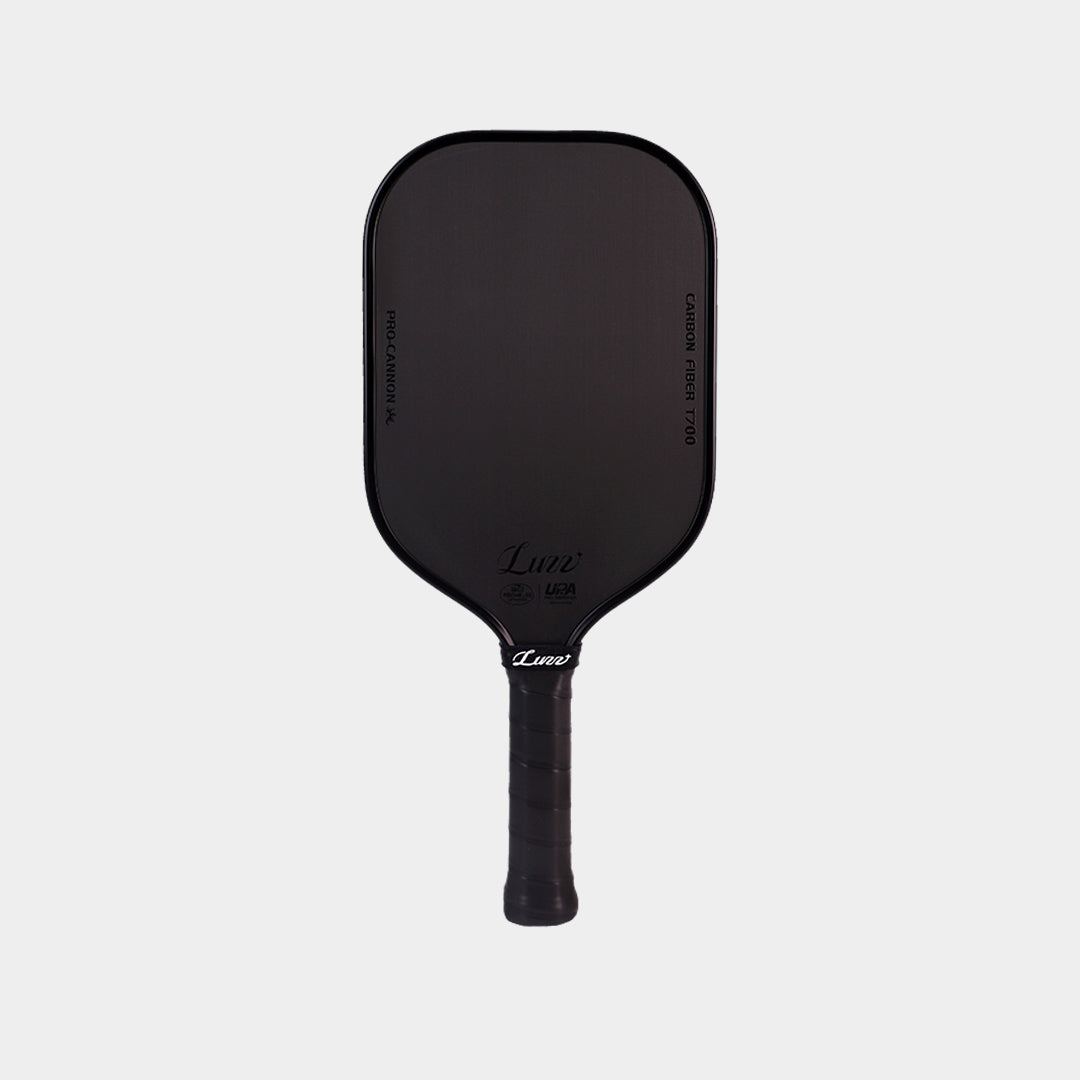
Recovering for ball two is easier with a paddle you can whip back into position. I've been playing with a Luzz paddle lately and the balance of pop and maneuverability on the attack-then-counter sequence has been dialed in - quick enough to reset, enough pop that the speed-up still has teeth.
A Drill That Trains the Decision, Not the Swing
You can't fix shot selection by hitting more speed-ups against a wall. The judgment is the skill, so the drill has to force judgments.
Set up a kitchen-line dink game with a partner, first to 11. One rule: you can only speed up a ball you take at net height or above, and your partner is allowed to call out "low" when you break the rule - if they're right, you lose the point on the spot. Both players attack whenever they think the green lights are on, and everything is live after a speed-up.
The rule sounds mild. It's brutal. The first few games, you'll get called constantly, because most players have no idea how many of their attacks start below the net - the whole drill is a lie detector for your shot selection. Over a few sessions, two things happen: your attack count drops, and your attack win rate jumps. That's the trade you want.
If you want a scoreboard, track two numbers across a session: speed-ups attempted and speed-ups that won the point within two balls. In my experience, players who track this for even one session stop arguing about whether they attack too much. The number settles it.
Key Takeaways
Speed up when three things line up: ball at net height or above, balanced body with contact out front, and a specific target - hip, shoulder, or middle. Skip the attack when any one is missing, read the opponent's paddle and feet before you swing, and treat every speed-up as ball one of an exchange, not a winner. Attack less, win more of them, and the rest of your game gets easier because opponents stop getting free points from your impatience.
For the visual version of the decision, watch the John Cincola video above, and check out the Backpaddle Pickleball YouTube channel for more kitchen-line breakdowns.
Frequently Asked Questions
When should you speed up in pickleball?
When the ball is at net height or above, you're balanced with contact out in front of your body, and you have a specific target picked before you swing. If any of those three is missing, keep the ball soft and wait for a better one.
Should you speed up to the forehand or backhand side?
Neither side in open court - aim at the body. The dominant-side hip and the paddle-arm shoulder are the two spots that jam an opponent regardless of how fast their hands are, because they have no room to swing.
Why do my speed-ups keep getting countered?
Most likely you're attacking balls below net height, which forces you to hit up and delivers the ball to your opponent at a comfortable counter height. Fix the selection first; the counters mostly disappear on their own.
How hard should a speed-up be?
Around 80 percent, not 100. You need enough control to place the ball at a jamming target and enough balance left over to be ready for the counter. Full-power speed-ups spray, and the failed ones are free points for the other team.
Do better players speed up more often?
Usually less often. Strong players initiate fewer attacks but win a much higher percentage of them because they only start exchanges from good balls and good positions. A high attack count with a low win rate is an impatience problem, not a hands problem.