

How to Reduce Unforced Errors in Pickleball: 6 Fixes That Actually Work
Here is the thing nobody wants to hear about rec pickleball: you are not losing to better players. You are losing to yourself. In my experience, the large majority of rallies at the 3.5 to 4.5 level end on a mistake, not a winner. Somebody nets a dink, sails a return, or speeds up a ball they had no business touching. The rally does not get won. It gets donated.
That is actually great news, because it means the fastest way to improve is not a new weapon. If you want to know how to reduce unforced errors in pickleball, you do not need a better backhand or a faster speed up. You need to stop giving away free points in six specific situations that repeat in almost every game you play.
None of these fixes require new technique. They are decisions and habits, which means you can apply every one of them in your next open play session and see the difference the same day.
Watch: How to Erase Unforced Errors in Pickleball - Briones Pickleball
Count Your Errors for One Game
Before you fix anything, get a baseline. Next time you play, keep a rough mental count of how your team's points ended. Not the score - how the rallies actually died. Winner for us, error by us, error by them.
I started doing this because I am a numbers person, and it was humbling. The games I was sure I lost to a stronger team, I mostly lost to my own paddle. Missed returns. Drops into the net from a dead-neutral position. Third shot drives at full power with nobody out of position.
This matters because your brain remembers the highlight reel, not the giveaways. You remember the one backhand winner you hit down the line. You do not remember the four returns you floated out trying to do too much. So players spend their practice time adding weapons when the actual leak is in the boring stuff.
One game of counting will tell you exactly which of the fixes below applies to you most. That is the whole point of a data-first approach: you cannot fix a leak you have not found. And if you count and find your errors are already low, congratulations - you are the rare player who gets to work on winners guilt-free.
Stop Watching Your Own Shots
The most common source of pickleball unforced errors is not a swing flaw. It is what happens after the swing: nothing. You hit a decent dink, and you stand there admiring it like it is framed art while the court shifts around you.
Every shot you hit should trigger movement. The simple rule that cleans this up: when the ball is cross-court from you, the middle is your responsibility. If you dink cross-court and stay parked wide, you just opened a lane through the middle, and the error that follows - a lunging stab volley into the net - will feel like a hands problem when it was actually a feet problem three seconds earlier.
When the ball is straight ahead of you, the job flips. You cover your line and your body, and your partner slides to the middle. Shifting and shading like this on every single ball feels like overkill until you try it for one session and realize how many "forced" errors were never forced at all. You were just standing in the wrong spot, reaching.
This is also the fix that costs zero technique. You do not need a coach or a drill. You need to move on every ball, even the ones you are proud of.
Pulled Wide? Dink to the Middle
Getting stretched wide at the kitchen line triggers panic, and panicked players reach for the hero shot: a sharp cross-court dink from a full lunge. It looks great when it works. It almost never works.
When you get pulled wide, dink to the middle. Three reasons this is the percentage play. First, the net is two inches lower in the middle, which is free margin on a ball you are already reaching for. Second, a middle dink keeps you and your partner connected instead of dragging you further off the court. Third, it makes your opponents have a conversation. Any ball between two players is a chance for miscommunication, and at the rec level that conversation fails constantly.
Same logic applies when you get pushed off the kitchen line entirely. The ball gets behind you, you step back, and your brain screams attack because you can see open court. Do not. Attacking off your back foot from behind the line is one of the highest-percentage giveaways in the game. Hit a controlled reset - again, middle is your friend - and use the time to get back to the line. Staying calm there is not a mindset cliche. It is a shot selection decision, and it is worth points every game.
Return Serves to the Middle, Not the Line
The sideline return is the rec player's favorite way to donate a point before the rally starts. It feels aggressive. It also misses wide over and over, and every missed return is a full free point - your opponents did not even have to hit a third shot.
Return to the big middle of the court instead. You remove the wide miss entirely, and you get strategic benefits on top: a middle return forces your opponents to sort out who takes the third shot, and it cuts off the sharp angles that bangers love to drive from. A deep middle return is boring, and boring is exactly what a return should be. You already win the exchange by making them play a third shot under pressure while you walk to the kitchen line.
If your one game of error-counting shows missed returns in the tally more than once, this fix alone will move your win rate. I broke down the most common return of serve mistakes in a separate article, but the short version is this: the return is the only shot you hit with unlimited time and zero defensive pressure, so it should be the single most consistent shot in your game.
Throttle Your Drives to 60-70 Percent
Full-power third shot drives feel amazing. They are also chaos. At 100 percent, your margin disappears, the ball flies long or into the tape, and even the drives that land set your partner up to eat a counterpunch at their chest.
Cap your drives at 60 to 70 percent pace. At that speed the ball stays down, you stay balanced, and you are ready for the next shot instead of posing for the camera. A 70 percent drive that forces a weak block is worth more than a 100 percent drive that comes back at your partner's face twice as fast.
The second half of this fix is knowing when to stop driving. Two drives per rally is a reasonable ceiling: drive the third, maybe drive the fifth if the ball sits up. After that, drop and reset. If you are still driving on shot nine, you do not have a strategy, you have a habit. The only exception is a true pop-up - if they hand you a ball above the net, by all means, hit it.
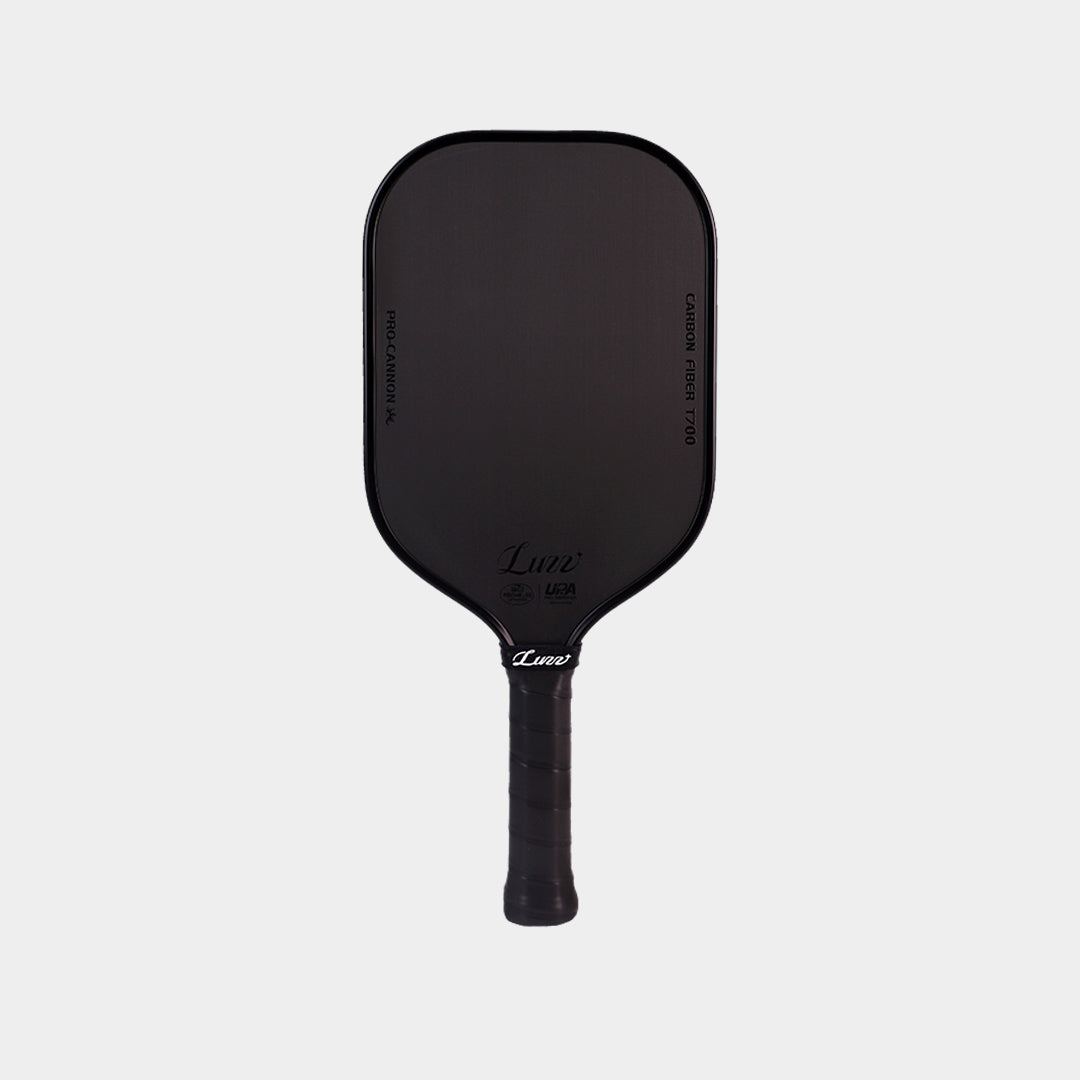
A controllable paddle makes the 70 percent drive a lot easier to trust. I have been playing the Luzz Cannon for exactly this reason - enough pop for real pace, but a soft enough feel that resets and drops do not turn into pop-ups.
Split Step Before They Hit
This one shows up in players with otherwise solid technique. You hit a good drop, see it land soft, and sprint through the transition zone at full speed. The next ball arrives at your shoelaces while you are mid-stride, and there is no shot in pickleball you can hit well while running through your own feet.
The fix: split step every time your opponent is about to make contact. Moving forward after your drop is right. Arriving at the kitchen line in one sprint is not the goal - being balanced when the next ball is struck is the goal. Come forward, then land in a controlled athletic ready position just before they swing. From there you can defend the ball at your feet, reset, or keep advancing if they dink.
I think of the transition zone as a place you pass through in installments, not a place you outrun. Drop, advance, split. Read the next ball. Advance again. Two or three installments and you are at the line with your paddle in front of you the entire time, instead of arriving fast, jammed, and popping the ball straight up.
If your feet are the leak, this pairs with everything above - most transition errors are running-through errors, not technique errors.
Decide Before You Hit, Not After
The last fix ties the rest together: most unforced errors happen because the player had no plan when they made contact. Before every shot, you should know two things - where this ball is going, and what you are doing the instant it leaves your paddle. Coming in behind it? Holding the line? Covering middle?
Indecision is the error factory. When you hit a drop and then hover halfway, waiting to see if it was good, you end up in no man's land with no options either way. When you dink without a target, you hit the ball that is attackable. When you drive without a next-shot plan, your partner cannot read the rally and your team falls out of sync.
You do not need a complicated game plan. "Deep middle return, then kitchen" is a plan. "Drop, advance in installments, split step" is a plan. The players who bleed the fewest points are rarely the flashiest ones - they are the ones who have already decided what the next two seconds look like before the ball arrives. Commit to the shot, hit the shot that fits the commitment, and move where the commitment requires. That loop, repeated, is what pickleball consistency actually is.
Key Takeaways
Unforced errors are not random - they cluster in the same six situations for almost everyone: spectating your own shots, hero balls from wide positions, sideline returns, full-power drives, sprinting through transition, and hitting without a plan. Count your errors for one game to find your leak, then fix that one first. You will win more games next week without adding a single new shot. If you want to see these fixes demonstrated, the Briones Pickleball video above is worth your ten minutes.
Frequently Asked Questions
What counts as an unforced error in pickleball?
Any rally you lose without your opponent hitting a genuinely forcing shot - a missed return, a netted dink from a neutral position, a drive into the tape, or an attack off a ball you should have reset. If a coach watching would say "you had a better option," it was unforced.
What causes the most unforced errors in pickleball?
Positioning, not technique. Standing still after your shot - especially failing to cover the middle after a cross-court ball - creates the stretched, lunging contacts that turn into errors. Move on every shot and a chunk of your "bad hands" disappears.
How hard should I hit my third shot drive?
Around 60 to 70 percent of max pace. You keep the ball down, stay balanced for the next shot, and avoid feeding a fast counterpunch to your partner. Cap it at about two drives per rally, then drop and reset.
Should I attack when I get pushed off the kitchen line?
Almost never. Attacking off your back foot from behind the line fails far more often than it works. Reset to the middle, get back to the line, and wait for a ball worth attacking.
Keep reading
- Pickleball Court Positioning: Where to Stand and Why - the middle-coverage and shift-and-shade rules from this article, mapped across the whole court.
- How to Reset in Pickleball - the controlled reset that replaces the hero shot when you are pulled wide or pushed back.
- Drop or Drive in Pickleball? - a simple framework for choosing the third shot so you stop over-driving.