

The Fourth Shot in Pickleball: The Free Point Most Players Give Back
Everyone drills the third shot. Almost nobody drills the fourth. That is backwards, because the fourth shot in pickleball is the easier of the two, and it decides more points than the shot everybody obsesses over.
Here is the sequence, in case the numbering has never been spelled out for you. Serve is one. Return is two. The serving team's drop or drive is three. The fourth shot belongs to the returning team, and by the time it arrives you are already standing at the kitchen line with your feet planted while two opponents are still running forward from the baseline. You have position. They do not. That is the whole opportunity.
And the whole shot comes down to a single read: is this ball above the net when I contact it, or below it? Above, you hit down at somebody's feet. Below, your only job is to keep it low and make them hit another one on the move. Get that read right and your opponents never reach the kitchen line. Get it wrong and you hand back the entire advantage your return just earned.
Watch: World #1 Ben Johns Teaches Secret to Pickleball's 4th Shot Off The Bounce - Josh Jenkins
Why the Fourth Shot Is the Most Winnable Shot on the Court
Think about what your opponent has to do on the third shot. They are somewhere near the baseline, often still moving, and they have to land a ball in a seven-foot box twenty-something feet away while sprinting forward. It is the hardest routine shot in the sport, which is exactly why there are ten thousand videos about it and a whole industry of coaching built around it.
Now look at your situation on the fourth. You are stationary. You are at the kitchen line. You have the net in front of you instead of twenty feet of court. Your opponents are in the transition zone, which is the worst place to be standing in all of pickleball. The ball is coming to you and they are the ones out of position.
That is a lopsided exchange, and yet most rec players treat the fourth shot as an afterthought. They either blast at it because it looks attackable, or they back up and let it bounce because they are not sure what to do. Both give the point back.
The correct mental frame is not "how do I win this point." It is "how do I keep them from getting to the line." Every extra shot they have to hit while moving forward is another chance for them to make the error instead of you. The fourth shot is a pressure shot, not a winner. If it happens to end the rally, great. That is a bonus, not the goal.
The One Read: Above the Net or Below It
Forget the taxonomy for a second. Drive versus drop, topspin versus flat, forehand versus backhand - none of that is the decision you are actually making. The decision is contact height.
If you will contact the ball above the height of the net tape, you hit down. Firm, out in front, aimed at feet. You do not need pace, because you already have the angle. Gravity is doing the work.
If you will contact it below the net, you cannot hit down without hitting into the net. So you keep it low, keep it soft, and send it somewhere that makes them hit a fifth shot while still moving. That is it. Two options, one read.
The mistake almost everyone makes is deciding before the ball arrives. You see their paddle take a big backswing, you brace for a drive, and then the ball floats short and you swing at it anyway. Or you see a soft third and relax, and then it sits up at chest height and you dink it back like a gift. Read the ball, not the swing.
One more piece that belongs here: take the ball out of the air whenever you legally can. Letting a ball bounce at the kitchen line gives your opponents roughly a second and a half of free travel time toward the net. That is the difference between them arriving at the line and them getting stuck. Volleying the fourth shot is not showing off. It is the whole point.
The Fourth Shot Against a Drive
When the third shot is a hard drive, your fourth is a block or a counter, and the difference is contact height again.
Below the net, it is a block. Paddle out in front of your body, face slightly open, wrist firm but arm soft. No backswing at all. A drive already carries every bit of pace you need; adding your own is how the ball ends up four feet past the baseline. You are absorbing, not hitting. Think of catching an egg rather than punching a bag.
Above the net, it is a counter. Same short path, but now the paddle face is angled slightly down and you punch through contact. Still no backswing. The most common counter error is not a bad paddle angle, it is a late one - the paddle drifts back toward the body and contact happens beside your hip instead of out front. Late contact on a drive is how balls go straight up.
The uncomfortable case is a drive aimed at your body, which is exactly where good players hit it. The fix is a backhand with your elbow moved out and away from your ribs rather than tucked in. Trying to defend a body ball with your forehand is what jams you up and produces that awkward chicken-wing pop-up.
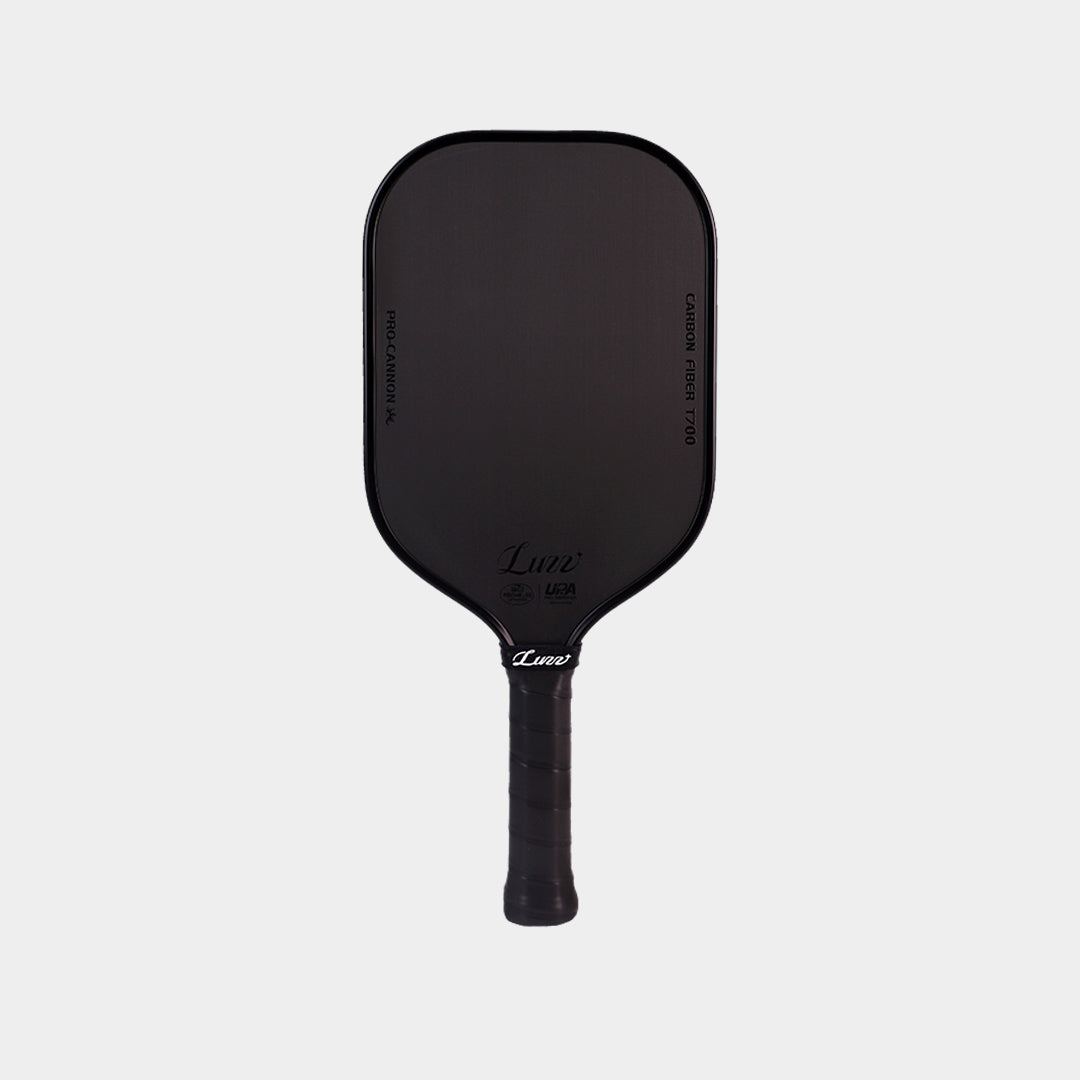
Paddle face control is most of this shot, and it is the one place where equipment genuinely shows up in your results. I play with a Luzz paddle, and what I care about on blocks is a face that stays quiet and predictable when a hard ball catches it off-center - because on the fourth shot you rarely get a clean middle contact.
The Fourth Shot Against a Good Drop
If their third shot drop is actually good - meaning you have to contact it below the net - you have no attack. None. Accept it early.
This is the biggest source of unforced errors on the fourth shot, and it is a decision error rather than a technique error. Players see a soft ball, feel like softness means weakness, and try to punish a ball that is six inches off the ground. Into the net it goes, and the team that hit a great drop from the baseline gets a free point they did not earn.
What you actually do is dink it back with intent. Not a neutral, floaty dink to the middle of the kitchen - a low ball placed at the feet of whichever opponent is still moving. They are trying to run forward and stop and hit a low ball, all in the same second and a half. That is a genuinely hard shot. Make them do it twice and one of those balls pops up.
The reframe that helped me most: a good drop does not mean you lost the exchange. It means the exchange is still going. You are at the line and they are not. As long as you keep the ball low, you keep that advantage until somebody makes a mistake, and it is much more likely to be the pair who are still moving. That is the same logic running the other direction on the serving side, which I break down in the modern 3rd shot drop guide.
Where to Aim, in Order
Targets on the fourth shot, ranked by how often they should be your first choice.
The feet of the player who is still moving. This is the default and it should be most of your fourth shots. A player caught between the baseline and the kitchen line has to hit up on anything at their shoelaces, and hitting up from the transition zone is how rally control changes hands.
The middle, when both opponents are transitioning. Middle balls create a moment of hesitation about who takes it, and hesitation while running forward is worse than hesitation while standing still. The net is also lowest in the middle, which means a firm ball there has more margin than the same ball down the line.
Away from whoever already arrived. If one opponent made it to the line and the other did not, stop making that a decision. Hit at the one who did not.
What to avoid: the sideline. Down-the-line targets on the fourth shot are low-percentage for very little added reward. The net is higher there, your margin is thinner, and the reward is a slightly better angle you did not need - because your opponent's feet were already a big enough target.
The Three Mistakes That Hand the Point Back
Backing up. When a ball comes fast, the body wants to retreat, and every step back costs you the position you spent the whole rally earning. It also lets the ball drop below net height, which turns an attackable ball into a defensive one. Hold your ground and move the paddle instead of the feet.
Overhitting a ball that is barely above the net. There is a real difference between a ball at chest height and a ball two inches above the tape. The chest-height ball is a put-away. The two-inch ball is a roll or a firm punch at feet. Swinging full at a marginal ball is the most common way an advantage turns into an unforced error in one shot.
Being predictable. If every fourth shot goes to the same opponent's feet, decent players start cheating that way by the second game. Mix in one middle ball and one at the far player's body per game and the same default target becomes twice as effective.
Footwork and Paddle Position Before the Ball Arrives
Most of the fourth shot is decided before contact.
Split step as their paddle makes contact on the third shot, not before and not after. If you are still drifting when they hit, you will be reaching rather than balanced.
Keep the paddle up around chest height and clearly in front of your body. A paddle held at waist level has to travel up and forward to meet a fast ball, and there is not enough time for both. Paddle up is not a style preference on this shot; it is the difference between blocking and flinching.
Stay square to the ball, not square to the net. On a wide third shot your shoulders should turn to face where the ball is coming from, which keeps contact in front and stops the arm from swinging across your body.
And expect the ball. The fourth shot is the one shot where you know in advance that something is coming to your side of the court. Standing at the line watching your opponents run is the wrong use of that second - use it to set your feet and get the paddle up.
How to Drill the Fourth Shot
Random third, live fourth. Your partner starts at the baseline and hits either a drive or a drop, their choice, without telling you. You start at the kitchen line and play the ball out. This is the only drill that trains the read, and the read is the actual skill. Everything else is technique you already mostly have.
Block wall. Partner drives from midcourt while you block from the kitchen line with no backswing at all. Ten in a row that land inside the baseline. When you can do ten, have them aim at your body for the next ten, since that is the version that actually shows up in matches.
Drop and dink out. Partner drops from the baseline, you dink at their feet, they keep advancing, you keep hitting low balls until somebody pops one up. This trains the patience half of the fourth shot, which is the half most players skip because it is not fun.
One honest note on all three: the fourth shot is boring to practice and it will never look good on video. It is also the single highest-leverage shot available to a rec player, because the technique is easy and the decision is the hard part - and decisions are free to improve.
Key Takeaways
The fourth shot in pickleball is your reward for a good return, and it comes down to one read: above the net you hit down at feet, below the net you keep it low and make them hit another one while moving. Take it out of the air when you can, aim at whoever is still running rather than at the sideline, and never try to attack a genuinely good drop. Hold your position, keep the paddle up and out front, and treat the shot as pressure rather than a winner. Do that consistently and your opponents will spend entire games stuck in the transition zone.
Frequently Asked Questions
What is the fourth shot in pickleball?
It is the returning team's shot after the serving team's third shot. Serve is one, return is two, the drop or drive is three, and the fourth is the ball you hit from the kitchen line while your opponents are still moving forward.
Should you volley the fourth shot or let it bounce?
Volley it whenever you legally can. Letting the ball bounce gives your opponents about a second and a half of free travel time toward the kitchen line, which is often the difference between them arriving and them getting stuck in the transition zone.
Where should you aim the fourth shot?
At the feet of whichever opponent is still moving forward. Second choice is the middle when both are transitioning. Avoid the sideline - the net is higher there and the reward does not justify the lost margin.
How do you handle a fourth shot when the third is a hard drive?
Block it with no backswing, paddle out in front, face slightly open if contact is below the net and slightly closed if it is above. The drive already supplies the pace. Contact in front of your body is what keeps the ball down.
Can you attack a good third shot drop?
No. If you have to contact the ball below the height of the net, there is no attack available. Dink it back low, aim at the feet of the player who is still moving, and wait for the ball that actually sits up.
Keep reading
- Drop or Drive in Pickleball? - the third-shot choice that sets up the fourth shot you hit.
- Which Balls to Attack in Pickleball - a traffic-light system for the above-the-net versus below-the-net read.
- Pickleball Court Positioning: Where to Stand and Why - how to hold the kitchen line once your return lands.