

Which Balls to Attack in Pickleball: The Traffic Light System
Most players at the 3.5 to 4.5 level do not lose points because their attacks are weak. They lose points because they attack the wrong ball. Learning which balls to attack in pickleball - and which ones to leave alone - is the fastest way I know to cut unforced errors without changing a single thing about your swing.
The framework that finally made this click for me is a traffic light. Every ball you could attack gets sorted by the height of your contact point: red, yellow, or green. Each color has one correct answer, and once you start seeing the colors, you cannot unsee them. I used to be the guy speeding up everything remotely chest-high and wondering why I kept eating counters at my feet. This system is a big part of why I stopped.
This article breaks down the three zones, the two factors that can change a ball's color mid-rally, and how I retrained my own shot selection after years of bad habits.
Watch: I Used To Be A Banger. Here's What Finally Made Me Stop.. - Backpaddle Pickleball
Why Attacking the Wrong Ball Costs You Points
The math on a low attack is brutal. If you attack a ball from below the top of the net, your shot has to travel upward to clear it. An upward trajectory means one of three things happens: you find the net, you sail it long, or - the most common outcome at the rec level - the ball rises into your opponent's strike zone and comes back at your shoelaces faster than you sent it.
That third outcome is the one that quietly ruins games. The attack does not feel like an error, because the ball landed in. But you handed your opponent a downward angle, and in pickleball, whoever is hitting down while the other team hits up wins the exchange almost every time.
Next time you watch a 4.0 rec game, count how many below-net "attacks" actually end the rally in the attacker's favor. In my experience it is a small minority - the rest are donations dressed up as aggression. The skill that separates players who plateau from players who climb is not a harder speed up. It is the discipline to not hit it.
The Traffic Light System Explained
The system sorts every potential attack by where your contact point falls on your own body.
Red light - contact below your knees. Do not attack. Ever.
Yellow light - contact between your knees and your hip. The decision zone. Attack only under specific conditions.
Green light - contact above your hip, at or above net height. Attack, and attack with intent.
Why body height and not net height? Because your body is the reference you can actually feel mid-rally. Nobody has time to eyeball the tape while a dink is dropping. Knees and hips are landmarks your brain already tracks, which is what makes the system usable at game speed. Pros make this exact decision on every single ball - they have just run the loop so many times it looks like instinct.
Red Light: Below the Knees, Reset Every Time
A ball you would contact below your knees is not an opportunity. It is bait. Attacking from down there means a steep upward trajectory, which means your opponent - standing comfortably at the kitchen line - gets to pick which of your feet to counter into.
The only job on a red ball is a reset: a soft, unattackable shot into the kitchen that buys you the next ball. That feels passive if you grew up on tennis or you just like hitting hard. It is not passive. It is the move that keeps the point alive until a yellow or green ball shows up.
There is also a habit argument here. Every red-light attack you get away with - and you will get away with some at 3.5 - teaches your hands a pattern that gets punished harder at every level above you. The players who "suddenly" fall apart against 4.5 opponents are usually cashing in years of unpunished red-light attacks all at once.
Yellow Light: The Decision Zone
Knee-to-hip height is where pickleball actually gets played. Most balls in a good dink rally live here, and this is where shot selection separates people.
A yellow ball is attackable if - and only if - two things are true. First, you are balanced. Feet set, weight centered, paddle in front. If you are lunging, reaching, or leaning when the ball arrives, the yellow light turns red and you reset. Second, the attack has a purpose: either you are beating your opponent's reaction time with a surprise speed up, or you are forcing them into a weak contact point - jamming them at the chicken-wing shoulder, or making them volley from below the net.
The third input is honest scouting: what are their hands like? A yellow-light speed up that works all day against slow hands gets fed back into your chest by a player with a good counter. Against fast hands, be pickier. I run through the five checks I make before pulling the trigger in my earlier article on when to speed up in pickleball.
If either condition fails - off balance, or no purpose - the yellow answer is the same as the red one: reset and wait.
Green Light: Above the Hip, Take It
When a ball sits up above your hip at net height or higher, that is the ball the whole rally was for. Go. Hesitating on green balls is its own leak - as you climb levels, opponents feed you fewer and fewer of them, and letting one drop is a gift back.
But green means go, not swing as hard as you can. Three things make a green-light attack actually finish. Placement first: hit away from the paddle, make someone stretch. Pace second: enough to beat reaction time, no more. And the low target above all - put the ball into your opponent's red zone, at their feet or below their knees, so that even if it comes back, it comes back weak and you get an easier green ball on the next one.
Here is the counterintuitive part: taking pace off a green attack to angle it down at the feet beats flattening it hard into their chest. A hard ball at chest height is a fast counter waiting to happen. A medium-pace ball at the shoelaces is almost impossible to do anything good with.
Balance and Position Change the Color
Height is the starting point, not the whole answer. Two modifiers can shift a ball's color in either direction.
Your balance can only downgrade. A hip-high ball you reach for on a dead sprint is not green - you cannot control placement while falling sideways, so treat it as yellow or worse. If I had to name the single most common attack error I see in rec play, it is players attacking off their back foot because the height looked right.
Your opponents' position can upgrade. A yellow ball while both opponents are stuck mid-transition, still jogging in from the baseline? That is functionally green - they cannot counter with authority while moving. Same yellow ball against two planted players with quick hands at the line - stay patient. The color of the ball is really the color of the whole situation: ball height, your balance, their position. Read all three and the decision usually makes itself.
How I Retrained My Shot Selection
Knowing the system and playing by it are different things. My hands had years of banger habits, and habits do not read blog posts. Two things actually moved the needle for me.
First, constraint games. Play dink-battle games to 7 where attacks are only legal on green balls - anything below hip height must be dinked or reset. It feels restrictive for about ten minutes, and then you notice you are losing fewer points than usual, which is the whole lesson compressed into one drill session.
Second, counting. For a few rec sessions, I kept a rough tally after each game: how many times I attacked, and how many of those attacks won the rally within two shots. I will not pretend I have a clean spreadsheet of it, but the pattern was obvious fast - my green-light attacks converted at a completely different rate than my yellow gambles, and my red-light attacks basically never converted. Nothing motivates patience like your own numbers telling you your favorite shot is a leak.
One equipment note, because it genuinely matters here: shot selection discipline is easier with a paddle you trust on the soft stuff. Resets and dinks are what you do with every red and most yellow balls, so control matters more than raw pop for this style of play.
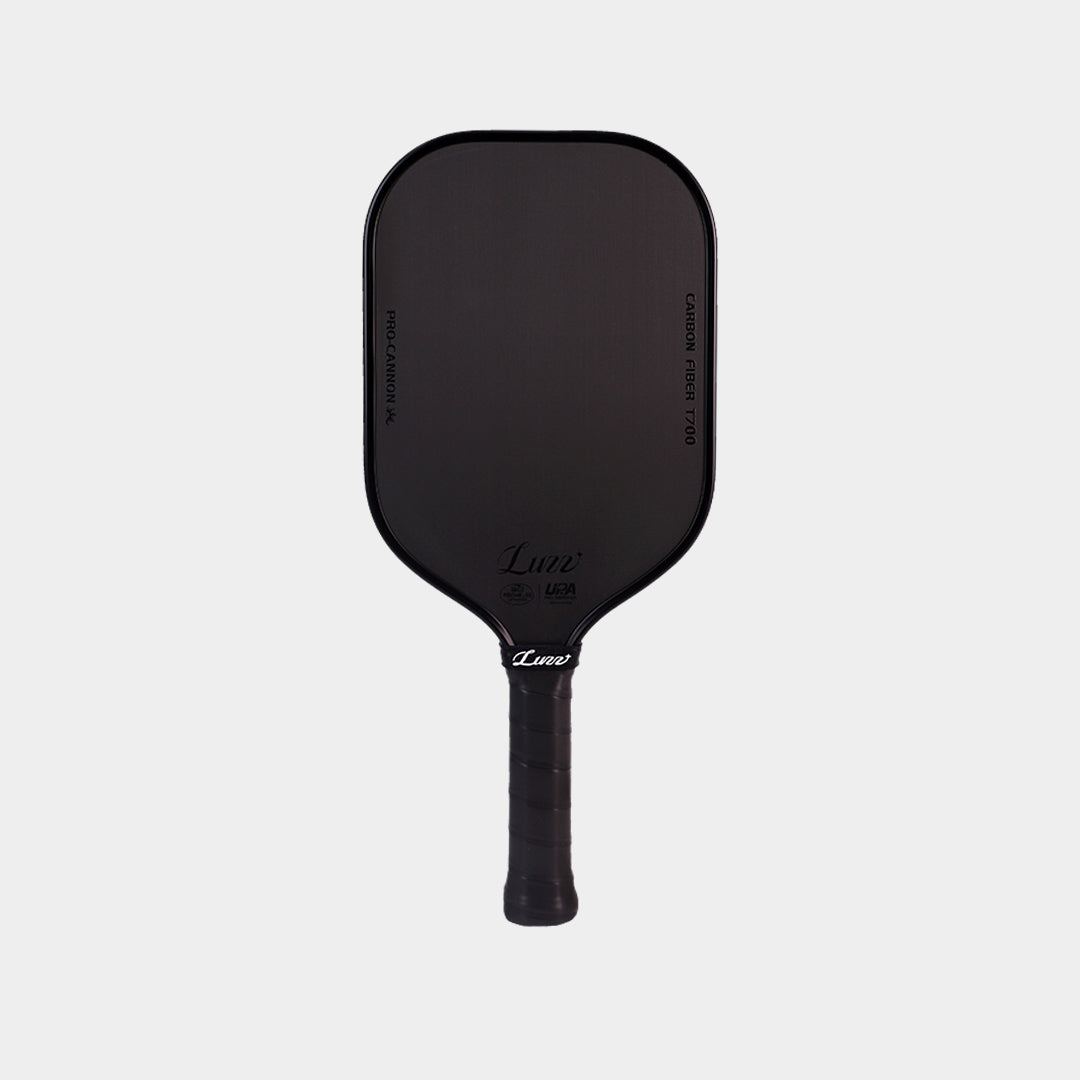
I have been playing the Luzz Cannon, and the dink feel is the best part of it - soft-game control that makes the reset-first style in this article a lot easier to trust. Solid pop on green balls too when you do pull the trigger.
Key Takeaways
Sort every attackable ball by contact height: below the knees is an automatic reset, knee-to-hip is attack-only-with-balance-and-purpose, above the hip is go. Let your balance downgrade the color and your opponents' court position upgrade it. Aim every attack at their red zone, even at the cost of pace. Most players do not need a better speed up to win more - they need to throw away fewer points attacking balls that were never theirs to attack.
Frequently Asked Questions
What is an attackable ball in pickleball?
A ball you can contact at or above hip height while balanced, letting you hit flat or downward. Balls contacted below the knees are not attackable at any level - reset those into the kitchen instead.
Should you attack from the transition zone?
Rarely. Even a hip-high ball in the transition zone often deserves a drop instead, because you are farther from the net and your opponents are set at the line ready to counter. Attack from mid-court only when the ball is clearly high and you can hit down on it.
How do you stop attacking the wrong balls?
Play constraint games where attacks are only allowed above hip height, and track how often your low attacks actually win the rally. Most players change their habits quickly once they see how rarely those attacks convert.
What height ball should you speed up at the kitchen line?
Speed up balls you contact between hip and chest height when you are balanced and your opponent has shown slower hands or a weak contact position. Below the knees, never - between knee and hip, only with balance and a clear purpose.