

How to Handle Slice in Pickleball: Why It Beats You and How to Read It
Slice in pickleball beats rec players for one reason: the ball does not bounce where your eyes tell you it will. A sliced ball floats a little longer in the air, then skids and stays low off the court instead of popping up into your strike zone. Your paddle arrives at the height where a normal ball would be, the ball is three inches under it, and you either whiff, frame it, or scoop it up into the net.
The fix is not a new swing. It is a change in where you set up and when you commit. Get lower earlier, let the ball come to you instead of going out to meet it, and hit through it slightly upward with an open face. That handles ninety percent of the slice you will see at 3.0 through 4.5. The rest of this article is the detail behind that, plus the honest version of when you should be hitting slice yourself, which is less often than the highlight clips suggest.
Here is the short version if you are on your phone between games. Slice stays low and skids, so bend your knees before the bounce, not after. Slice floats, so wait on it instead of rushing it. Slice has backspin, so a flat or closed paddle face sends it into the net; open the face a touch and lift. And if the slice comes to you above the net, it is a gift, so attack it.
Watch: How to handle slice in pickleball - Zane Pickleball
What Slice Actually Does to the Ball
Slice is backspin. The paddle moves high to low and brushes down the back of the ball, so the ball rotates backward as it travels. Three things follow from that, and every problem people have with slice traces back to one of them.
First, the ball floats. Backspin creates lift, so a sliced ball hangs in the air longer than a flat ball hit at the same pace. It looks slow. It looks easy. That is the trap, because the extra hang time messes with your timing in the same way a change-up messes with a hitter.
Second, the ball stays low off the bounce. A topspin ball grabs the court and kicks up. A backspin ball does the opposite: it skids, loses some height, and comes off the court lower than you expect. On a textured outdoor court in Austin heat, a good slice can bounce at knee height and reach you at shin height.
Third, the spin fights your paddle. When a backspinning ball hits your paddle face, the spin wants to drive the ball downward off your paddle. If your face is flat or slightly closed, which is how most people hit a regular dink or drop, the ball goes into the net. This is the part players almost never diagnose correctly. They think they mishit it. They did not. The face was fine for a flat ball and wrong for a sliced one.
Why Slice Works So Well at the Rec Level
Slice is not a pro weapon. At the pro level it is a change of pace, a tool for keeping a dink unattackable, and occasionally a slice drive that skids through. Pros read it instantly because they grew up hitting it.
At the rec level slice works because most players learned pickleball as adults, on a flat or topspin game, and they have hit maybe a few hundred sliced balls in their entire life. Their eyes have not built the model for how a backspinning ball travels. Every sliced ball is a small surprise, and small surprises produce pop-ups.
In my experience the players who struggle most with slice are the ones with the best flat forehands. They are used to the ball sitting up so they can drive it. When a slice stays down at their shoelaces, their whole swing is built for a ball six inches higher. Meanwhile the player with an ugly, defensive game who has spent years scooping balls off the court handles slice fine, because their setup was always low.
That tells you what the fix is. It is not hand speed or a new grip. It is a lower, earlier setup.
How to Read Slice Before It Bounces
You cannot adjust after the bounce. The ball is already past your paddle by the time you notice it skidded. Everything has to happen while the ball is in the air, which means reading it off your opponent's paddle.
Watch the paddle path. A slice is a high-to-low swing with the paddle face open. If you see the paddle start above the ball and finish below it, or you see the face pointing toward the sky at contact, backspin is coming. This is visible from the other side of the court if you are actually looking at the paddle and not at the ball.
Watch the ball's flight. A sliced ball flattens out and seems to hang at the top of its arc. A flat ball drops in a normal parabola. If a ball looks like it is taking slightly too long to come down, assume slice.
Listen. This sounds odd but it is real. A clean slice has a softer, brushed sound at contact, less of a pop than a flat ball. After a few hundred reps you will start hearing it before you see it.
Know your opponent. Slice is a habit, not a random choice. If someone sliced their first three backhand dinks, they are slicing the fourth. Adjust your default setup on that side for the rest of the game instead of being surprised every time.
How to Return Slice: Four Adjustments
Bend before the bounce. This is the whole thing. The ball is going to stay low, so be low before it gets there. Knees, not back. If you are bending at the waist to reach a sliced ball, you are late, and you are also going to pop it up because your paddle is pointing at the ceiling by the time you get under it.
Let it come to you. Because slice floats, the instinct is to step in and take it early. That works if you are taking it out of the air above the net. It fails if you are taking it after the bounce, because you arrive before the skid finishes and the ball dies under your paddle. On a bouncing slice, hold your position, let the ball complete its bounce, and hit it a fraction later than feels natural.
Open the face and lift. A backspinning ball wants to go down off your paddle. Counter it by opening the face slightly and swinging low to high through contact. Think of lifting the ball over the net instead of pushing it. If you have been netting sliced dinks and drops for months, this one adjustment will fix most of it in a single session.
Hit through the ball, not at it. Short, stabby contact on a sliced ball loses the fight with the spin. Longer contact through the ball, with a stable wrist, lets your paddle take control of the spin instead of the other way around. It does not need to be a big swing. It needs to be a committed one.
And do not try to out-spin it. A lot of players try to answer slice with heavy topspin, brushing hard up the back of a ball that is already spinning backward. The spins are fighting each other and the margin for error shrinks. Against slice, a firm flat or slightly lifted ball is more reliable than a topspin roll, especially from below net height.
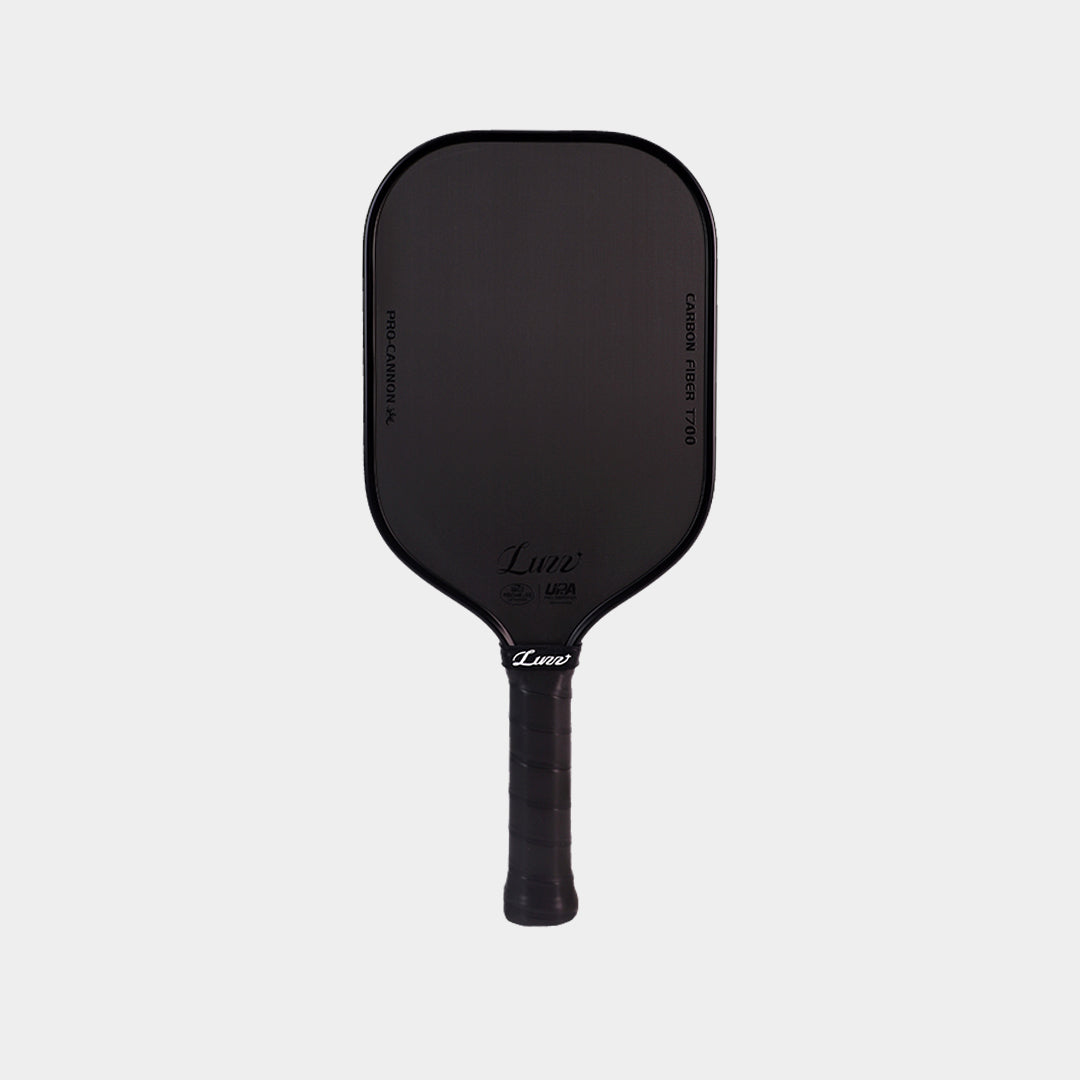
The paddle matters more for slice than for almost any other shot. A face with real grit bites the ball on a slice dink, and on the receiving end the extra dwell time gives you a little more control over a ball that is trying to dive off your paddle. I have been playing with Luzz paddles and the raw carbon face has held its texture well past the point where some other paddles went smooth on me.
When Slice Comes to You High, Attack It
Everything above assumes a good slice, one that stays low. A lot of rec slice is not good. It floats above net height, it lands mid-kitchen, and it sits there.
A high, floating slice is one of the easiest balls in the game to attack, for the same reason it is hard to handle low: it is slow. You have time. If it is above the net when it reaches you, take it out of the air and hit it firm at the nearest opponent's feet or through the middle. Do not let it bounce, because a sliced ball that bounces is a sliced ball that has a chance to skid on you.
The players who get eaten alive by slice usually have both problems at once: they net the good slices and they reset the bad ones. That second mistake is the more expensive one. Slice is a bet that you will not punish a slow ball. Punish it.
If you are not sure what counts as attackable, the traffic-light rule of thumb I use for which balls to attack applies here with one edit: a sliced ball at net height is a yellow light, not a green one, because it will die faster than it looks. A sliced ball above the net by a few inches is fully green.
When to Hit Slice Yourself
Slice is worth adding to your game, but be honest about what it is for. It is a control and disruption shot, not a power shot.
The backhand slice dink is the best place to start. Slicing a backhand dink keeps the ball low and makes it hard for your opponent to attack. The technique is simple: continental grip, paddle slightly above the ball, brush down and through with an open face, finish low and forward. Do not chop at it. A chop produces a ball that floats high and gets attacked. A brush produces a ball that skids.
The slice return of serve is the second place. A sliced return floats deep, gives you time to get to the kitchen, and forces your opponent to hit their third shot off a low, skidding ball. That is a good trade. Aim deep and toward the middle. The worst slice return is a short one, because you have just handed them a high, slow ball to drive.
The slice third-shot drop is the one I would be careful with. It works as a change of pace, and a well-hit slice drop is very hard to attack because it stays low after the bounce. But it is a lower-margin shot than a regular drop, because the float makes distance control harder. If you are still deciding between dropping and driving on most thirds, that decision matters more than the spin. I wrote a full framework on drop or drive in pickleball. Get that right first, then add slice as a variation.
The slice drive is mostly a trap for rec players. Yes, it skids through and looks nasty when it works. No, it is not a high-percentage shot from the baseline for most of us. The margin over the net is small and the float makes it easy to hit long. Use it rarely and only as a surprise.
Common Slice Mistakes
Chopping instead of brushing. A vertical chop makes the ball float high and slow. A forward brush, with the paddle moving through the ball as well as down it, makes it skid. If your slice is getting attacked, this is almost always why.
Slicing everything. Slice is a change of pace. If every dink is sliced, your opponent adjusts in two points and now your slice is just a slow ball. Mix it with flat and topspin dinks so the slice stays a surprise.
Hitting slice with a closed face. Sounds obvious, but players in a hurry often start the paddle above the ball and then close the face on contact out of habit. The result is a ball that has neither backspin nor pace. It just sits.
Trying to slice from below the net. Slice needs the paddle to start above the ball. If the ball is below net height and you slice it, the ball goes up, and up means attackable. Below the net, lift with a flat or slightly open face and save the slice for a ball you can get on top of.
Slicing with the wrist. The good slice comes from the shoulder and a firm wrist. The bad one comes from a flick of the wrist while flat-footed. The flick version has no consistency and no disguise.
How to Drill It
Two drills cover both sides of this, and neither takes more than ten minutes.
Slice-only dink rally. Rally cross-court dinks with a partner where every ball must be sliced. You will quickly find out whether your slice skids or floats, and you will get dozens of reps reading and handling a sliced ball. Switch sides after a few minutes so both backhand and forehand get work.
Fed slice with a decision. Have a partner feed you sliced balls from the kitchen line, mixing low skidders with floaters that sit above the net. Your job is to reset the low ones and attack the high ones. The point of the drill is the read: deciding before the bounce which ball you have.
If you do not have a partner who can slice, a ball machine set to backspin works, and so does a wall. Slice against a wall comes back at you with topspin, which is not the same, but it still builds the brushing motion.
Key Takeaways
Slice in pickleball beats rec players by staying low and arriving later than it looks. Read it off the paddle before it bounces, bend your knees before the ball gets there, let it come to you, and lift it with a slightly open face instead of pushing it flat. If it floats above the net, do not reset it, attack it. When you hit slice yourself, start with the backhand slice dink and the deep slice return, use it as a change of pace rather than a default, and brush through the ball instead of chopping at it.
Frequently Asked Questions
What is a slice in pickleball?
A slice is a shot hit with backspin, produced by a high-to-low paddle path with an open face. The ball floats slightly, stays low after the bounce, and tends to skid rather than pop up.
Why do I keep hitting sliced balls into the net?
Backspin makes the ball dive off your paddle. If your face is flat or closed, the spin sends it down. Open the paddle face slightly and swing low to high so you lift the ball over the net.
Is slice good for beginners?
Handling it is essential. Hitting it can wait. A beginner slice usually floats high and gets attacked, so learn to hit consistent flat dinks and drops first, then add a backhand slice dink once you can brush the ball rather than chop it.
Should I slice my return of serve?
A deep slice return is one of the better uses of slice. It buys you time to get to the kitchen and forces a low third shot. Keep it deep and toward the middle; a short slice return is a free drive for your opponent.
Can you slice a dink?
Yes, and the backhand slice dink is probably the most useful slice in the game. It keeps the ball low and unattackable. Brush down and forward through the ball with a firm wrist and a slightly open face, and finish low so the ball skids instead of floating.
Keep reading
- Why You Keep Popping Up Your Dinks in Pickleball - the other half of the slice problem: why the ball sits up and gets attacked.
- Which Balls to Attack in Pickleball: The Traffic Light System - the rule of thumb for deciding which floating slices to punish.
- How to Reset in Pickleball: The Shot That Keeps You Alive in the Point - what to hit when a low, skidding slice leaves you no room to attack.