

The Pickleball Forehand Dink: Why Yours Only Has One Setting
Your pickleball forehand dink is probably the least-coached shot in your game, and that is exactly why it stopped improving. Nobody drills it. Everybody assumes they already own it. It is the comfortable wing, the one that feels natural in your first week with a paddle, so it gets waved through while you spend your practice time on the backhand that scares you.
Here is what that produces at 3.5 and 4.0: a forehand dink with exactly one setting. Get it over, get it lowish, hope. It is not a bad shot. It is a shot with no intent, and good opponents read that in about four balls. Once they know nothing dangerous is coming off your forehand side, they just lean on it until you crack.
The fix is not a swing change. It is realizing the forehand dink is two different shots that happen to share a wing - one that buys you time when you are under pressure, and one that quietly takes the point away from the other team. This article covers both, plus the five mistakes that keep most forehand dinks stuck on setting one.
I watched this happen in real time with my son. Thirty minutes, a handful of small corrections, and a forehand dink that had been flat and defensive for months started doing something. None of it was a swing overhaul. That is the part worth carrying into everything below: this shot improves through boring, specific adjustments, not a new stroke.
Why Your Forehand Dink Is Probably Worse Than Your Backhand Dink
Ask a group of 4.0 players which dink they trust more and a surprising number will say the backhand. That sounds backwards until you look at how each shot got built.
The backhand scared you, so you drilled it. You watched breakdowns of it, you asked for feeds on it, you committed to a two-hander or grooved a one-hander. The forehand never scared anybody, so it never got a single deliberate rep. It is the shot you warm up with, not the shot you work on.
The mechanics reinforce it. A backhand dink is a short lever in front of your chest with the paddle already leading the hand. There is not much room for it to go wrong. A forehand dink has a longer lever, a shoulder that can rotate, an elbow that can collapse, and a wrist that can flip - four ways to add motion the shot does not need.
Then the match itself hides the problem. Opponents attack your backhand, so your backhand gets tested under real pressure every game and adapts. Your forehand gets the polite balls. You do not find out it is one-dimensional until somebody pulls you wide or decides to sit on it.
Quick test for your next session: dink cross-court forehand only for three minutes, then backhand only for three minutes, and count the balls you put in the net or above the other player's waist. In my experience most people are surprised by which side wins.
The Reach Trap: Extra Range Hides Bad Footwork
The forehand reaches further than the backhand. That sounds like an advantage, and it is the single biggest reason forehand dinks go bad.
On a ball you should move for, the forehand lets you stand still and stretch. You still touch it, so nothing registers as an error. But contact has drifted out to the side of your body where you cannot see the paddle face, your weight is traveling sideways instead of forward, and the paddle arrives at whatever angle your arm happened to leave it at. The ball floats. You blame your hands.
The backhand does not allow this. It has less reach, so it forces you to move or miss, which is exactly how it quietly became the more disciplined shot.
The rule I play by now: if I had to reach to touch a dink, I should have moved for it. Shuffle, get the outside foot down, bring your body to the ball so contact happens in front of you instead of beside you. Most of what people call a soft-hands problem on the forehand is a footwork problem wearing a disguise, and it shows up everywhere else in your game too.
Your Forehand Dink Needs Two Settings, Not One
For a long time my forehand dink from the right side had exactly one setting: get it back over. Same shot every time, regardless of what came at me. I took it to a coach, and the reframe that actually changed my right side was not a technical cue. It was this - I did not need a better forehand dink. I needed a second one.
Setting one is the safe dink. Its job is time and margin. It keeps you in the rally when you are stretched, off balance, or taking a ball below your knees.
Setting two is the pressure dink. Its job is to make the other player hit a harder next ball - lower contact point, more movement, worse angle.
Most players own setting one and then, once every eight or nine balls, attempt something aggressive that is really just setting one hit harder. That is the ball that pops up and gets buried. The problem was never courage. It was that there was no actual second shot there to reach for.
Setting One: The Safe Forehand Dink
The safe dink is not the lazy dink. It has specific targets.
Height. The highest ball over the net that still lands in the kitchen. Skimming the tape is not safe, it is fragile. You want real margin over the net and a landing spot that keeps the ball unattackable.
Depth. Deep in the kitchen, near their feet at the line, not short. A short dink invites them to step in and take it above net height. A deep one keeps them back and buys you the half second you need to recover.
Direction. Cross-court by default. It is the longest diagonal on the court, it crosses the lowest part of the net, and it gives a miss the most room to still land in.
Technique. Contact in front of your front knee, paddle face open just enough to lift the ball, motion from the shoulder with a quiet wrist, knees bent through contact so your chest stays down.
When you are genuinely stretched, the safe dink is the only correct answer. Get it over, get it deep, get back to the middle of your half. Do not try to change direction with your weight going the wrong way.
Setting Two: The Pressure Forehand Dink
Pressure does not mean pace. If your dink is getting faster without getting lower, you are just handing over a ball they can counter.
Spin. A topspin dink dips late, bounces low, and kicks forward into your opponent instead of sitting up. It crowds their contact point without ever traveling above net height. The brush mechanics and the three mistakes that kill the spin are in the topspin dink breakdown.
Target. Move the ball to the middle seam, or at the hip of whichever player is already moving. Same pace, much worse angle for them.
Depth and width. Pull them off the line wide, then take the next one back to the middle. The point is not a winner. The point is that they now have to hit a dink while moving, and that is where pop-ups come from.
The gate for switching to setting two: the ball is at or above your knee, you are balanced with the outside foot planted, and contact is in front of you. Miss any one of the three and you are on setting one whether you like it or not.
How to Pick a Setting in the Middle of a Rally
Decision-making is the part that never makes it into technique videos, so here is a version simple enough to run at speed.
Ask one question on every ball: am I balanced?
If the answer is no - you are reaching, drifting backward, taking it below the knee, or still recovering from the last shot - play setting one. Cross-court, deep, higher over the net. Nothing else.
If the answer is yes, ask a second question: is the other player balanced? If they are set and square, play setting one again and keep asking. If they are moving, leaning, or recovering, that is the ball worth spending setting two on.
Most rec players invert this. They attack when they personally feel confident and reset when they feel scared, which means their attacks land on balanced opponents and their resets land on nobody in particular. Judge the other side of the net, not your own confidence. There is a fuller version of that logic in dead versus aggressive dinks.
Five Forehand Dink Mistakes and the Fix for Each
1. Contact beside the hip. Make contact in front of your front knee instead. If you can see the paddle in your peripheral vision without turning your head, the ball is already too far back.
2. The wrist doing the lifting. Set the wrist angle before the ball arrives and keep it there. The paddle should travel low to high from the shoulder, not flick from the hand. A flicked forehand dink is a coin toss.
3. Standing up through the shot. Stay down until the ball has left the paddle. Rising pulls the face open late, which is a pop-up with extra steps. It is the most common cause of the dinks that sail on you.
4. Aiming at the net instead of a landing spot. Pick a spot in their kitchen and hit to it. Net clearance is a result of choosing a target, not a target itself.
5. Square stance with no outside foot. Take a small step out with the outside foot, load it, push back to center. One step is the entire difference between a controlled dink and a stretch.
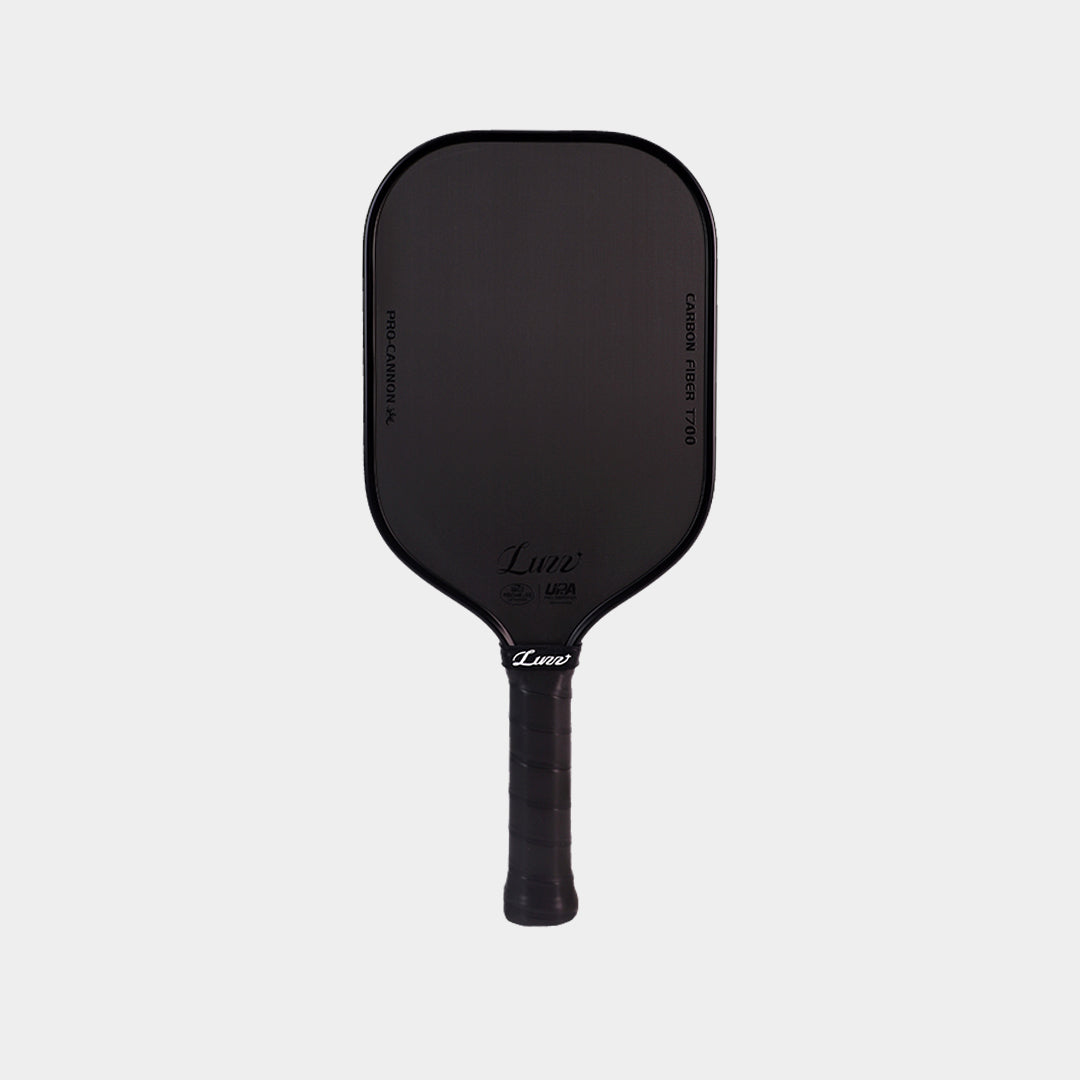
Paddle feel matters more on this shot than on almost any other, because the forehand dink is where a millimeter of face angle decides whether the ball lands at their feet or above their waist. I have been playing a Luzz paddle, and the first thing I noticed was how much information comes back through the handle on soft touches - you can feel where on the face the ball landed, and that feedback loop is what actually makes a dink better.
Two Drills That Actually Transfer to Games
Two-target forehand cross-court. Put a towel deep in the kitchen cross-court and a second marker out near your partner's sideline hip. Dink forehand only, and alternate: safe ball to the deep towel, pressure ball to the hip marker, repeat. Accuracy is not really the point. The point is that every single ball has a declared job before you hit it. Ten minutes of this kills autopilot dinking faster than anything else I have tried.
Stretch and recover. Your partner feeds wide forehand dinks that force you to move. One rule: you are not allowed to reach. If you cannot get the outside foot planted before contact, you let the ball go and it counts against you. Reset to the middle of your half after every ball. It is a boring drill and it is the one that fixes the reach trap.
If you only have a wall, dink forehand into a spot about a foot above the net line and force yourself to take a step between every ball. The wall will not let you cheat the tempo, which is the whole benefit.
The Forehand Dink Is the Building Block of the Right Side
For a right-handed player on the even side, the forehand covers the middle. That is where the highest-percentage ball in doubles lives. If your forehand dink has one setting, the middle of the court is a free zone for the other team. They know nothing is coming back at them from there, so they can stand square, take their time, and pick their moment.
Once that forehand has two settings, the same piece of court becomes a problem for them. The middle is now somewhere they might get a topspin ball at their feet, get pulled wide, or get jammed at the hip. Nothing else about your game has changed. You just stopped being predictable on the biggest piece of court you are responsible for.
That is the honest reason to work on this shot. Not because the forehand dink wins points - it mostly does not - but because a one-setting forehand tells good opponents exactly where to live.
Key Takeaways
Your pickleball forehand dink is probably your least-drilled shot, and the extra reach on that wing hides footwork mistakes your backhand would never let you get away with. Treat it as two shots: a safe dink that buys time, played cross-court and deep with real margin over the net, and a pressure dink built from spin, target and depth rather than speed.
Choose between them by asking whether you are balanced and whether they are, not by how brave you feel in the moment. And fix the contact point and the outside foot before you change anything else, because most forehand dink problems are movement problems that only look technical.
Frequently Asked Questions
What is a forehand dink in pickleball?
A forehand dink is a soft, controlled shot hit off your forehand side from at or near the kitchen line, landing in your opponent's kitchen. Its purpose is to keep the ball below net height so the other team cannot attack it.
Should a forehand dink be flat or have topspin?
Both, depending on the job. A flat or slightly lifted dink gives you the most margin and is the right choice when you are stretched or off balance. Topspin is the pressure version - it dips late and bounces low, which crowds your opponent's contact point.
Why do my forehand dinks keep popping up?
Almost always one of three things: contact happening beside or behind your hip instead of in front of your knee, the wrist flicking instead of the shoulder swinging, or standing up out of your stance before the ball leaves the paddle.
Should you use a continental grip for the forehand dink?
Continental is the safest default because it keeps the face angle consistent and lets you switch to a backhand without regripping. Some players shade slightly toward an eastern forehand grip to get more brush on topspin dinks, which is fine as long as your backhand transition stays clean.
How do I practice the forehand dink on my own?
Use a wall. Pick a target about a foot above net height, dink forehand only, and force yourself to take a step between every ball rather than standing flat-footed. Ten minutes of that per session builds the movement habit that most partner drills let you skip.
Keep reading
- How to Hit a Topspin Dink in Pickleball - the brush mechanics behind the pressure forehand dink.
- Why You Keep Popping Up Your Dinks - the fix when your forehand dink sails on you.
- The Two-Handed Backhand Dink - the other wing, and the one you probably drilled more.