

How to Hold a Pickleball Paddle: Complete Grip Guide
Most players learn how to hold a pickleball paddle in their first ten minutes on a court and never think about it again. That is a mistake. The grip you settled into - and more importantly, how hard you squeeze it - quietly shapes half the errors in your game: dinks that pop up, counters that sail long, resets that bounce right back to your opponent's feet.
Here is the short answer. Use a continental or eastern grip as your default, hold the paddle at about a 3 or 4 out of 10 on the pressure scale, and resist the urge to strangle the handle when the ball speeds up. That last part is where most of us fail.
The grip style debate gets all the attention online, but at the 3.0 to 4.5 level, grip pressure and where your hand sits on the handle matter more than which bevel your knuckle touches. This guide covers all three - style, pressure, and hand position - plus the grip mistakes I see in rec play every single week, most of which I have made myself.
Watch: Why The Pros Grip Differently From You - Enhance Pickleball
The Three Pickleball Grips, Explained
Continental grip. Hold the paddle like you are about to hammer a nail with its edge. The V formed between your thumb and index finger sits right on top of the handle. The paddle face stays neutral, which means you can hit forehands, backhands, volleys, and dinks without changing anything. This is the grip most coaches want you in at the kitchen line, because hands battles leave zero time to adjust.
Eastern grip. The classic handshake. Shake hands with the handle and you are there - the V rotates slightly toward your forehand side. It is the most commonly recommended starting grip because it is balanced: comfortable forehand, workable backhand, no dramatic weaknesses. For most players, eastern and continental are close neighbors, and your neutral grip probably sits somewhere between the two.
Western grip. Rotate your hand further under the handle and the paddle face closes. Tennis converts sometimes bring this over because it produces heavy topspin forehands. The problem: at the kitchen line it is a liability. Backhand dinks become awkward stabs, volleys come off a closed face, and you have no time to fix any of it. Some strong players make it work from the baseline, but as a default grip in a fast doubles game, it costs more than it gives.
How to Find a Neutral Grip in Ten Seconds
Two quick tests. First, the hammer test: grab the paddle by the throat with your non-paddle hand, hold it edge-on like a hammer, and slide your playing hand onto the handle as if you were going to drive a nail. Second, the handshake test: hold the paddle out in front of you, face perpendicular to the ground, and shake hands with it.
Both land you in the continental-to-eastern zone, which is exactly where you want to live. Now check the V between your thumb and index finger. On top of the handle: continental. Rotated a touch toward your dominant side: eastern. Either is a solid home base.
The useful habit is re-checking between points. Grips drift mid-game - especially after hitting a few drives - and most players never notice their knuckles have migrated. Make the regrip part of your reset routine before the next serve.
Grip Pressure Is the Real Separator
If I could only fix one grip-related thing for every 3.5 player in Austin, it would not be grip style. It would be pressure.
Think of pressure on a 1-to-10 scale, where 10 is white-knuckle. Your default should sit around 3 or 4 - firm enough that the paddle does not twist on off-center hits, loose enough that your forearm stays relaxed. Pros talk about this constantly, and it shows up in everything they do at the kitchen.
Here is why the death grip hurts you. A tight grip turns your paddle into a rigid wall, and a rigid wall rebounds the ball with all of its incoming pace. That is the hidden cause behind dinks that pop up and blocks that fly long: the ball came in hot, your paddle gave nothing back, and physics did the rest. A relaxed grip absorbs pace instead of returning it, which is the entire foundation of soft resets from the transition zone.
The sneaky part is pressure creep. Nobody death-grips on purpose. It happens at 9-9, it happens the moment someone speeds up at your chest, it happens after you have missed two counters in a row. Tension migrates into your hand without permission. The fix is boring but real: between points, exhale and consciously check your grip pressure. If your knuckles feel involved, you are too tight.
Why Pros Choke Up on the Handle
Watch pro doubles closely and you will notice something most amateurs never copy: a lot of pros do not hold the paddle at the bottom of the handle. They choke up - sometimes an inch or more, index finger nearly touching the throat. The featured video above breaks down why, and it is worth eight minutes of your time.
Choking up effectively shortens the paddle. A shorter lever means your hands move faster, the paddle head is easier to control, and keeping the face up in front of your chest during hands battles takes less effort. More control, quicker reactions, better feel on dinks. The cost is reach and leverage: you give up a little power on serves and drives, and a little length on stretch volleys.
That trade is exactly backwards from what most rec players do - full-length grip everywhere, maximizing power they rarely need and giving up control they desperately do. You do not have to commit to a dramatic choke-up. Try moving your hand up one finger-width at the kitchen line and see what happens to your counters. In my experience the difference on speed-up exchanges is noticeable within a session.
Should You Switch Grips Mid-Rally?
At the pro level, yes, players make small grip shifts constantly. At the 3.0 to 4.5 level, the answer is mostly no - and trying is one of the quiet error factories in rec play.
The math is simple: at the kitchen line, a speed-up reaches you in roughly a quarter of a second. There is no time to rotate your hand and reset your fingers. This is exactly why the continental grip earns its keep - it covers the forehand and backhand side without any adjustment.
Where a grip change is fine: back at the baseline, with time. Shifting toward eastern for a forehand drive on a third shot is reasonable, as long as you return to neutral before you move forward. The rule of thumb I use: change grips when the ball is on the other side of the net and you are behind the transition zone. Inside it, whatever grip you have is the grip you are playing with.
If you catch yourself fidgeting with the handle during hands battles, that is not technique - that is a tell that your default grip does not cover both sides. Fix the default instead.
The Index Finger Question
Plenty of players extend their index finger up the back of the paddle face. Is that wrong? No - but know the trade.
The extended finger adds face awareness and stability. You can feel where the paddle is pointing, which helps on blocks and touch shots, and it resists twisting on off-center contact. The downside is wrist mobility: flicks, rolls, and aggressive topspin dinks lose a bit of snap because your finger is bracing the very thing the shot wants to rotate.
If you rely on feel and blocking, the finger up is fine. If your game leans on rolls and speed-ups, keep it wrapped. What actually matters is consistency - pick one and stop switching mid-match, because your brain calibrates paddle feel around it.
Common Grip Mistakes Between 3.5 and 4.5
The death grip on defense. The moment someone attacks, tension spikes, and every block flies long. Counters need a 3, not an 8. If your counters sail, check pressure before you touch your swing.
Regripping during hands battles. Covered above, worth repeating: if your hand is moving on the handle at the kitchen line, you are donating points.
Western creep. You hit three forehand drives in a row, your grip stays rotated under, and the next backhand dink comes off a closed face into the net. Drives are fine - forgetting to come home to neutral is the problem.
Playing the wrong grip size. If the handle is too small, your hand compensates by squeezing - manufactured tension you cannot breathe away. Too big and you cannot stabilize the paddle on off-center hits. Most paddle handles run about 4.25 inches in circumference; if your fingertips dig into your palm or barely reach it, experiment with an overgrip or a different handle. This is also a reason to demo paddles instead of buying blind.
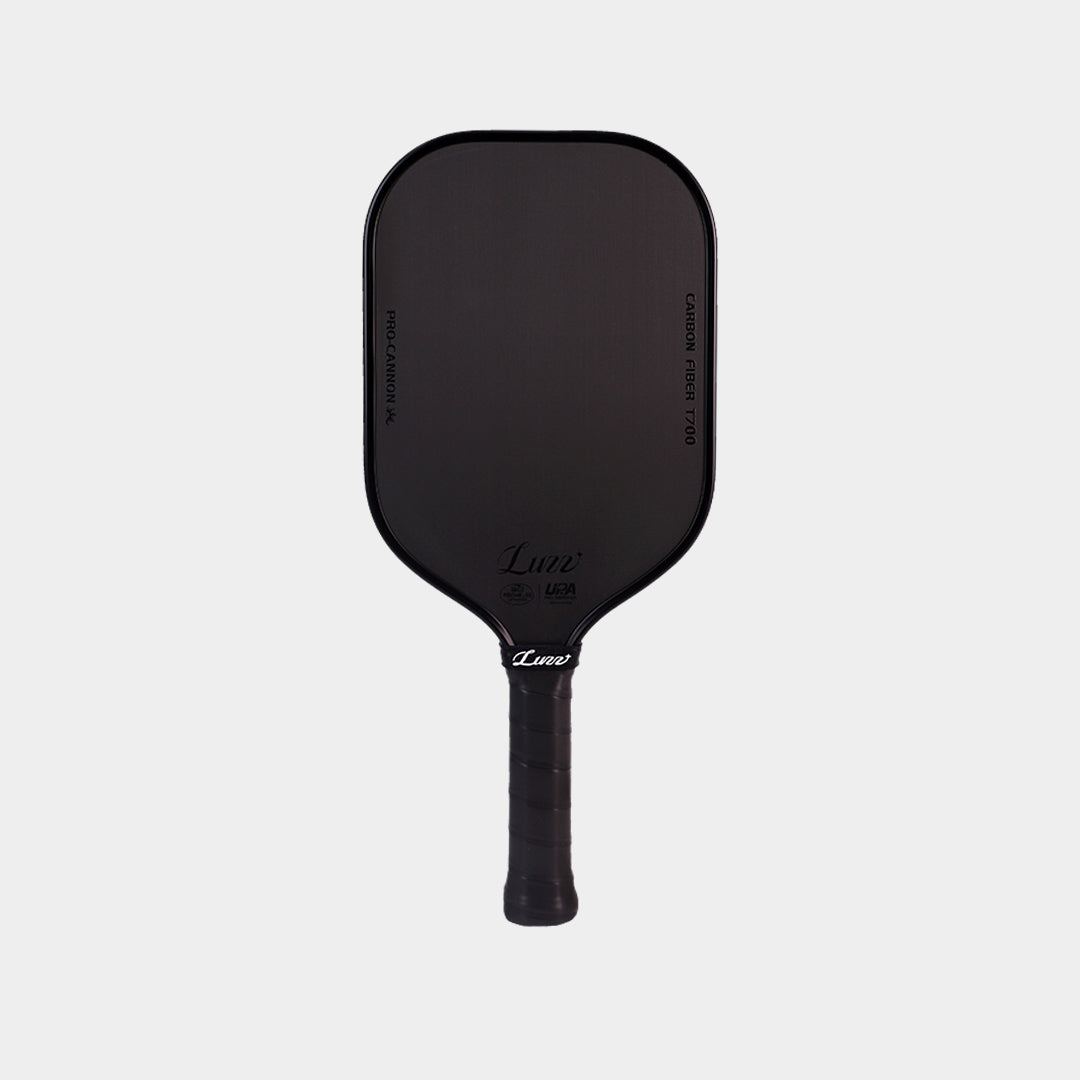
I play with a Luzz paddle, and the handle shape was half the reason it stuck - relaxed grip, no squeeze needed to stabilize off-center hits. Solid build at the price.
Key Takeaways
Your grip decision was probably made in your first ten minutes of pickleball, and it deserves a review. Default to continental or eastern, keep pressure around 3 or 4 out of 10, and try choking up a finger-width at the kitchen. Before you blame your technique for pop-ups and long counters, check your hand: at this level, grip pressure fixes more errors than any new swing pattern will. For more of the data-driven amateur perspective, the Backpaddle Pickleball channel is where I track all of it.
Frequently Asked Questions
Is continental or eastern grip better for pickleball?
Either works as a default, and most players end up between the two. Continental is slightly better at the kitchen line because it covers forehand and backhand without adjustment; eastern feels more natural on forehand drives. Avoid western as your default.
How tight should I hold a pickleball paddle?
Around 3 or 4 out of 10. Firm enough that the paddle does not twist on off-center contact, relaxed enough to absorb pace on resets and dinks. Most pop-ups and long counters trace back to squeezing too hard, not swinging wrong.
Why do pro pickleball players choke up on the paddle?
A higher hand shortens the paddle, which speeds up their hands and improves control during fast exchanges. The trade-off is a little less power and reach, which matters less at the kitchen line where most points are decided.
Does grip size matter in pickleball?
Yes. A handle that is too small makes you squeeze harder, adding tension; one that is too big prevents you from stabilizing the paddle. If your grip feels wrong, an overgrip is a cheap experiment before changing paddles.