

The Pickleball Mental Game: 7 Mistakes That Cost You Matches
Here is the uncomfortable truth about the pickleball mental game: at 3.5 and above, most close matches are not decided by who has the better third shot drop. They are decided by who falls apart less. You have felt this. You are up 9-6, you start thinking about winning, and suddenly you cannot buy a serve return. Nothing changed in your technique between point nine and point eleven. Something changed in your head.
I spent a long time treating the mental side as something that would fix itself once my shots got better. It did not. My rec-play level and my tournament level stayed two different players until I started treating mental mistakes the same way I treat technical ones: identify the specific error, understand why it happens, and drill a specific fix. This article covers the seven mental mistakes I see most often at the 3.5-4.5 level - including the ones I still catch myself making - and what actually works to fix each one.
Watch: The Mental Game No One Talks About in Pickleball
Mistake 1: Playing Not to Lose Instead of Playing to Win
Watch any close rec game at 9-9 and you will see it: both teams stop playing the shots that got them there. Drives turn into pushes. Aggressive dinks turn into pop-up-waiting-to-happen lifts. Everyone is suddenly allergic to the sideline.
Playing scared feels safe, but it is actually the higher-risk strategy. When you push a shot instead of committing to it, your mechanics change - shorter follow-through, tighter grip, slower feet. Those tentative mechanics miss more, not less. In my experience, the points I lose at big moments are rarely wild aggressive errors. They are timid balls that sat up and got punished.
The fix is to make the decision before the point starts. Before you serve or return, pick one concrete intention: deep serve to the backhand, return down the middle, first dink to the opponent's forehand foot. When the plan exists before the pressure arrives, your body executes the plan instead of negotiating with your fear mid-rally.
Mistake 2: Replaying the Last Point While the Next One Starts
One popup becomes three. Not because your dink mechanics collapsed, but because points two and three were played while your attention was still attending the funeral of point one.
This is the most common mental mistake in pickleball and the easiest to see in other people. Someone misses an easy putaway, mutters at themselves, stares at their paddle - and then plays the next point at about 70 percent attention. Pickleball points are short. There is no time to ease back into focus the way you might in tennis.
The fix that works for me is a physical reset cue, not a mental one. Telling yourself "forget it" does not work because your brain does not process negation well. Instead, do something with your body: walk to the fence, tap your paddle twice on your palm, fix your grip. The specific action does not matter. What matters is that the action means "that point is filed away" and you do it every single time, after good points and bad ones.
Mistake 3: Letting Tournament Nerves Shrink Your Game
If you play worse in tournaments than at your local courts, welcome to the biggest club in pickleball. My first tournament, my arm was so tight through the first game that my serve landed three feet shorter than normal and I could not figure out why.
Here is what I wish someone had told me: the goal is not to eliminate pickleball tournament nerves. Pros get nervous. The goal is to play your normal game at 80 percent intensity instead of a stranger's game at 100 percent. Nerves shrink your game - shorter serves, safer returns, no speed-ups. So the counter is to consciously restore your normal patterns, starting with the shots you can control completely: serve deep like you always do, return deep like you always do.
Two practical things help. First, a real warm-up - not two minutes of half-hearted dinks, but the same 15-minute progression you would do before rec play. Familiar routine tells your nervous system this is a normal day. Second, give yourself the first game to settle. Play the highest-percentage version of your game - deep returns, patient dinks, middle targets - and let the nerves burn off before you start hunting winners.
Mistake 4: The Tilt Spiral After Two or Three Bad Points
Tilt is a poker term, but pickleball players know it intimately. You lose two points in ways that feel unfair - a net cord, a partner miss, a line call you disagreed with - and suddenly you are speeding up every third ball, trying to win the game back in one shot.
Tilt is not anger. It is urgency. Your brain decides the current trajectory is unacceptable and starts trying to fix everything immediately, which in pickleball means forcing attacks from bad positions. I have donated entire games to opponents this way, hitting speed-ups from below net height because waiting one more dink felt unbearable. If that is your pattern, it is worth getting deliberate about which balls are actually attackable so the decision stops being an emotional one.
The counter to urgency is deliberately slowing down the things you can slow down. Walk slower between points. Take the full time before serving. Bounce the ball a couple of extra times. This is not stalling - it is a signal to your own nervous system that there is no emergency. The score does not care how frustrated you are, and the fastest way back into a game is one boring, patient point at a time.
Mistake 5: Overthinking Every Shot Mid-Rally
If you watch pickleball YouTube - and if you are reading this, you do - you are carrying around fifty coaching cues: paddle up, compact backswing, contact out front, split step, shoulder not wrist. Trying to run through that checklist during a rally is a great way to hit nothing cleanly.
Conscious thought is slow. Rallies are fast. The players who look calm at the kitchen line are not thinking harder than you - they are thinking less, because they moved their technique into autopilot during drills and freed their in-game attention for reading the opponent.
The fix: one cue per session, maximum. When you play, pick the single thing you are working on - say, "paddle up at the kitchen" - and let everything else run on whatever autopilot you currently have. Save the checklist for drilling, where there is no score and your brain has room to be mechanical. Your game improves faster this way too, because feedback attaches to one variable instead of scattering across ten.
Mistake 6: Silently Blaming Your Partner
You do not have to say a word. The half-second head shake after your partner misses a return, the sigh, the "you got to get those" body language - your partner reads all of it, and players play worse when they feel judged. Now you have two problems: their misses and their tension.
I am not proud of how long it took me to fix this one. What finally clicked was realizing that my reaction to my partner's error is the only part of that error I control. The miss already happened. The only live question is whether my partner plays the next point loose or tight, and my body language is the biggest input into that.
The practical fix is a hard rule: paddle tap and one short positive phrase after every lost point, no exceptions, no editorializing. "All good." "Next one." It feels forced for about two games and then it becomes automatic. And when you are the one spraying balls, tell your partner what you want: "keep feeding me, I will find it." Teams that talk stay loose.
Mistake 7: Blaming Your Gear and Tinkering Mid-Match
When the wheels come off, amateurs look for an external explanation: the wind, the balls, and above all the paddle. I have watched players - fine, I have been the player - rotate the paddle after a miss and study its face like it committed the error on its own.
The gear-blame habit is a mental leak because it outsources responsibility, and responsibility is where adjustment lives. If the paddle missed, there is nothing to fix. If I missed - late contact, wrong shot choice - there is a specific correction available on the very next point.
The related mistake is constant equipment churn: a new paddle every two months, demo after demo, always convinced the next one fixes the popups. Confidence at the kitchen line partly comes from trusting your equipment completely, and trust needs reps with one paddle. Pick a paddle that fits your game and commit to it for a season.
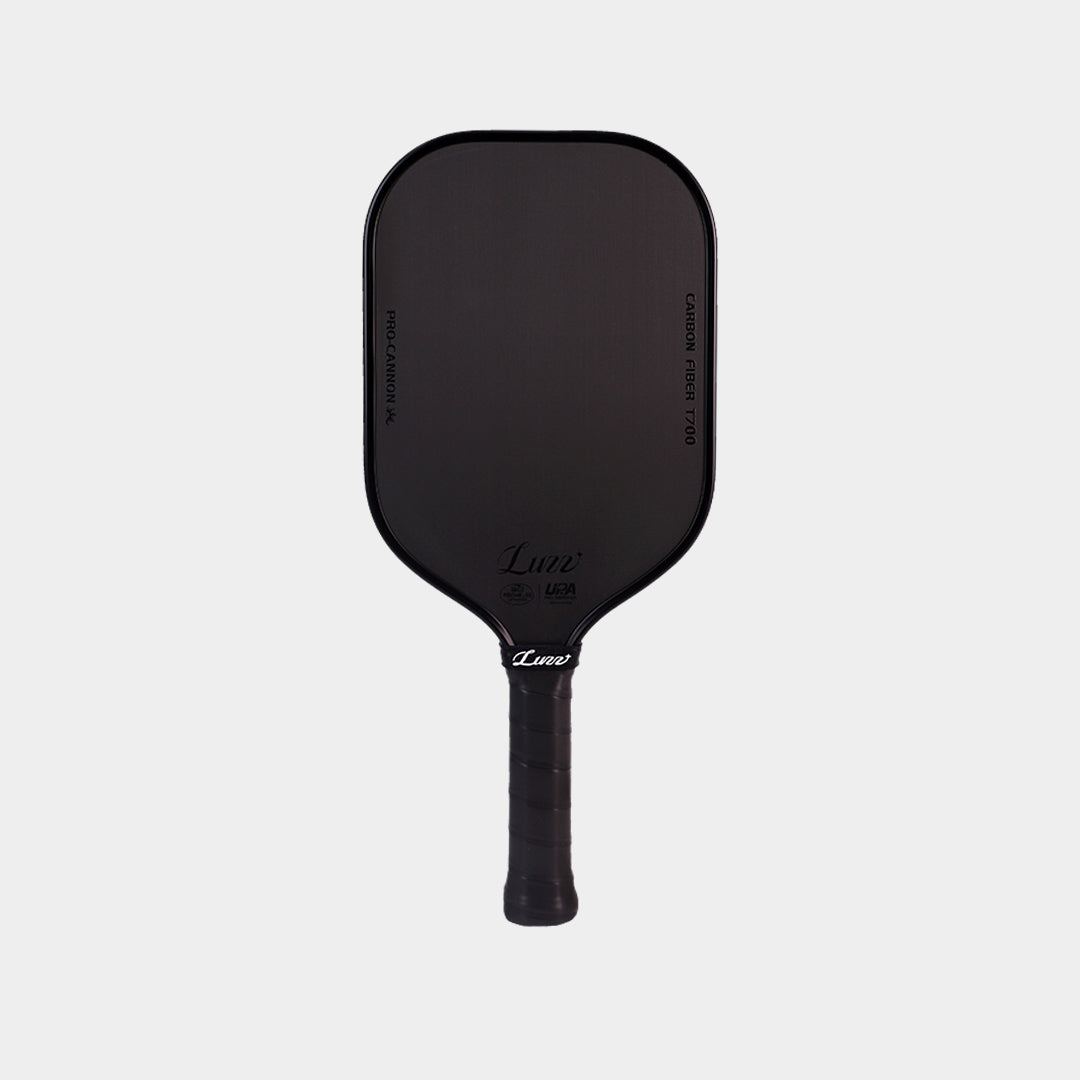
I settled on the Luzz Cannon after my last round of paddle testing and stopped thinking about my paddle entirely - which is the whole point. Dialed in for dink feel with enough pop for counters, and one less variable in your head.
What Actually Fixed My Mental Game
Not affirmations. Not pretending pressure does not exist. Three boring, repeatable habits.
First, a between-point routine I run every point: exhale, one physical reset cue, pick a target for the next shot. Five seconds, same order, win or lose. It is the mental equivalent of a free-throw routine, and it is the single highest-leverage change I have made.
Second, process goals instead of outcome goals. "Win this match" is not actionable mid-game and mostly generates anxiety. "Return deep all match" and "no speed-ups from below the net" are actionable, and if I hit my process goals, winning mostly takes care of itself.
Third, post-match notes. Data-first, two minutes in my phone: how points actually ended, and specifically how many I gave away mentally - tilt attacks, points played while replaying an error. The first time I counted honestly, the number was embarrassing. It has been shrinking since, because what gets measured gets managed.
Key Takeaways
The pickleball mental game is not a personality trait - it is a set of specific, fixable mistakes. Commit to shots instead of pushing them, reset physically after every point, slow everything down when you feel urgency, and protect your partner's confidence like it is your own. Pick one mistake from this list, work on it for two weeks the way you would drill a third shot drop, and you will win close games you have been donating. For more of the amateur-perspective breakdowns behind this article, the Backpaddle Pickleball channel is where I test all of this on camera.
Frequently Asked Questions
Why do I play worse in tournaments than in rec play?
Nerves change your mechanics - tighter grip, shorter swings, slower feet - and shrink your shot selection. You cannot eliminate the nerves, so restore normalcy instead: full warm-up, familiar routines, and a first game built entirely on high-percentage shots until you settle.
How do I stay calm playing pickleball at 9-9?
Decide your shot before the point starts. Pressure attacks decision-making mid-rally, so pre-committing to a target - deep serve, middle return, first dink location - removes the negotiation. Then run your normal between-point routine, not a special "big point" one.
What is tilt in pickleball?
Tilt is playing with urgency after frustrating points - forcing speed-ups, hunting winners from bad positions, trying to win the game back on one shot. The fix is deliberately slowing your pace between points and committing to one patient, boring point at a time.
How long does it take to improve your pickleball mental game?
Faster than technique, in my experience. A between-point reset routine feels automatic within a few sessions, and process goals work the first match you use them. The hard part is consistency - the habits are simple, but you have to run them on the days you least feel like it.