

Pickleball Dinking Strategy: When to Play Dead and When to Attack
Most players treat dinking like a truce. Both teams get to the kitchen line, everyone taps the ball back and forth, and the rally continues until somebody blinks. If that describes your game, here's the uncomfortable part: you don't have a pickleball dinking strategy. You have a waiting room.
The players who win dink battles aren't more patient than you. They're making a decision on every single ball: is this dink a reset, or is it a weapon? Those are the only two options. The "medium dink" - not quite safe, not quite dangerous - is the shot that gets attacked, and most rec players hit it forty times a game without realizing it.
I spent a long time thinking I was a consistent dinker because I rarely made errors in the first five shots of a rally. What I actually was, was predictable. Same pace, same depth, same crosscourt target. Good opponents didn't need to beat me in the dink rally - they just waited for the inevitable ball that sat up. Fixing that meant learning the difference between a dead dink and an aggressive dink, and being honest about which one each ball called for.
Watch: How I Stopped Dinking Into the Net - Backpaddle Pickleball
The Two Types of Dinks
A dead dink is a ball with nothing on it - no pace, low trajectory, landing short in the kitchen with a bounce that dies below net height. Its entire job is to be unattackable. You're not trying to win the point with it. You're trying to make sure your opponent can't win the point either. Think of it as hitting pause on the rally.
An aggressive dink is the opposite. It has intent: extra pace, a target (usually a foot or a hip), sometimes topspin, and it's designed to force an awkward contact. Your opponent has to hit it from below their knees, off their backhand hip, or while moving. Aggressive doesn't mean risky, and it definitely doesn't mean a speed-up. It means uncomfortable.
Every dink you hit should be a deliberate choice between these two. The problem ball is the one in between - a dink with a little pace but no target, or decent placement but a high bounce. That in-between ball is the one that gets attacked at your face. When players say "I got speeded up on out of nowhere," it usually wasn't out of nowhere. It was a medium dink that sat up two inches too high.
Why "Just Keep It Low" Loses You Dink Rallies
The advice every beginner gets is "keep it low and be patient." That's fine at 3.0, because at 3.0 the rally ends on an unforced error anyway. But somewhere around 3.5 to 4.0, everyone can keep the ball low. If your entire strategy is "don't miss," you've handed control of the rally to your opponent.
Here's what passive dinking actually does: it lets your opponent get comfortable. Their feet get set. Their contact point stays consistent. They're never stretched, never rushed, never guessing. A comfortable player at the kitchen line is a dangerous player, because they get to choose when the rally speeds up - and they'll choose the moment that's worst for you.
Pressure works the other way too. When you mix dead dinks with aggressive ones, your opponent has to react to each ball instead of settling into a rhythm. Their contact point moves around. They start reaching. And a reaching player pops the ball up - not because they made a mistake, but because you built the mistake three shots earlier.
In my experience, the dink rallies I lose aren't lost on the ball that gets smashed. They're lost in the five boring dinks before it, when I stopped asking my opponent any questions.
When to Hit a Dead Dink
The dead dink is your defensive tool, and the trigger for using it is simple: hit it whenever you're not in position to do anything else.
When you're stretched. If the ball pulled you wide or short and you're reaching, this is not the moment for ambition. Kill the ball, land it short and middle, and recover your position before the next shot.
When the ball is at your feet. A dink that lands on your shoelaces has to be hit upward, which means anything aggressive you attempt is really just a pop-up with extra confidence. Dead dink, reset, move on.
When the incoming ball has pace. If your opponent hit an aggressive dink at your hip, absorb it. Trying to counter pace with pace from below net height is how hands battles start on their terms, not yours.
When your partner is scrambling. If your partner just got pulled off the line, your job is to buy them time to recover. One dead dink can reset the entire point's geometry.
The key to a good dead dink is taking pace off, not adding placement pressure. Aim short and middle-ish in the kitchen - the deepest, widest targets are for your aggressive dinks, because missing those targets by a few inches is how balls land attackable or sail out.
When to Dink Aggressively
Flip everything above. You earn the right to be aggressive when you're balanced, the ball is in your comfortable contact window, and you can hit it at the top of the bounce or slightly before. That last part matters more than people think - taking the ball early steals reaction time even at dink speed.
The green lights: the bounce sits up even slightly. You're set, with your weight under you. Your opponent is still recovering from their last shot, leaning, or standing flat-footed with their paddle low. Any of those is an invitation.
What does "aggressive" actually look like at dink pace? Three things, roughly in order of value. Target the backhand hip - it's the hardest spot to dink from cleanly for most players, and the common miss is a ball that floats. Target the feet as they move - a dink at a stationary player's feet is annoying, but a dink at the feet of a player mid-step is genuinely hard, because their base is changing as they swing. Add topspin, not just pace - a flat pushed dink and a topspin dink can travel at the same height, but the topspin ball dips and bounces toward your opponent's body, crowding their contact.
One warning: aggressive dinking raises your own error rate slightly. That's the trade. You're accepting a few more nets and long balls in exchange for forcing far more pop-ups. If you're playing someone who self-destructs on their own, stay dead and let them.
The Targeting Hierarchy: Where to Aim and in What Order
Placement beats pace at the kitchen line, and there's a rough hierarchy of where aggressive dinks should go.
First choice: the backhand-side foot of the player in front of you. Highest discomfort, lowest risk - even if the ball sits up a little, attacking from the backhand hip below net height is a low-percentage speed-up for most rec players.
Second choice: the middle, at the weaker mover. Middle dinks create communication problems on top of technical ones. Two players deciding mid-rally who takes the ball is worth a free pop-up every few points.
Third choice: wide, then behind. Pull a player wide with a crosscourt dink, and when they recover toward the middle, put the next one back where they came from. You're not trying to win with either ball - you're making them hit two consecutive dinks while moving.
The pattern matters as much as the target. Two dinks to the same spot, then a third somewhere else, beats random spraying. You're training a lean, then punishing it. This is also why crosscourt dinking is your default rally ball - it gives you the most net clearance and the most margin - while the straight-on dink works best as the surprise, not the habit.
How Pop-Ups Actually Happen (And How to Be Ready)
Here's the part most players miss: the pop-up you eventually attack was created two or three shots earlier. It's the product of a sequence - a dink that moved their feet, another that rushed their recovery, and a third they had to reach for. By the time the ball sits up, the point was already decided. If your own dinks are the ones sitting up, that's a separate mechanical problem worth fixing first - I broke down the causes in why you keep popping up your dinks.
Which means you should never be surprised by the pop-up you earned. If you just landed a good aggressive dink on their backhand hip, the single most likely next ball is a weak one. Paddle up, weight forward, expecting it. The number of players who hit a great pressure dink and then stand there admiring it while the pop-up floats past is genuinely large - I was one of them for about a year.
The same logic applies in reverse. When you hit a bad dink - and you'll know the moment it leaves your paddle - don't just hope. Get your paddle up into a defensive position and shade toward your body. Anticipating the attack off your own weak ball turns some of those points from lost to neutral.
Common Dinking Strategy Mistakes
Same ball, every time. If all your dinks share one pace and one target, you're a metronome. Metronomes are easy to attack.
Attacking from your shoelaces. Choosing an aggressive dink when the ball demands a dead one is the most common cause of pop-ups. The ball's height and your balance decide which dink you get to hit - not your mood.
Standing behind the kitchen line. A foot of extra distance turns dinks you could take out of the air into dinks off the bounce, and gives every ball more time to push you around. Hold the line.
Trying to hit winners with dinks. The aggressive dink's job is to force a weak ball, not to end the point. When you aim for the sideline paint, you're donating errors.
Never talking about the middle. If you and your partner haven't agreed on who takes middle dinks, an aggressive opponent will find that seam within three rallies.
A Simple Way to Train Both Dinks
Most dinking practice is cooperative, which trains exactly the passive habits this article is arguing against. Two fixes:
Pattern dinking: with a partner, rally crosscourt with a fixed script - two dead dinks, then one aggressive dink at the backhand hip, repeat. The script forces you to consciously switch between the two balls instead of drifting into one speed.
Kitchen game, no speed-ups: play skinny singles or half-court doubles to 7, kitchen line to kitchen line, where any ball hit above net height loses the point instantly. With the speed-up banned, the only way to win is to force errors with dink quality - placement, pace changes, and patience under pressure.
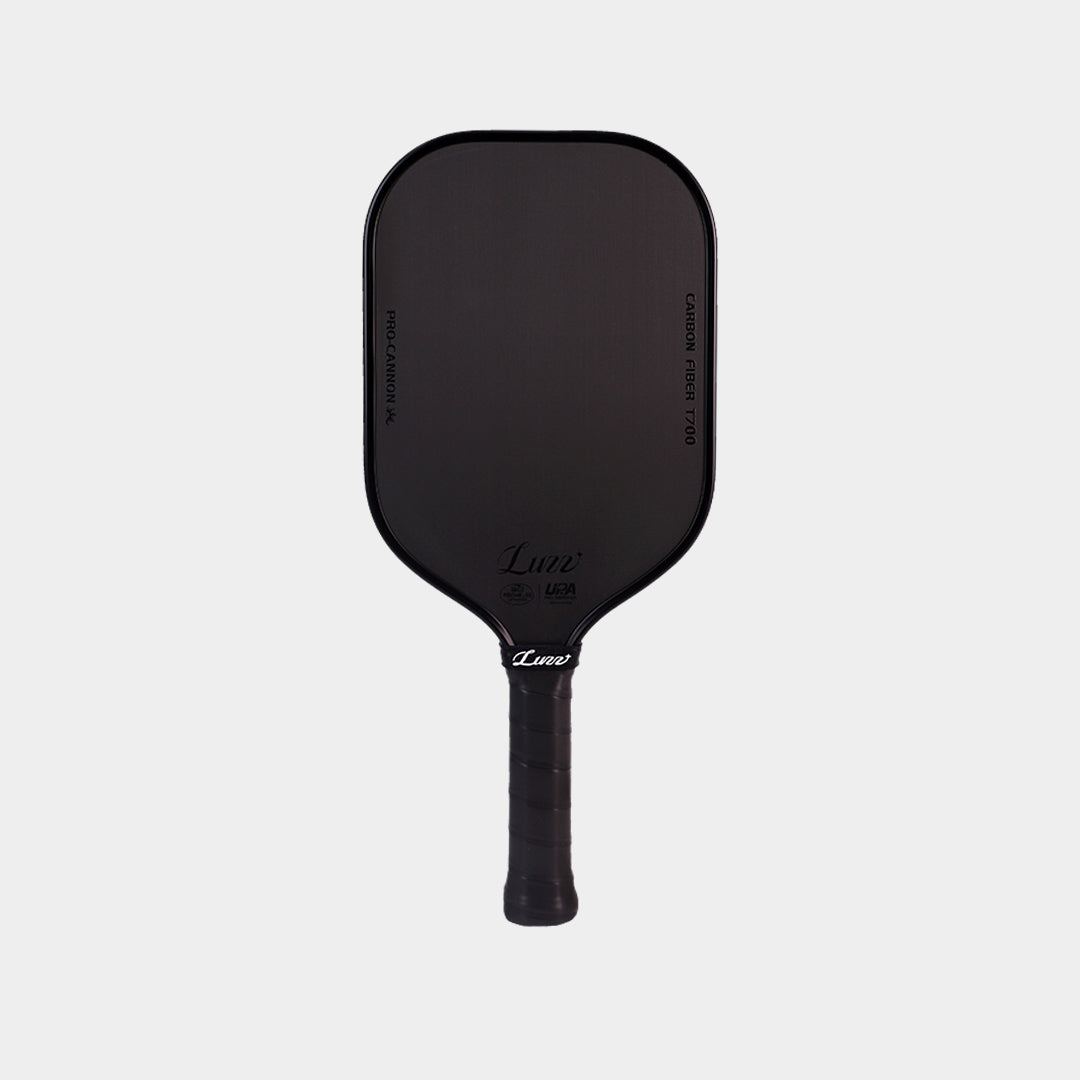
One honest equipment note: aggressive dinking with spin is noticeably easier on a paddle with a grittier face and softer feel. I play with a Luzz paddle, and the extra dwell time shows up most on exactly these shots - topspin dinks and resets.
Key Takeaways
Every dink is either dead or aggressive - decide before you swing, and let the ball's height and your balance make the call. Dead dinks buy time when you're compromised; aggressive dinks at the backhand hip and moving feet build the pop-up you'll eventually attack. The rally isn't won on the smash - it's won in the three dinks before it. If you want the mechanics side of keeping these dinks out of the net, the video above breaks down what I changed.
Frequently Asked Questions
What is a dead dink in pickleball?
A dead dink is a dink with no pace and a low bounce, landing short in the kitchen, designed to be unattackable. Its purpose is to reset the rally when you're stretched, off balance, or handling a ball at your feet - not to create offense.
Should beginners learn aggressive dinking?
Learn the dead dink first - consistency at the kitchen line is the foundation. But don't wait years. Once you can rally 10+ dinks without an error, start adding targets (backhand hip, feet) before adding pace. Placement-aggressive comes before pace-aggressive.
Is it better to dink crosscourt or straight on?
Crosscourt is the default - more net clearance, more court, more margin. Straight-on dinks are shorter and riskier but effective as a surprise, especially against a player leaning toward the crosscourt angle. Use crosscourt as your rally ball and straight-on as your change-up.
How do I stop popping up my dinks?
Pop-ups usually come from choosing the wrong dink - trying to do too much with a ball that demanded a reset - or from contacting the ball late with a rising paddle face. When you're stretched or the ball is low, commit fully to a dead dink. Balance first, ambition second.