

Pickleball Serve Strategy: How to Turn Your Serve Into a Weapon
The serve is the only shot in pickleball you hit with zero pressure. Nobody is rushing you, nobody is at the kitchen line waiting to punish you, and you get to set up exactly how you want. And yet most rec players treat it like a formality - a polite way to start the rally. If your pickleball serve strategy is "just get it in," you are donating the one free advantage the game gives you, every single point.
Here is the mental shift: your side only scores when you are serving. That means every serve is the opening move of a point you can actually win, and the quality of that opening move decides whether the returner steps in and rips a deep return at your feet or floats back something short and attackable. The difference between those two outcomes is usually not talent. It is intention.
This article covers the three serves worth building - the power serve, the lob serve, and the screwball - plus when to use each one, how to disguise them, and a ten minute practice plan. None of them require pro-level athleticism. They require deciding, before you toss the ball, what you are trying to do to the returner.
Watch: The 3 Hardest Pickleball Serves to Return (And HOW to hit them) - Briones Pickleball
Why "Just Get It In" Is Costing You Points
The "never miss your serve" advice made sense years ago, when rallies were slower and the serving team's disadvantage was smaller. It still contains a real truth - a missed serve is a 100 percent wasted scoring opportunity, and no serve strategy survives a 20 percent fault rate. But most players heard "don't miss" and rounded it down to "don't try anything."
Watch a typical 3.5 rec game and count how many serves land in the front half of the service box at medium pace, dead center. That serve asks nothing of the returner. They contact it at waist height, in rhythm, moving forward, and send back a deep return that pins the serving team behind the baseline. The serving team then has to hit a great third shot just to get back to neutral. The point started 0-1 in effort terms, and the server volunteered for it.
A serve with intention flips that. A deep, heavy serve forces the returner to contact the ball behind the baseline, off their back foot, which usually produces a shorter return - and a shorter return means you can step in and take your third shot on your terms. In my experience the deep serve does not win the point outright very often. What it does is make every shot after it easier. That compounding effect is the entire case for taking your serve seriously.
The Power Serve: Your Default Weapon
The power serve should be 70 to 80 percent of your serves, and it works at every level from rec play to the pro game. The goal is not raw speed - it is pace plus depth. A hard serve that lands three feet inside the baseline pushes the returner back and rushes their swing. A hard serve that lands at the kitchen line is batting practice.
The technique key is weight transfer, not arm speed. Load your weight on your back foot as the ball drops, then shift forward onto your front foot through contact. That momentum shift produces what feels like effortless power - the kind that comes from your body moving forward rather than your shoulder muscling the ball. Players who arm the serve top out fast and spray errors when they try to add pace. Players who drive with their legs and hips find another gear without their fault rate moving.
Think in three targets, not one: the backhand corner, the body, and the forehand corner. The backhand corner is the default - most rec players have a weaker backhand return and have to run around anything hit there. The body serve jams the returner and forces a decision - forehand or backhand - under time pressure, and indecision produces late contact. The forehand corner is the honesty check, the one you throw in so they cannot cheat toward their backhand all game. Rotate through the zones deliberately instead of hitting the same spot on autopilot.
The Lob Serve: Mess With the Bounce
The lob serve is the contrast serve, and the point of it is bounce height. If your power serve skids through low, the lob serve should bounce up dramatically higher - shoulder height or above. That vertical difference is what breaks the returner's rhythm. They have spent the whole game timing a low, driven ball, and suddenly they are waiting on a ball that hangs, drops steeply, and kicks up out of their preferred contact zone.
Two details separate a lob serve that earns weak returns from one that gets attacked. First, it still has to be deep - the target is the back 25 percent of the service box. A deep lob serve forces the returner to wait behind the baseline while the ball comes down, then contact it from further back than they want. A short lob serve is a gift: it sits up mid-court at exactly smashing height. Second, the height comes from getting under the ball and lifting through it with your legs and shoulder, not from flicking your wrist. Wrist-flick lob serves are the ones that sail long or come out with no height difference at all - too much can go wrong in a joint that small.
Targets: right at the returner's body, or the deep crosscourt corner. And do not overuse it. The lob serve works because it is different. Once or twice a game per opponent keeps it strange; every rally teaches them to time it.
The Screwball Serve: Break Their Timing
The third serve is the screwball - a heavy sidespin serve that bends in the air and kicks sideways off the bounce. This is the one to reach for when an opponent has timed up your power serve and is stepping into it comfortably. The sidespin makes the ball curve during flight, so the returner's read of where contact will happen keeps being slightly wrong, and slightly wrong reads produce late, off-center returns.
To generate the sidespin, brush around the outside of the ball with your paddle path traveling across it, not just through it. The spin should come from your arm and shoulder moving on that angled path - same principle as the lob serve, keep the wrist quiet. You will give up some depth and pace compared to your power serve; that is an acceptable trade because this serve's job is disruption, not pressure.
A note on expectations: at higher levels, players read spin serves better, and a mediocre screwball is easier to handle than a good power serve. Treat it as a change-up in the truest sense - maybe one serve in ten - and always against returners who have shown they struggle with spin. Against a returner who calmly slices back everything, go back to deep and heavy.
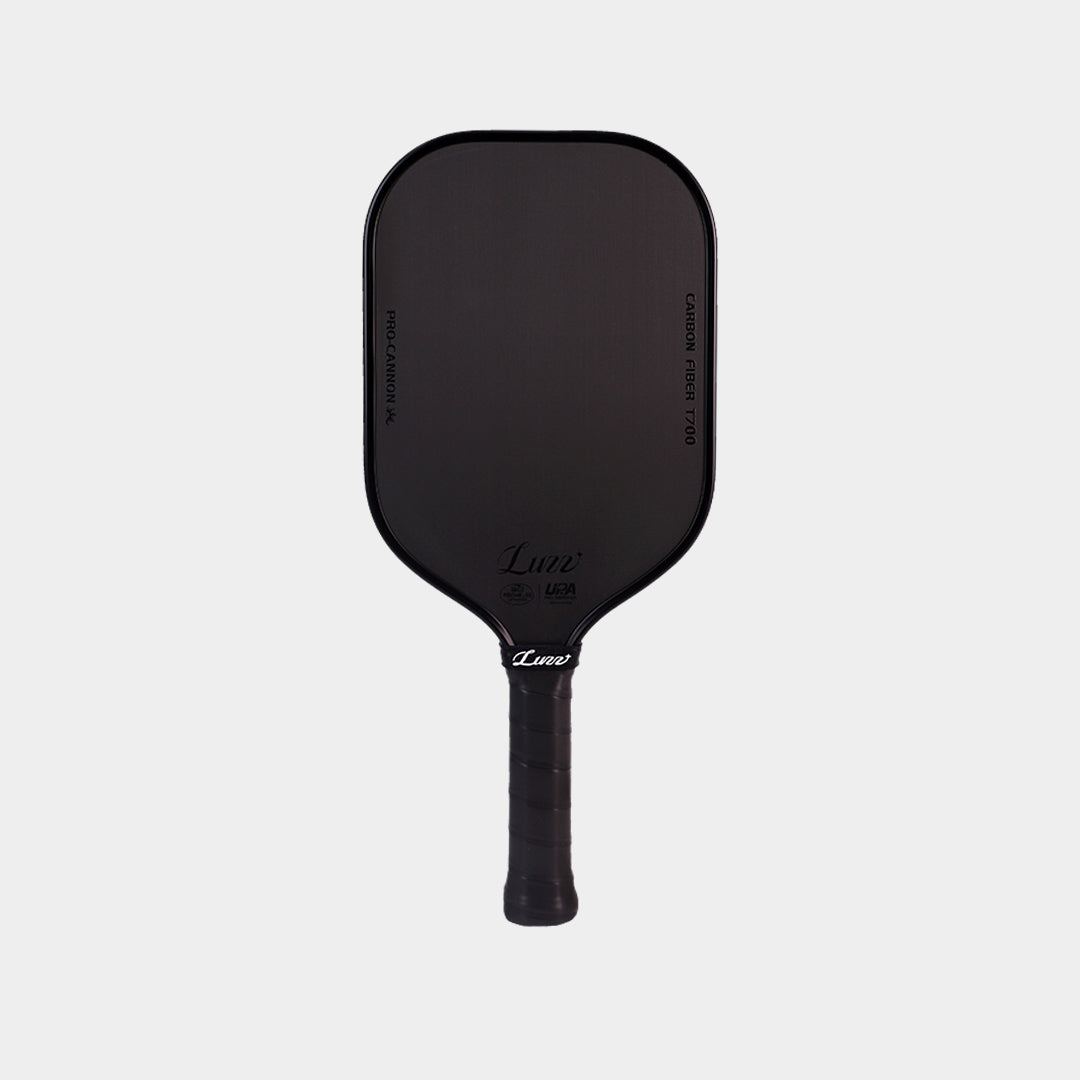
Spin serves live and die by paddle grit. I serve with a Luzz - the raw carbon face noticeably grabs the ball on that brushing contact, which is exactly what the screwball needs.
One Setup, Three Serves: The Disguise Layer
Here is the multiplier that makes the whole system work: your setup, preparation, and swing up to contact should look identical for all three serves. Same stance, same ball drop, same initial swing path. The differences - swing speed for power, the lift under the ball for the lob, the brushing path for the screwball - only appear at the last moment.
If your lob serve comes with a visibly different windup, the returner simply steps in three feet and takes it early, and the serve is worse than useless. If everything looks the same until contact, the returner has to prepare for the power serve every time - and preparing for pace is exactly the wrong setup for handling a high bounce or a sideways kick.
You do not need perfect disguise at rec level. You need to not telegraph. Film yourself hitting ten of each serve on your phone and watch the windups side by side. If you can tell which serve is coming at the halfway point of the swing, so can a decent returner. Close that gap and your three ordinary serves start playing like six good ones, because every serve carries the threat of the other two.
How to Mix Them: A Simple Serving Pattern
A workable pickleball serve strategy for game day looks like this. Establish the deep power serve early - first several service points, backhand corner, as deep as you can reliably land it. You are doing two things: applying default pressure and gathering information. Watch what comes back. Short returns off the backhand corner? Keep going there; do not change a serve that is producing attackable thirds.
Introduce the lob serve around the middle of game one, ideally on a point where the returner has just grooved two comfortable returns in a row. Save the screwball for returners who have started stepping into your power serve, or for momentum points where a cheap error is worth extra - 9-9, side out battles, closing points.
Two guardrails. First, your fault rate caps your aggression: if a serve misses more than roughly one time in ten under pressure, it is not a game serve yet - keep it in practice. Second, never hit a "special" serve twice in a row after it wins a point. The second one is exactly what the returner is now waiting for.
And remember what the serve is for: setting up the third shot. A deep serve buys you a short return, and a short return opens the drop-or-drive decision on your terms. If you have not read it yet, here is my framework for choosing between the drop and the drive.
A 10-Minute Serve Practice Plan
Serves are the easiest thing in pickleball to practice because you need nothing but a bucket of balls and an empty court. Ten focused minutes, twice a week, beats an hour of mindless repetition.
Minutes one to four: power serves, rotating targets - backhand corner, body, forehand corner, repeat. Lay a towel across the back quarter of the service box and count how many land on or behind it out of 20. That number is your depth score; track it week to week instead of guessing whether you are improving.
Minutes five to seven: lob serves. Same towel target, but now judge bounce height - a helper standing at the baseline should see the ball kick above their waist. Ten reps, focusing on lifting with the legs, wrist quiet.
Minutes eight to ten: screwballs, brushing around the outside of the ball, watching for visible curve in flight. Then finish with five "game serves": pick a target out loud before each toss and hit your power serve at it, because naming the target is what converts practice reps into intention under pressure.
In my experience the towel drill alone - just tracking your deep-serve percentage weekly - moves your serve more in a month than a year of starting rallies casually.
Key Takeaways
Your serve is the only free swing pickleball gives you, so put intention behind it. Build the deep power serve first with weight transfer and three targets, and make it 70 to 80 percent of your serves. Layer in the lob serve for bounce-height contrast and the screwball to break timing - sparingly, and only once each is reliable. Keep one identical setup for all three so nothing is telegraphed, and let the returner's responses tell you which serve to hit next. Ten deliberate minutes of practice a week is the entire price.
Frequently Asked Questions
What is the best serve in pickleball?
For most players, a deep power serve to the returner's backhand corner. It works at every level, pressures the return, and has the lowest technique risk. Specialty serves like the lob and screwball are complements, not replacements.
Should I hit my serve as hard as I can?
No. Depth beats raw pace - a controlled hard serve landing in the back quarter of the box does more than a max-effort serve that lands mid-box or misses. If your fault rate goes above roughly one in ten, dial the pace back.
What is a lob serve in pickleball?
A high, deep serve designed to bounce dramatically higher than a normal serve. The bounce-height change disrupts the returner's timing and forces contact outside their comfortable strike zone. It must land deep - a short lob serve is easy to attack.
How do I put spin on my pickleball serve?
Brush around the outside of the ball with an angled paddle path, generating the spin from your arm and shoulder rather than your wrist. A gritty paddle face helps significantly. Expect to trade some depth and pace for the movement.
How often should I use specialty serves?
Keep the power serve as your default and use the lob serve or screwball roughly one serve in five to ten. Specialty serves work because of contrast - overusing them lets the returner time them up and erases the advantage.