

Two-Handed Backhand Dink in Pickleball: When It Helps and When It Hurts
The two-handed backhand dink in pickleball is the shot everyone at the 3.5 to 4.5 level is suddenly trying, because the pros hit it and it looks stable. Here is the short version: the "twoey" dink gives you more control on balls that land at your feet or your backhand hip, and it makes topspin and disguise much easier. But it also shortens your reach, slows your hands on the next ball, and turns into a pop-up machine the moment you hit it with your arms instead of your legs.
I switched most of my backhand dinks to two hands about a year ago, and the shot did not "fix" my kitchen game overnight. What it did was raise the floor on my worst dinks - the ones off my back foot that used to float. This article covers how to hit the two-handed backhand dink, when it actually beats the one-hander, the three mistakes that undo it, and how to drill it without wasting court time.
Watch: Stop obsessing over Two-handed backhand dinks - Backpaddle Pickleball
What the Two-Handed Backhand Dink Actually Changes
A one-handed backhand dink is a wrist-and-forearm shot. Your paddle face is controlled by one set of small muscles, which is fine when you are balanced and the ball is in front of you. The problem shows up when the ball is low, on your body, or you are late. One hand has to rescue the shot by opening the face, and an open face at the kitchen line is how you feed your opponent a ball at shoulder height.
Putting your non-dominant hand on the handle changes the shot in three ways. First, the paddle face gets locked in by two hands instead of one, so it stops flipping open under pressure. Second, the power comes from your shoulders and legs rotating together, which means you can hit a shorter, more compact swing and still get the ball over. Third, topspin becomes almost automatic - the top hand naturally brushes up through the ball, so the dink dips after crossing the net instead of floating.
That last part matters more than people think. A dink that dips forces your opponent to hit up. A dink that floats lets them hit down. Most of the "why do my dinks keep getting attacked" questions I hear from 3.5s are really a floating-dink problem, and the twoey is the easiest mechanical fix for it. If you struggle with pop-ups generally, read why you keep popping up your dinks first - the twoey does not fix bad contact height, it just makes good contact easier to repeat.
How to Hit a Two-Handed Backhand Dink Step by Step
Grip. Keep your dominant hand in your normal continental grip. Place your non-dominant hand above it on the handle, touching or nearly touching, with the palm facing the back of the paddle. If your top hand is too far up on the paddle face, you lose the pivot; if it is too far down and overlapping, you lose control. Most players end up with the top hand roughly where a tennis player would have it for a two-handed backhand, and that is fine.
Stance and height. Get low before the ball arrives, not during the swing. A twoey hit from a standing position is worse than a one-hander from a low position, because the two-handed swing has less range to make up for a bad setup. Knees bent, weight on the balls of your feet, paddle already out in front at roughly net height.
Contact point. Out in front of your lead hip, not beside your body. The two-handed grip physically prevents you from reaching behind yourself, so if the ball gets past your hip you have to either step or give up and one-hand it. Take the ball early, on the rise if you can, and keep it in the zone between your knees and your hip.
Swing. Short. The motion is a compact low-to-high push from the shoulders, with the top hand doing the brushing. There is no backswing to speak of. If you can see your paddle going behind your back leg in a video of yourself, the swing is too big and the ball will sail long.
Finish. The paddle should finish pointing at your target, no higher than your chest. Immediately return to ready position with both hands still on the paddle - that recovery is where most of the time you lose to the twoey comes from, and we will get to that.
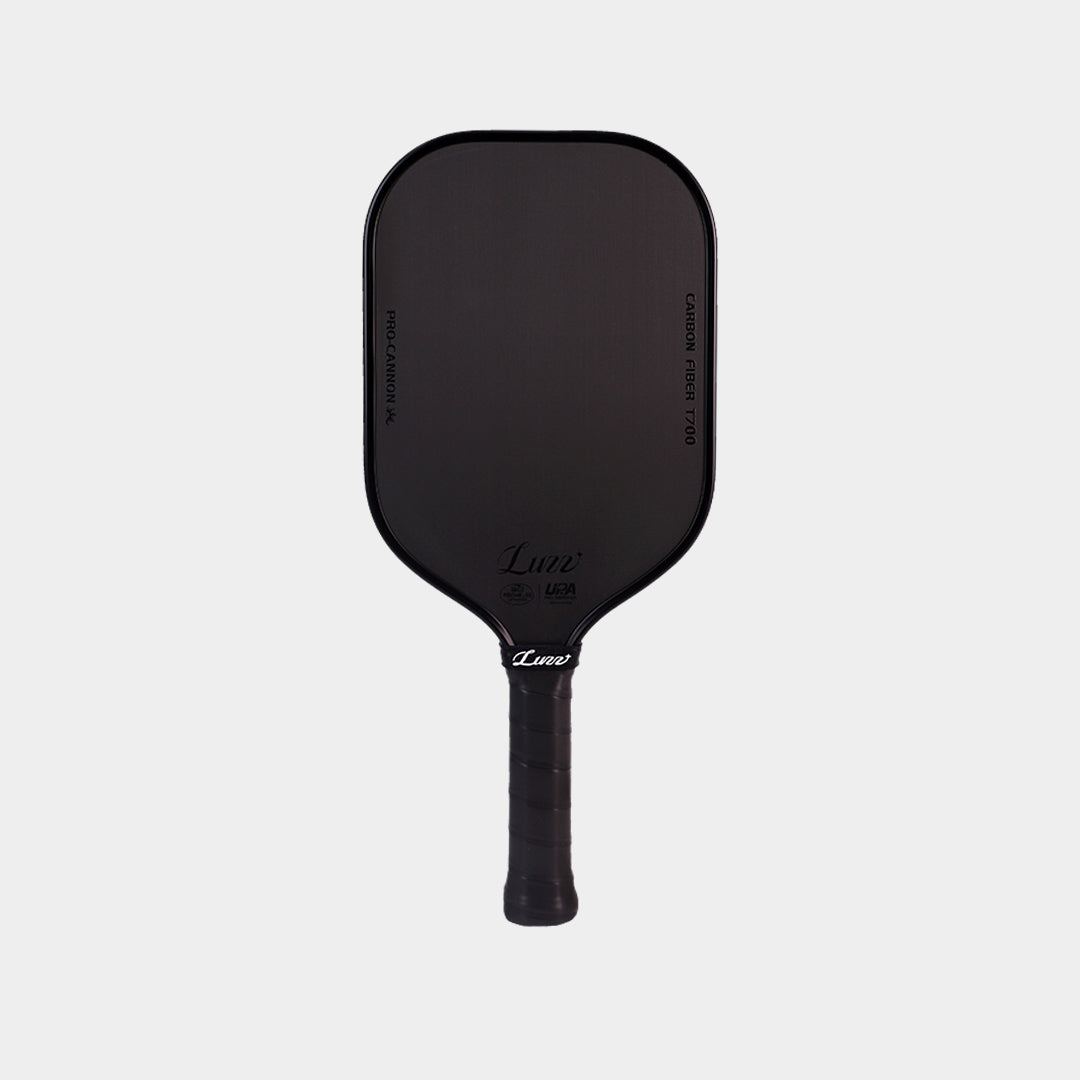
Handle length matters more for the twoey than for any other shot. I switched to a Luzz paddle with a longer handle so my top hand actually has somewhere to go, and the extra grip room made the two-handed dink feel natural instead of cramped.
When the Twoey Beats the One-Hander
The two-handed backhand dink is not a replacement for the one-hander. It is a specific tool for specific balls, and the players who get the most out of it are the ones who know which balls those are.
Balls at your feet or on your body. When the ball is low and inside your backhand hip, the twoey wins clearly. One hand has to scoop; two hands can hold the face and lift with the legs.
Cross-court backhand dinks. The extra face control and natural topspin make the sharp cross-court angle much more repeatable. This is the dink you use to pull the opponent wide and open the middle.
Attackable balls that are just slightly too low. The twoey is the bridge between a dink and a speed-up. Because the mechanics are the same as a two-handed backhand flick, you can disguise which one is coming until the last moment. My opponents lean the wrong way on this more than any other shot I hit. For the full decision framework, see two-handed vs one-handed backhand in pickleball.
When you are tired. Late in a tournament day, my one-handed dink gets loose because my forearm is cooked. The twoey holds up longer because bigger muscles are doing the work. This is not something you will see in a technique video, but it is real.
When the Twoey Hurts You
Wide balls. Two hands on the paddle shortens your reach by close to a full paddle length. A dink that lands two feet outside your backhand sideline is a one-handed shot, full stop. Players who refuse to let go of the twoey on wide balls end up lunging with both hands, hitting off their back foot, and popping it up. Let go. Reach with one hand. Two-hand the next one.
Fast exchanges. A two-handed grip is slower to reset to ready position and slower to flip to a forehand. If you dink with two hands and the opponent speeds up into your body, you are half a beat late compared to a one-handed player. This is why a lot of 4.5s two-hand the dink but release the top hand the instant the ball is struck - the hand goes on for the shot, off for the reaction.
High balls. Anything above your waist on the backhand side should not be a two-handed dink. Either it is attackable, in which case flick or drive it, or it is a ball you should be taking out of the air with a one-handed volley. Dinking a high ball with two hands is just adding steps to a shot that did not need them.
Standing tall. This is the one that gets everyone. The twoey feels so stable that players stop bending their knees, because the shot "works" even when they are upright. It works until it does not. An upright two-handed dink has no margin: your contact point drifts back, your face opens, and you send a ball that sits up at net height. Every twoey pop-up I have reviewed on my own video had the same cause - I was standing up.
The Three Mistakes That Turn It Into a Pop-Up Machine
Mistake one: arming it. Players learn the grip, then swing with their arms exactly the way they would with one hand, just with an extra hand along for the ride. The twoey only works if the rotation comes from the shoulders and the lift comes from the legs. The arms are basically a hinge. If your elbows are moving a lot during the dink, you are arming it.
Mistake two: letting the ball get to your hip. The two-handed grip has a very small window where it works well - roughly the space in front of your lead hip. Wait too long and the ball is beside you, which forces you to bend the wrists and open the face. The fix is not swing-related, it is footwork. Move your feet so the ball is in front of you. If footwork is the underlying issue, this footwork breakdown is the real fix.
Mistake three: hitting it too hard. Because the twoey generates topspin easily, players get greedy and try to make every dink dip aggressively. Then it clips the tape or lands short of the kitchen line and gets attacked. Most of your twoey dinks should be neutral: a soft push with a little spin that lands mid-kitchen. Save the heavy dip for balls where you are already in position and have a clear target.
How to Drill the Two-Handed Backhand Dink
You do not need a drill partner who can feed. You need repetitions with a specific constraint, because the shot has a narrow window and the only way to learn the window is to spend time inside it.
Wall dinks, two hands only. Stand seven feet from a wall, tape a line at net height, and dink backhand-only with two hands for five minutes. The wall does not care about angle, so this is pure contact and face control. Count consecutive clean contacts. My starting number was embarrassing; it climbs fast.
Cross-court backhand dinks with a partner. Both players in the left-hand kitchen position (for righties), dinking cross-court backhand to backhand. Rule: two hands on every ball you can reach with two hands, one hand only on balls that force you wide. This teaches the switch, which is the skill that actually matters in games.
Dink-then-attack. Partner feeds dinks; every fourth ball you get to attack with a two-handed flick from the same setup. The point of this drill is to make the dink and the flick look identical for the first half of the motion. If your partner can tell which one is coming, your backswing is different between the two.
Two to three sessions a week for a month is enough to make the twoey a default rather than a decision. That was roughly my timeline, and I am not a natural athlete - I came to pickleball with zero tennis background.
Key Takeaways
The two-handed backhand dink in pickleball is a face-control and topspin tool, not a magic upgrade. It wins on low balls, cross-court angles, and disguised attacks; it loses on wide balls, fast exchanges, and anything above your waist. The single biggest reason it fails is standing tall and swinging with your arms. Bend your knees, take the ball in front of your lead hip, keep the swing short, and let go of the top hand the moment reach or speed demands it. Do that and the twoey raises the floor on your worst dinks, which is where most rec-level points are actually lost.
Frequently Asked Questions
Should I dink with one hand or two hands in pickleball?
Use two hands on low balls in front of your backhand hip and on cross-court backhand dinks. Use one hand on wide balls, fast exchanges, and anything above your waist. Most strong players use both and switch based on the ball.
Why does my two-handed backhand dink keep popping up?
Almost always because you are standing tall or letting the ball get beside your body. Get low before the ball arrives and take it in front of your lead hip. Also check that the swing is coming from your shoulders and legs, not your arms.
Where does my non-dominant hand go on the paddle for a two-handed dink?
Directly above your dominant hand on the handle, palm facing the back of the paddle. Do not let it creep up onto the paddle face. A longer-handled paddle makes this grip more comfortable.
Do the pros use a two-handed backhand dink?
Yes - it has become standard at the pro level, especially for cross-court backhand dinks and disguised flicks. Most pros still go to one hand on wide balls and in quick hand battles.
Does a two-handed dink slow down my hands?
Slightly, if you keep both hands on the paddle after contact. The fix is to release the top hand as soon as the ball leaves your paddle so you can reset to a one-handed ready position for the next ball.