

How to Counter a Speed Up in Pickleball (Even With Average Hands)
If you keep losing hand battles at the kitchen line, the fix is probably not faster hands. Learning how to counter a speed up in pickleball is mostly about what happens before the ball gets attacked - your paddle position, your read, and your decision about which balls to fight back on and which to simply block. Most players get all three wrong, then blame their reflexes.
I know because I did exactly that for over a year. I assumed my hands were decent - quick enough, anyway. Then I started filming my games and got honest with myself: my hands are slower than I thought, and they are slower than yours probably are too. What finally improved my counters was not reaction training. It was preparation. Once I fixed my ready position and stopped swinging at balls I had no business swinging at, I started winning exchanges against players whose hands are clearly faster than mine.
This article breaks down the whole sequence: why hand speed is overrated, how to set up before the attack, how to read a speed up before it happens, and the three-choice framework that tells you what to do when the ball is coming at your chest.
Watch: Don't be cocky, Your Hands are SLOWER than you Think - Backpaddle Pickleball
Why You Lose Hand Battles (It's Not Your Reflexes)
A speed up from the kitchen line reaches you in a fraction of a second. There is no drill, supplement, or paddle that gives you enough raw reaction time to see the ball, decide what to do, and execute a clean swing in that window. Nobody has that - not even pros.
So how do good players counter so consistently? They are not reacting faster. They decided earlier. Before the speed up ever happens, a good player has already done three things: set their paddle in a position that covers the most likely target, read the cues that an attack is coming, and pre-committed to a simple response. When the ball comes, they are not making a decision - they are executing one they already made.
That is the entire mental shift this article is built on. Losing a hand battle usually means you lost it two seconds earlier, when your paddle was hanging at your knees and you were admiring your own dink. In my experience, most 3.5 to 4.0 players lose the majority of their hand battles before the opponent even starts the swing. The good news: preparation is trainable in a way that raw reflexes are not. You cannot meaningfully change your reaction time. You can absolutely change your paddle position, your reads, and your shot selection - this week.
Set Your Ready Position Before the Speed Up Comes
The single highest-value change: keep your paddle up and in front of you at all times at the kitchen line. Not at your waist. Not resting against your leg between shots. Up, around chest height, with the paddle head slightly above your wrist.
Here is the checklist I actually use:
- Paddle at chest height, out in front of your body, roughly a forearm's length away from your torso. If your elbows are pinned to your ribs, you have no room to punch forward.
- Favor the backhand side. Hold the paddle slightly toward your non-dominant shoulder, in a backhand-ready grip. Most speed ups target the backhand shoulder and hip because it is the hardest spot to defend. If your paddle sits in a neutral or forehand position, you will never get it across your body in time.
- Loose grip until contact. A death grip slows your hands and pops balls up. Hold the paddle around a 3 or 4 out of 10 pressure and firm up only as you block or counter.
- Reset after every shot. This is the part everyone skips. Hitting a dink and letting the paddle drift down as you watch it is exactly when the attack comes. Dink, then paddle back up. Every single time.
When I fixed my ready position, counters I used to miss completely turned into playable blocks - not because my hands got faster, but because the paddle was already 80 percent of the way there.
Read the Speed Up Before It Happens
Speed ups are telegraphed way more often than people think, especially at the amateur level. You just have to know what to look for. It also helps to understand the decision from the attacker's side - I broke down which balls are actually worth speeding up in When to Speed Up in Pickleball, and the exact cues that tell you to attack are the ones that warn you an attack is coming.
Ball height is the biggest cue. If your dink floats and would cross the net above the tape, assume it is getting attacked. Do not wait to find out - get your paddle up and expect the ball at your body. A dink that lands short and low almost never gets sped up, so you can relax a notch on those.
Watch the backswing. A player about to dink takes almost no backswing. A player about to speed up drops the paddle head or pulls it back, even a little. When you see that paddle load up, stop thinking dink.
Know the patterns. Most rec players speed up the same ball every time - the slightly high one to their forehand - and they hit it to the same spot every time, usually your backhand shoulder. Pay attention for two or three rallies and you will have their pattern. When I play someone new, I treat the first few kitchen exchanges as a scouting report: what do they attack, and where does it go? After that, their "surprise" speed up is not a surprise anymore.
Court position matters too. If your opponent has stepped slightly back or squared up their chest to you, the attack probability just went up. Players get low and sideways to dink; they get tall and square to swing.
Block, Counter, or Duck: The Three-Choice Framework
When the speed up comes, you have exactly three good options. Picking the right one matters more than executing any of them perfectly.
Block when the ball is at your body or you are late. A block is a dead-paddle reset: firm wrist, no swing, angle the face slightly down, and let the pace die into their kitchen. This is your default. It is the highest-percentage response and it takes the attacker's speed advantage away completely. A good block turns their best shot into a neutral rally.
Counter when the ball is between your waist and shoulders with room in front of you. This is the punch-back. Short, compact, contact out in front - more on the mechanics below. The counter is how you punish lazy speed ups, and it is what makes opponents stop attacking you.
Duck or leave anything at your shoulders or higher. This is the choice amateurs refuse to make. A ball speeding at your head or above your shoulders is going out the vast majority of the time. Swinging at it does your opponent a favor - you turn their overhit attack into a live ball, and usually a pop up. Get your paddle and body out of the way and let it fly. In my experience, simply letting high balls go is worth more free points at 4.0 than any counter I have ever hit.
The framework only works if you commit before contact. Waist to shoulders with time: fight. At the body or rushed: block. High: duck. Decide in that order, decide early, and stop swinging at everything - that alone will win you more hand battles than a year of reaction drills.
Where to Aim Your Counter (Targets That Win)
A counter is not a winner attempt. That mindset shift matters. Your counter's job is to put the attacker in a worse position than you, so the NEXT ball is easy. Aim for two-shot wins, not one-shot highlights.
First target: the attacker's paddle-side hip and shoulder. Right back at the person who sped up. They are recovering from their own swing, and their paddle is out of position for a split second. The paddle-side hip - the spot they physically cannot get a clean paddle on - is the single best target in a hand battle.
Second target: down the middle. Between two opponents, the middle ball creates hesitation, and there is no sideline to miss into. When in doubt, middle.
What to avoid: the sidelines. Trying to thread a counter down the line under pressure is how you donate points. The margin is tiny, your contact is rushed, and even when you make it, a decent player covers it. Save the line for putaways, not counters.
One more thing - height discipline. A counter that sails high comes right back at you faster. Aim at their chest or lower and accept that some counters get returned. You are playing for the exchange, not the single shot.
The Backhand Counter: Your Most Important Weapon
Since most attacks come to your backhand shoulder, your backhand counter will decide most of your hand battles. Mine used to be my biggest weakness, and fixing it changed how often opponents even bothered attacking me.
Keep it compact. The backhand counter is a punch, not a swing. Six inches of forward movement, starting from your ready position. If you take the paddle back to load up, you are already too late - remember, the whole point is that nobody has time for a backswing.
Contact out in front. Meet the ball in front of your chest, not beside your ribs. Contact out front lets you direct the ball down and toward a target. Contact late, beside your body, sends the ball wherever it wants to go - usually up.
Firm wrist through contact. The wrist does not snap or flick on a counter. Firm up the grip at contact, drive the paddle face at your target, and stop. Think of hitting a nail with a hammer, not cracking a whip.
Consider two hands. I hit my backhand counter with two hands, and for me the second hand is free stability - the paddle face stays square under pace, and balls that used to twist my paddle now come back flat and heavy. If you already use a two-handed backhand for drives and dinks, use it for counters too. If you are a one-hander, that works as well - the compact punch and firm wrist matter more than the hand count.
Drills to Train Counters Without a Coach
You do not need a coach or a machine to build a real counter. You need a partner, ten minutes, and honesty about what actually happens in your games.
Speed up battle drill. You and a partner at opposite kitchen lines. Dink cooperatively, and either player is allowed to speed up any ball above net height. Play the exchange out. This is the closest thing to a real hand battle you can rehearse, and it trains the read and the response together. Play games to 11, attacks only count if the exchange is won.
Body target drill. Partner stands at the kitchen and hits medium-pace balls straight at your body - backhand shoulder, hip, chest, no patterns. Your only job: block everything softly into the kitchen from a proper ready position. Boring, and it fixes the exact thing that loses games. Then add counters on anything waist to shoulder height.
Wall work. A wall gives you unlimited speed up reps. Stand eight or nine feet away, hit firm volleys at a spot, and keep your swing compact - the wall punishes big backswings instantly because the ball is back on you before you can recover. Three sets of 30 seconds of continuous backhand volleys will humble you the first week.
Film one session. Set your phone behind the court and record your rec games. Watch every hand battle you lose and ask: was my paddle up? Did I swing at a ball that was going out? Did I pick the wrong response, or execute the right one badly? In my experience the answer is paddle position at least half the time - which is the easiest fix on this entire page.
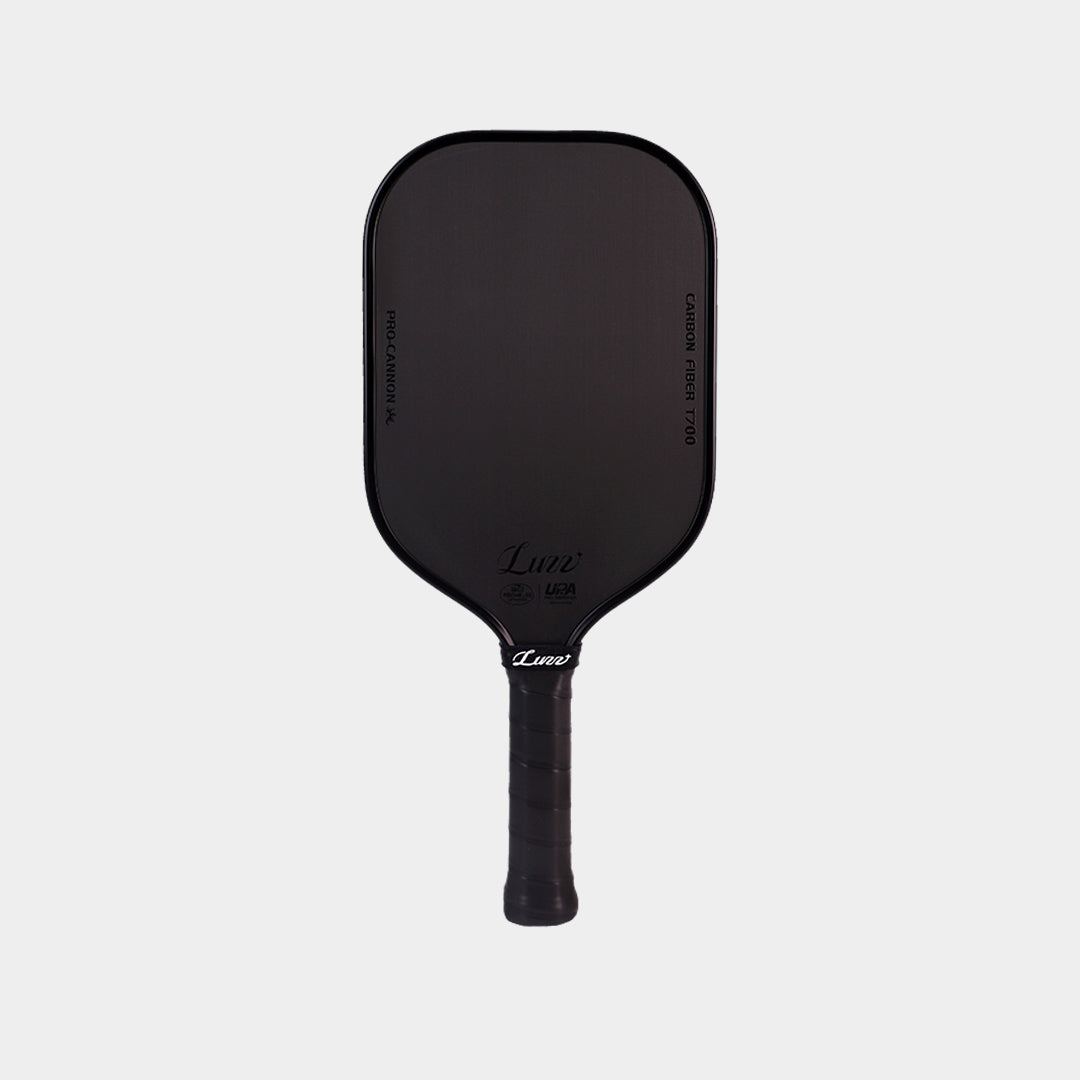
Your paddle matters more in hand battles than anywhere else in the game, because counters live on the edge between pop and control. I have been playing the Luzz Cannon lately - enough pop to make counters hurt, enough control that blocks die in the kitchen instead of floating.
Key Takeaways
You do not counter a speed up with reflexes - you counter it with decisions made before the ball is hit. Keep your paddle up and favoring the backhand between every shot, read ball height and backswing to see attacks coming, and run the three-choice framework: block at the body, counter between waist and shoulders, duck anything high. Aim your counters at the attacker's paddle-side hip or down the middle, and treat every counter as the setup for the next ball, not a winner. Train the pattern with a partner for ten minutes a session, and your "slow hands" will stop being the story you tell about why you lost.
Frequently Asked Questions
Should I counter with my forehand or backhand?
Whichever side the ball dictates - but train the backhand, because that is where most attacks go. Cover the backhand side in your ready position and let the rare forehand-side attack be the adjustment, not the other way around.
What is the best ready position for hand battles?
Paddle at chest height, out in front of your body, angled slightly toward your backhand side, with relaxed grip pressure until contact. Reset to this position after every single shot at the kitchen line, not just when you expect an attack.
Should beginners try to counter or just block?
Block first. A reliable soft block into the kitchen neutralizes attackers and wins points at 3.0 and 3.5 all by itself. Add counters once your block is dependable - counters built on a shaky block collapse under pressure.
How do pros counter speed ups so fast?
Mostly preparation, not reflexes. Pros hold a disciplined ready position, read attacks from ball height and body language before contact, and pre-commit to targets. Their hands are quicker than average, but the visible speed difference comes from deciding earlier, not swinging faster.