

How to Beat Better Pickleball Players (Without Suddenly Getting Better)
If you want to know how to beat better pickleball players, start here: they almost never beat you with winners. They beat you by waiting. Better players have figured out that at 3.5, 4.0, even 4.5, the overwhelming majority of points end because somebody donated one - a dink into the net, a speed-up into a paddle that was already there, a third shot that floated up and begged to be crushed. Their entire game is built on being the second-to-last person to make a mistake.
So the question is not how to hit harder or cleaner than someone above your level. You are not going to win that argument this afternoon. The question is how to make the point last longer than they want it to, and how to stop handing over the free points that make their job easy.
That shift - from trying to out-hit better players to simply refusing to out-error them - is the biggest thing that changed for me when I started regularly playing up. What follows is the tactical version of it: seven adjustments you can make in your next game, none of which require a shot you do not already own.
Watch: Defending Strong Drives - Backpaddle Pickleball
Why You Actually Lose to Better Players
Go back through a game you lost badly and count how the points ended. Not who was more talented - just how each rally finished. In my experience the tally is lopsided in a way that has nothing to do with their best shots. You netted a dink. You popped a ball up and they put it away. You tried a low-percentage speed-up at 7-9. You hit a short return and got driven off the court.
A handful of points genuinely ended because they hit something you could not touch. Most of them ended because you gave the point away, usually while trying to do something you cannot do reliably yet.
This matters because it tells you where the gap actually is. It is not that better players have a shot you have never seen. It is that they have a much shorter list of shots they are willing to attempt under pressure, and they almost never attempt something outside that list just because the moment feels urgent. Beating them starts with shortening your own list.
The Kitchen Is the Great Equalizer
Everything that separates a better player from you gets smaller at the kitchen line. Their reach matters less. Their speed matters less. Their legs, which are where a lot of the real difference lives, matter almost not at all. A dink rally is a contest of patience and hands, and patience is free.
This is why the single most effective tactic against a stronger opponent is to drag them into a long soft exchange and stay there. Not to grind out of some moral commitment to the soft game, but because that is the phase of the point where the skill gap compresses the most. Out in the transition zone or trading drives from the baseline, their advantages are fully expressed. At the line, you are much closer to even than the rating difference suggests.
The practical version: get to the line and stay at the line. Do not back up after a dink because you are nervous about a speed-up. Backing up is how you turn a neutral kitchen rally - where you are competitive - back into an athletic contest, where you are not.
Stop Speeding Up Into Hands That Are Ready
Here is the mistake I see most often from players who are losing to a better team, and I made it constantly myself: they speed up to make something happen.
The problem is that a better player sitting at the kitchen line is already expecting it. Their paddle is up, their eyes are on your paddle face, and a mediocre speed-up at a ready opponent is not an attack - it is a gift with pace on it. You have handed them a ball above the net, at a height they like, with their hands set. That is the exact situation they have spent years learning to counter.
Attack when the ball earns it, not when your patience runs out. The ball earns it when it is above net height, out in front of you, and your opponent is reaching, leaning, or recovering. Against better players that moment arrives less often, which is frustrating, and it is also exactly why you have to wait for it. A speed-up you win at 3.0 is a speed-up you lose at 4.0, and the shot did not change - the hands on the other side did. For a full framework on picking the right ball, see my guide on when to speed up in pickleball.
Reset Instead of Countering When the Drive Comes Hard
When a strong player drives at your feet, you have two options and most players pick the wrong one. The instinct is to counter - to meet pace with pace and swing back. Against someone better, that trade usually ends with the ball in the net or sailing long, because countering a hard drive is a precision skill that needs a quiet paddle and a lot of repetition.
The better option is to take the pace off. Soft hands, paddle out front, let the ball come into the face rather than swinging at it, and float it back into the kitchen. You have not won the point. You have refused to lose it, and you have handed them the exact problem they were trying to avoid: another ball they have to solve from the soft game. If resets are a weak spot, start with how to reset in pickleball.
Playing up a level puts you in this situation far more often than rec play does, and it is where paddle feel stops being a gear-nerd conversation and starts being practical. A paddle you can hold loosely and still control is doing real work here.
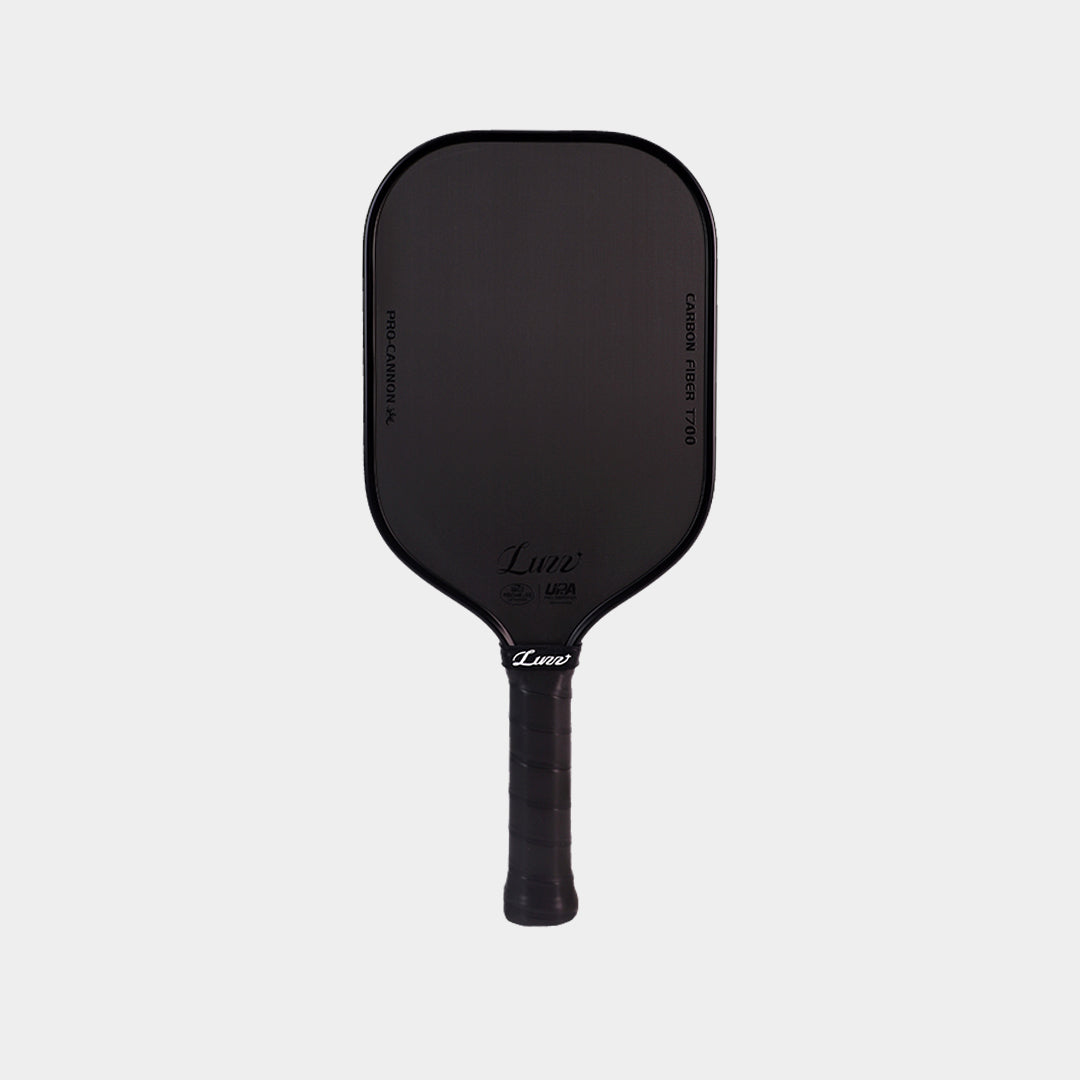
The paddle I have been playing with lately is from Luzz. The thing I care about for resets is how quiet the face is when I barely grip it - this one lets me block a hard drive without the ball jumping off the paddle. Solid build for the price.
Hit Your Return Deeper Than Feels Comfortable
The cheapest advantage available to you against a better team is a deep return, and almost nobody at the intermediate level takes it.
A short return lets the server step in, take the ball early, and drive it with their body moving forward - which is the shot that pins you at the baseline and starts the point on their terms. A return that lands within a couple of feet of the baseline does the opposite. It keeps them behind the ball, it makes the third shot harder, and it buys you the extra half second you need to get all the way to the kitchen line instead of getting caught in the transition zone.
High and deep beats low and short here. Give yourself margin over the net; you are not trying to hit a winner off a return, you are trying to buy time and position. If you only change one thing from this article, change your return depth. It costs nothing, it requires no new technique, and against stronger opponents it removes their easiest way to start a point in control. More on the common errors in return of serve mistakes.
Dink to the Middle to Erase Their Angles
Cross-court dinks look like the sophisticated choice and they are, in the right spot. Against a better player, though, every wide ball you hit gives them geometry you then have to cover. The sharper the angle you create, the sharper the angle available to them on the reply, and they will find it faster than you can reset your feet.
Dinking to the middle of the court takes that away. From the middle, the angles available to your opponent are narrow, and a narrow reply is a ball you can reach without scrambling. It also creates a decision between two opponents about who takes it, which is a small amount of free pressure on every ball. (It is also the reason you keep losing points down the middle when your own team gets it wrong.)
Use the middle as your default and the cross-court or the sideline as the shot you pull out when you have already earned an advantage. Better players exploit space; stop manufacturing it for them.
Stop Targeting the Weaker Player on Every Single Ball
This one is going to sound backwards, because "hit to the weaker player" is the first strategic advice most of us ever got.
It works, and that is the problem. In a rec game it works so well that it quietly becomes your only plan, and two things follow. First, you stop developing the shots you avoid - if you have spent a year never hitting to the strong player's forehand, you still cannot hit to a strong player's forehand. Second, better teams read it inside three points and start covering for it. They will stack, they will switch, the stronger player will simply poach everything in the middle, and your whole strategy evaporates.
The nuance: in a tournament, where the only thing that matters is the result, lean on the matchup. In rec play and in any game you are using to get better, make the weaker player your majority option rather than your only one. Mix in enough balls at the stronger opponent that they cannot cheat, and that you are actually practicing the shots that will matter when there is no weak link to find.
Pick One Thing Per Game, Not Seven
If you try to apply all of this at once, you will play worse, not better. Too much thinking produces slow feet and tentative hands, which is its own way of losing to a better player.
Pick one. Deep returns for a whole session. Or: no speed-ups unless the ball is above the net and out in front. Or: every dink to the middle unless you already have an advantage. Play the entire game under that single constraint and let everything else happen on instinct.
This is also the honest answer to why playing up helps even when you lose. You are not there to win today. You are there to find out which of your shots survive contact with someone who does not miss, and the only way to find that out is to keep showing up with one thing you are trying to fix.
Key Takeaways
Beating better pickleball players is mostly subtraction. Stop donating points with speed-ups into ready hands, short returns, and cross-court dinks that open angles you cannot cover. Get to the kitchen line, where the skill gap is smallest, and make them solve one more soft ball than they want to. You will not out-hit someone above your level today, but you can absolutely make them earn every single point - and against a lot of stronger players, that alone is enough to win games you are supposed to lose.
Frequently Asked Questions
Should I play up if I lose every game?
Yes, as long as you are getting rallies and not just getting served off the court. The value of playing up is feedback - you find out which shots hold up against someone who does not miss. If the games are 11-1 and the points last two shots, mix in some even games too so you are still getting reps.
What is the fastest way to beat better pickleball players?
Deeper returns. It requires no new technique, it keeps the stronger team behind the baseline, and it gets you to the kitchen line in time. It is the single highest-return change most intermediate players can make in one session.
Is it bad strategy to target the weaker opponent?
It is good strategy and a bad habit. Use it when the result matters, but if it is your only plan, better teams will cover for it and you will never develop the shots you are avoiding.
Why do my speed-ups work in rec play but not against better players?
Because the shot was never the reason it worked. At lower levels, a ball with pace at someone's body produces a miss. Better players keep their paddle up and are already watching your paddle face, so a speed-up from below net height just gives them a ball they like. Wait for one above the net and out in front.
Keep reading
- How to Block a Drive in Pickleball - the exact skill you need when a stronger player drives at your feet.
- Why You're Stuck at 4.0 in Pickleball - what actually holds players back when playing up still is not working.
- How to Reduce Unforced Errors in Pickleball - because beating better players mostly means giving away fewer points.