

How to Find Your Opponent’s Weakness in Pickleball (and Exploit It)
Every player you face is leaking information. The way they hold their paddle while waiting for a ball, the grip they use, which dinks they avoid, how fast they rush through the middle of the court - all of it tells you where the holes in their game are. Learning how to find your opponent's weakness in pickleball does not require film study or a scouting report. Most of what you need is visible in the warmup and the first three rallies, if you know what to look for.
Most rec players never look. They play their own game, hit their favorite shots, and let close games come down to luck. Meanwhile the 4.5 who keeps beating you has quietly figured out by the second rally that you do not trust your backhand, and now every important ball is going there.
I know because I have been on the receiving end. A while back somebody spent an entire rec night feeding my backhand dink, and I could not figure out why every game felt uphill. That night sent me down this rabbit hole. This article covers the reads that actually work at the 3.5 to 4.5 level - ready position, grip, dinks, hands, third shots, and the transition zone - plus the two ways to exploit a weakness once you find one.
Watch: Exploit Their WEAK SPOT - Zane Navratil Pickleball
Read Them Before the First Point
Scouting starts before anyone serves. Physical traits give you the first layer: a long-armed player can reach further into the kitchen and take more balls out of the air, while an older or slower-moving opponent may struggle when you make them cover ground. None of this is definitive on its own, but it sets your starting assumptions - and starting assumptions beat no assumptions.
The ready position is worth far more. A paddle cocked to the backhand side says this player wants backhands and is probably comfortable flicking from that wing. A paddle waiting flat on the forehand side says the opposite. A low paddle usually belongs to someone who likes reaching in for aggressive flicks off the bounce; a high paddle belongs to someone set up to defend speedups.
Body posture completes the picture. Players in a wide, low stance are generally looking to take dinks out of the air and pressure you at the line. Players standing tall tend to back off the kitchen line and play everything off the bounce. You can gather all of this while your partner rallies crosscourt in warmup - which is exactly when almost nobody is paying attention.
Check Their Grip Before Their Shots
Grips have built-in trade-offs, and at the rec level most players never change grips mid-rally, which makes the read even more reliable than it is for pros.
An eastern backhand grip means the flick and the backhand roll are threats, but the forehand side gets awkward - especially forehand volleys at full stretch. A semi-western grip means a big forehand and real trouble on anything fast to the backhand or high on that side. A neutral continental player has fewer glaring holes but usually less pop on both wings.
You do not need to name the grip precisely. Just ask one question in warmup: which side does this grip make easy, and which side does it make late? Then aim at late.
Watch the Dink Rally for Three Tells
The dink rally is where weaknesses surface, because nobody can hide technique for twenty soft shots in a row.
First, watch for variance. Give someone the same ball twice and watch what happens. If the same crosscourt dink comes back clean once and popped up the next time, that shot is not owned - it is rented, and it will break down under pressure late in a game.
Second, watch for bail-outs. A player who keeps speeding up mediocre balls out of backhand-to-backhand rallies is not being aggressive - they are escaping a rally they do not trust themselves to stay in. That panic speedup is a weakness wearing an aggression costume. Keep them in that pattern and let them donate.
Third, watch for hiding. If someone runs around their backhand to hit forehands from the backhand corner, they are telling you there is a secret over there they do not want exposed. Pull them wide to the forehand first, then play the next ball behind them so they have to hit the backhand on the move.
One more positional tell: does the player hold the kitchen line or back up off it? Someone who backs up is rarely a threat to speed up from back there - push dinks deep at their feet and take the line yourself. Someone who holds and reaches for everything is hunting flicks, so keep your dinks below the tape and off to the sides.
Probe Their Hands Early
Some information you have to buy. Early in a game, hit one medium-pace speedup at your opponent's paddle-side hip - not to win the point, but to see what comes back.
Compact, quiet hands that punch the ball back with no backswing belong to a player who wants the firefight. Big swinging volleys mean the opposite: this player loses exchanges once the ball comes back fast, because that backswing costs them their next shot. Slow hands show up as jammed, late contact - if you see it, go back to that spot relentlessly, because reaction time does not improve mid-match.
Also note the guessers. Some players survive hands battles by committing early to one side, and the flashy ones - behind-the-back saves, tweeners, catching wide balls instead of playing them - are often guessers in disguise. A guesser who reads one attack right will eat the next three. Keep attacking; the math is on your side.
Run the Middle Return Test on Third Shots
Here is the cheapest scouting trick in pickleball: return serve right down the middle and watch who takes it. Whoever steps in decisively wants the third shot and trusts it. Hesitation, or an awkward "yours-mine" moment, tells you the middle is a soft spot all game long.
Then separate flashy from effective. Some players hit gorgeous topspin thirds that miss six times out of ten. Others look like hackers but shovel every single drop into the kitchen and walk their team to the line. Judge thirds by how often the team gets to the net behind them, not by how they look.
Two adjustments follow. If one opponent is a strong poacher, it can be worth returning to the better dropper anyway, just to keep the poacher pinned at the baseline. And if one opponent is shaky moving through the middle of the court, return to that player deliberately so their own third shot forces them to travel through the zone where they are weakest.
The Transition Zone Never Lies
How someone moves from the baseline to the kitchen tells you almost everything about their confidence. A player who works in methodically - split-stepping, resetting, advancing in stages - is comfortable there and will not give you much. A player who sprints through like the zone is on fire is hiding something: usually a reset they do not trust.
Rushers also tend to swing away from mid-court instead of resetting. They will occasionally rip a highlight winner past you, but on a percentage basis you want them hitting from back there all day. Keep the ball at the feet of the rusher and make them play the shots they sprint to avoid. The flip side read: someone who hits a good reset but is slow to follow it forward can be pushed right back out with a deep ball, over and over.
I wrote a full breakdown of how to move through this part of the court without donating points in my article on getting stuck in the transition zone.
Two Ways to Exploit What You Find
Finding the weakness is half the job. Exploiting it comes in two flavors, and picking the right one matters.
The first is constant pressure: hit the same spot 20 or 30 times and let it erode. Some players crack under pure repetition - by the fifteenth backhand dink the popups start arriving. This works best against weaknesses of consistency.
But most decent players do not break down when they are balanced and set, even on their weak side. That is when you open the weakness up instead. Feed the strong side first - stretch them wide to the forehand - then attack the weak side while they are moving. A backhand hit from a planted, ready position might be fine; the same backhand hit on the move, off balance, at full stretch is where the popup lives. Weakness plus movement is the formula.
And to be clear: targeting a weakness is not poor sportsmanship - it is the game. The night my backhand got targeted stung, but it also told me exactly what to drill next. Do the same when it happens to you.
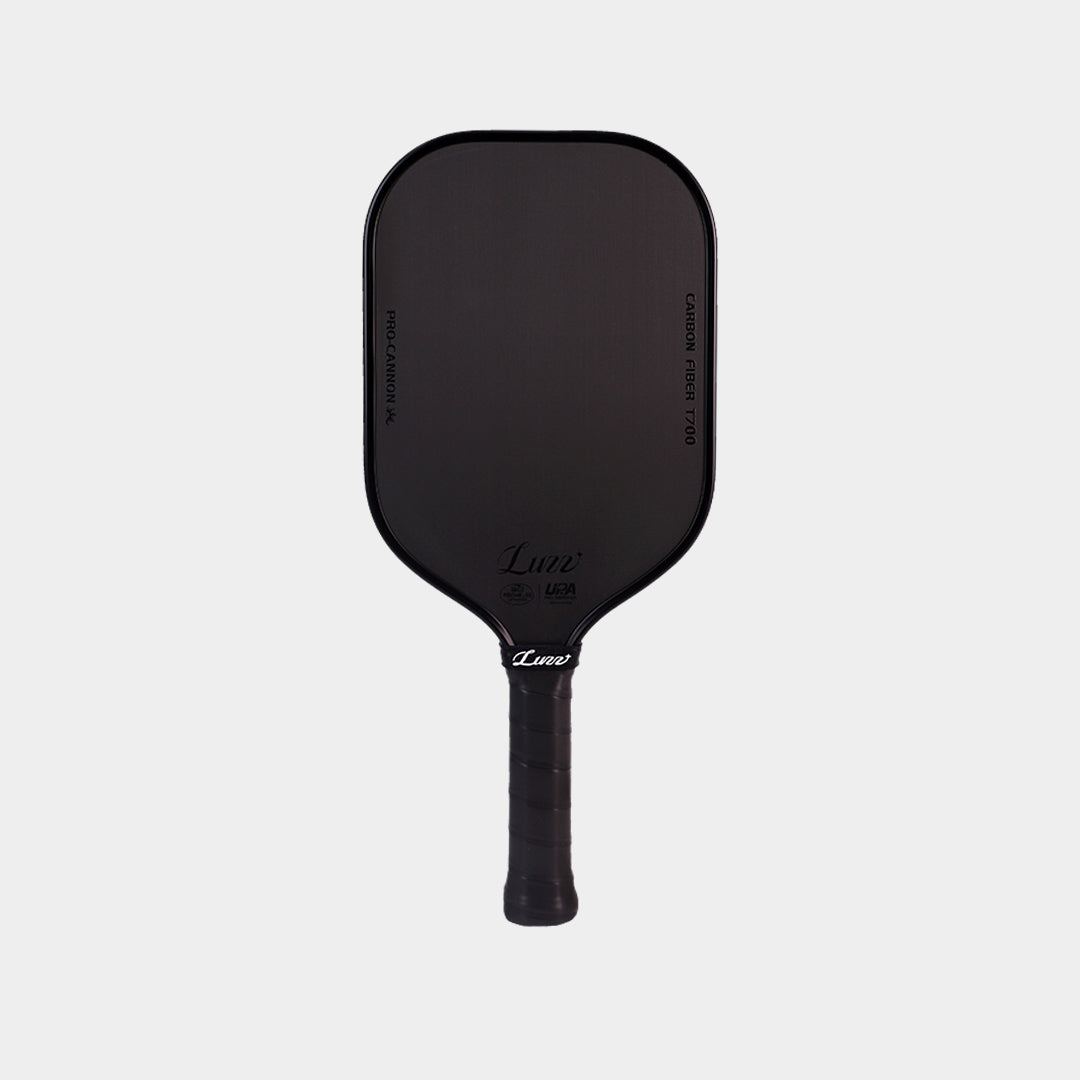
Exploiting weaknesses means deliberately staying in long, uncomfortable rallies instead of bailing out - and that patience is much easier with a paddle you trust on the soft stuff. I have been playing the Luzz Cannon and the dink control is the best thing about it.
Key Takeaways
Every opponent broadcasts their weaknesses through ready position, grip, dink patterns, hands, third shots, and how they handle the transition zone - you just have to watch for the first few rallies instead of playing on autopilot. Buy the information you cannot see with a probe speedup and a middle return. Then exploit what you find, either with relentless repetition or by stretching the strong side first and attacking the weak side on the move. None of this requires new shots. It only requires paying attention.
Frequently Asked Questions
How do you tell if a pickleball player has a weak backhand?
Watch for hiding and bailing: running around backhands to hit forehands, speeding up out of backhand dink rallies early, or a ready position permanently cocked toward the forehand. All three say the backhand is a shot they do not want to hit under pressure.
What is the fastest way to find a weakness in a new opponent?
Two free tests: read their paddle height and grip during warmup, then return your first serve down the middle and see who takes the third shot decisively. Together they usually reveal a target inside the first two points.
Should you target the weaker player in rec pickleball?
In competitive games, yes - directing traffic at the weaker player or weaker shot is the highest-percentage strategy in doubles. In casual rec play, mix it up: use those games to develop your own weaker shots instead of farming somebody else's.
What if my opponent has no obvious weakness?
Then attack balance instead of shots. Even technically clean players pop balls up when forced to hit on the move - stretch them wide, then play behind them, and treat their least favorite direction of movement as the weakness.
Keep reading
- Which Balls to Attack in Pickleball Once you have found the weak spot, this is how you decide which balls are actually worth attacking.
- How to Counter a Speed Up in Pickleball The other side of the probe - what to do when somebody is testing your hands.
- Pickleball Mental Game: 7 Mistakes That Cost You Matches Exploiting a weakness means staying patient in long rallies instead of bailing out.