

How to Hit a Topspin Dink in Pickleball (Brush, Don’t Push)
The topspin dink is the difference between a dink that keeps you in the rally and a dink that quietly wins it. Same height over the net, same landing spot in the kitchen - but the topspin ball dips late, bounces low and kicks toward your opponent's body, crowding their contact point until something floats. If you've ever wondered why a 4.5 player's "soft game" feels so much heavier than yours, this shot is a big part of the answer.
Here's the good news: hitting a topspin dink is not a talent issue. It's a mechanics issue, and the mechanics are learnable in a couple of focused sessions. The bad news is that most players who try to add topspin to their dinks are making the same three mistakes, and all three come from the same instinct - treating the dink like a push instead of a brush.
I spent months pushing my dinks with a flat paddle face and wondering why balls I thought were "aggressive" kept getting attacked. The fix wasn't more pace. It was changing what my paddle was doing through contact. This article covers the exact technique, the three mistakes that kill your spin, when the topspin dink is the right call, and how to drill it without ruining your consistency.
Watch: How To Hit With TOPSPIN And POWER With Ease - Briones Pickleball
What a Topspin Dink Actually Does
A topspin dink is a dink hit with a low-to-high brushing motion that puts forward rotation on the ball. That rotation changes the ball's behavior in three ways that matter at the kitchen line.
First, it dips. A topspin ball can leave your paddle on the same trajectory as a flat dink but drop faster on the other side, which means you can hit it with more pace and still keep it unattackable. That's the whole trade: spin buys you margin.
Second, it bounces differently. Instead of sitting up politely, a topspin dink stays low and kicks forward - toward your opponent's feet and body. They have to hit their next ball from a lower, more crowded contact point, and low crowded contact points produce pop-ups.
Third, it pressures the reach. Against a topspin dink, reaching forward to take the ball out of the air is riskier, because the dip punishes late contact. So opponents back off half a step, give up the line, and now every one of your dinks lands deeper into their feet.
None of this makes the topspin dink a winner-hitting shot. It's a pressure shot. Its job is to force the weak ball that your put-away actually wins.
The Three Mistakes Killing Your Topspin Dinks
When a player tells me they "can't create spin," it's almost always one of these three problems - usually all three at once.
Mistake one: pushing through the ball. If your paddle travels flat through contact, on a line toward your target, you're pushing. A push produces a flat float with zero rotation - the trajectory you release is the trajectory your opponent gets, no dip, friendly bounce. Spin doesn't come from moving the paddle toward the target. It comes from moving the paddle across the ball, low to high.
Mistake two: not starting the paddle below the ball. You cannot brush up on a ball if your paddle starts level with it. The paddle head has to drop clearly below the contact point before you swing - for a dink at knee height, that means the paddle head gets down near your shin. Most players drop it two inches and wonder where the spin went. The distance your paddle travels from below the ball to above it is your spin engine. Short runway, no spin.
Mistake three: cutting off the follow-through. Players brush up and then stop their swing at waist height, worried the ball will fly. Ironically, the short follow-through is what sends balls high - an abbreviated brush turns into a lift with a decelerating paddle, and decelerating paddles have terrible feel. The follow-through should carry up and forward, finishing high, roughly toward head height. The spin controls the ball; the follow-through completes the spin.
If you take one sentence to the court, take this one: start below the ball, brush up its back, finish high.
The Technique, Step by Step
Setup. Get low with your legs, not your back. Knees bent, chest up, paddle out in front. The topspin dink is hit from a stable base - if you're reaching or stretched, you've already lost the right to hit this shot (more on that below).
Drop the paddle head. Before the bounce reaches its peak, your paddle head drops below the intended contact point. This happens early and calmly, not as part of the swing. Think "set low, then swing" - two beats, not one.
Brush up the back of the ball. Contact the lower back of the ball with a slightly closed face and swing low to high. The feeling is friction, not impact - like you're trying to roll the ball up an invisible wall. Your wrist stays quiet through contact. The low-to-high path comes from the shoulder and forearm, not a wristy flick. Amateurs who generate spin with wrist snap get spin on Tuesday and errors the rest of the week.
Finish high. Let the paddle continue up and slightly forward after contact, finishing around chest-to-head height. If your follow-through keeps ending at your waist, exaggerate it in practice until the full motion feels normal.
Contact point matters as much as the swing. Take the ball at the top of the bounce or just after, out in front of your body. Let it drop too far and you're forced to open the face and lift - which is a dead dink, not a topspin dink. The higher your contact relative to the net, the more aggressively you can brush.
Forehand vs Backhand Topspin Dinks
The forehand topspin dink comes first for almost everyone. The low-to-high brushing motion is natural on the forehand side, and the crosscourt forehand dink gives you the most net clearance and the biggest landing zone. Learn it there: crosscourt, off the bounce, from a set base.
The backhand side is where players get in trouble. The most common error is trying to create backhand spin with a pushing motion and a stiff arm - which is exactly the pushing-through mistake with worse leverage. If you dink one-handed, the brush comes from the shoulder with the paddle head dropping below your knuckles first. If you have a two-handed backhand, you have an advantage: the left hand (for righties) drives the low-to-high path, and the motion feels like a miniature two-handed roll. Either way, the checkpoints don't change - start below, brush up, finish high.
Be honest about which side is ready for games. In my experience the forehand topspin dink becomes match-usable weeks before the backhand version does. Using a shot in games before it's stable doesn't make you aggressive, it makes you generous.
When to Use the Topspin Dink (and When Not To)
The topspin dink is an aggressive dink, and aggressive dinks are earned, not chosen. The ball and your balance decide.
Green lights: you're balanced with your weight under you, the bounce sits at or above knee height, and you can take the ball at the top of the bounce out in front. Best targets are the backhand hip of the player in front of you and the feet of a player who's moving. Topspin into moving feet is genuinely nasty - the kick chases them as they step, and the common reply is a pop-up off the shoelaces.
Red lights: you're stretched, the ball is at your shoelaces, or the incoming dink has pace on it. From those positions the topspin attempt turns into a rising floater, which is the most attackable ball in pickleball. Hit the dead dink instead - no pace, short in the kitchen, reset the rally. The dead dink and the topspin dink are a system: one buys time, the other spends pressure. Players who only own one of the two are easy to read.
And when your topspin dink does its job - when the reply floats up above net height - that's not a dinking situation anymore. That's an attack. For a full framework on picking which of those balls to pull the trigger on, see the guide on when to speed up in pickleball - the two shots are one sequence: the topspin dink builds the ball, the speed-up cashes it in.
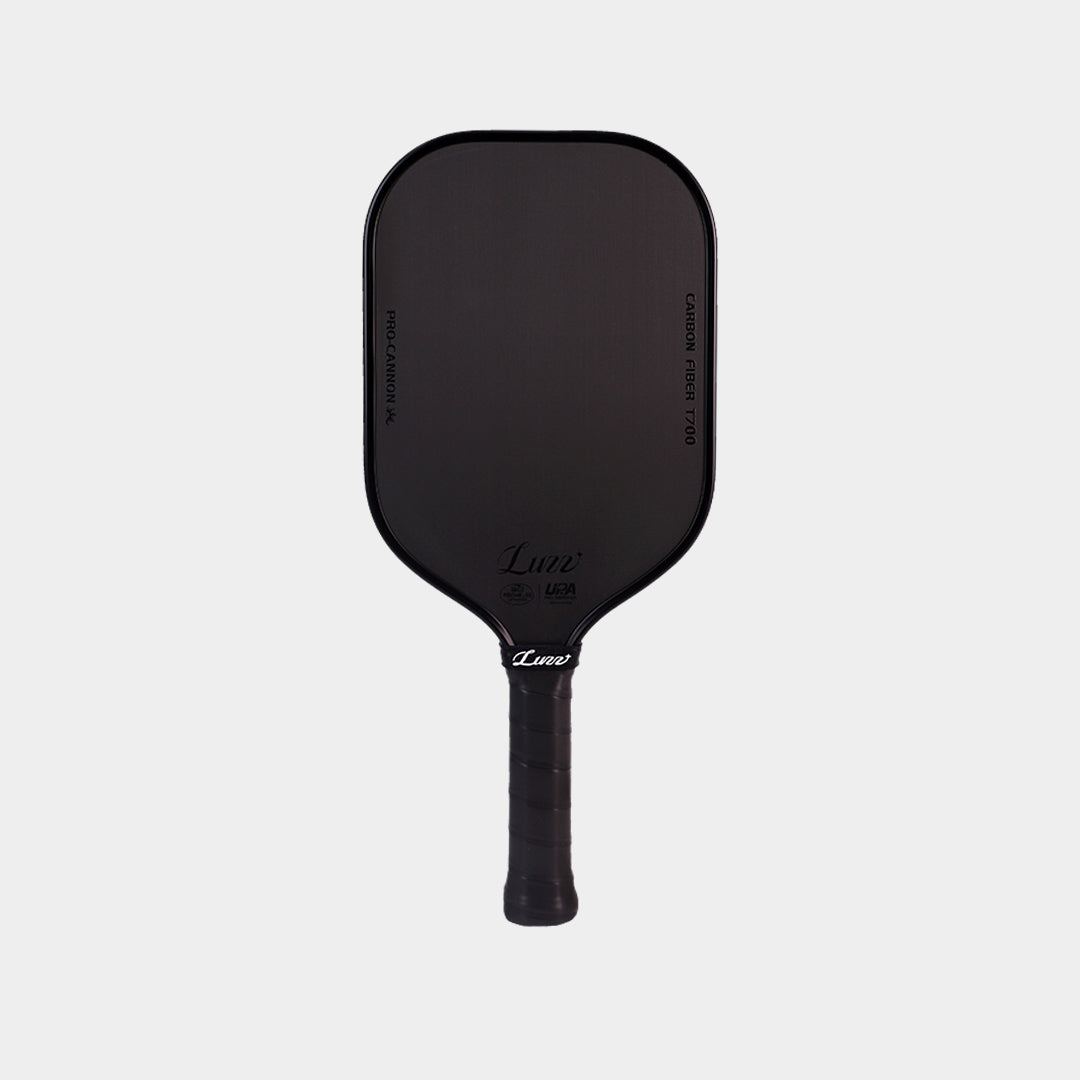
One honest equipment note: spin comes from friction, and paddle faces are not equal at generating it. A gritty carbon face with decent dwell time makes the brushing motion noticeably more forgiving - the ball stays on the face a fraction longer and the spin window widens. I play with a Luzz paddle and the difference shows up most on exactly this shot and on resets.
How to Practice It: Two Drills
Wall brushing. You don't even need a court. Stand a few feet from a wall, drop a ball, and brush up its back so it climbs the wall with visible forward spin, catching it after one bounce. You're not hitting targets - you're building the feeling of friction and the below-the-ball setup. Fifty reps of this teaches the brush faster than an hour of rallying, because you can watch the ball's rotation on every rep.
Crosscourt topspin ladder. With a partner, dink crosscourt forehand to forehand. Script it: two dead dinks, then one topspin dink, repeat. The script matters - it forces the deliberate switch between flat and brushed contact instead of letting you drift into one motion. When the forehand crosscourt holds up for twenty-ball rallies, move the same script to the backhand side, then to straight-on dinks, which have less margin and should come last.
In games, add the shot gradually. Pick one pattern - say, forehand crosscourt topspin dink at the backhand hip - and use only that pattern for a session. One reliable topspin pattern beats five wobbly ones, and it gives the rest of your dink game a credible threat to hide behind.
Key Takeaways
The topspin dink turns your soft game from a waiting room into a pressure tool: it dips, stays low, kicks into the body, and forces the pop-ups your attacks feed on. The technique is one motion - start the paddle below the ball, brush up its back, finish high - and the three killers are pushing through contact, a shallow paddle drop, and a cut-off follow-through. Use it only from balance on balls at knee height or better, keep the dead dink for everything else, and be ready for the weak reply you just created. The video above shows the brushing mechanics in real time if you want to see the full motion before your next session.
Frequently Asked Questions
What is a topspin dink in pickleball?
A topspin dink is a dink hit with a low-to-high brushing motion that puts forward rotation on the ball. The spin makes the ball dip after crossing the net, bounce low, and kick toward your opponent's body - creating pressure while staying unattackable.
How do you put topspin on a dink?
Drop your paddle head clearly below the ball before you swing, contact the lower back of the ball with a slightly closed face, brush low to high, and follow through up toward head height. The spin comes from the shoulder-driven brushing path, not from wrist snap.
Why do my topspin dinks keep going into the net?
Usually your contact point is too low or you're closing the paddle face too much for how little you're brushing. Take the ball at the top of the bounce, open the face slightly, and commit to the full low-to-high path - a half-brush with a closed face has no lift and finds the net.
Should beginners learn the topspin dink?
Learn a consistent flat and dead dink first - control before pressure. Once you can rally ten-plus dinks without an error, start adding the topspin dink on the forehand crosscourt, where the margin is biggest. It's a 3.5-and-up shot in games, but the wall drill is worth starting earlier.
Keep reading
- Pickleball Dinking Strategy: Dead vs Aggressive DinksThe topspin dink is the aggressive half of the system - this shows when it is earned and when the dead dink is the right call.
- Why Your Pickleball Dinks Pop Up - and How to Fix ItIf your brush keeps producing floaters, start here - the contact-point and paddle-face fixes overlap with the three mistakes above.
- Two-Handed Backhand Dink in Pickleball: Full GuideThe backhand side is where topspin dinks break down first, and the two-handed version gives you the cleanest low-to-high path.