

Chicken Wing in Pickleball: How to Stop Getting Jammed
The chicken wing in pickleball is that awkward, elbow-up, jammed backhand you're forced into when the ball comes screaming at your right shoulder or hip (for a righty). Your elbow flies up, your paddle face collapses, and the best you can manage is a weak pop-up that gets put away. If it keeps happening to you, here's the part nobody tells you: it's not because your hands are slow.
It's because that spot on your body is the single best target in pickleball, and good players are aiming at it on purpose. The paddle-side shoulder pocket is the one place where you can't comfortably hit a forehand or a backhand. You can't fix a targeting problem with more reaction speed. You fix it with preparation - specifically, with where your paddle is pointing before your opponent ever hits the ball.
This article covers what the chicken wing actually is, why you keep getting caught in it, three fixes that hold up in real games, and the honest part most coaching content skips: sometimes the chicken wing is the correct shot.
Watch: How to stop getting chicken winged in pickleball! - Tanner Pickleball
What Is a Chicken Wing in Pickleball?
A chicken wing happens when a fast ball attacks the space between your forehand and your backhand - roughly from your paddle-side hip up to your paddle-side shoulder. There's no clean answer for that zone. Take it as a forehand and you're hitting with a bent, cramped arm. Take it as a backhand and your elbow has to lift up and out of the way, which is the "wing" everyone laughs about.
The result is the same either way: your contact point is behind you or right on top of you, your paddle face is unstable, and whatever comes off it floats. Against decent opponents, that float is a free put-away.
The key detail is that a chicken wing is a preparation failure, not a technique failure. By the time the ball is at your shoulder, the point is already decided. Nobody has the hand speed to reorganize their grip, elbow, and paddle angle in the two-tenths of a second a kitchen-line speed-up gives you. That's why "just be quicker" has never fixed anyone's chicken wing, and why the fixes below all happen before your opponent hits the ball.
Why You Keep Getting Chicken Winged
Here's the uncomfortable truth: if you're getting chicken winged a lot, it's a compliment. It means your opponents have scouted you and found the target. Aiming at the paddle-side shoulder is one of the first things players learn when they start speeding up with intent, because it works at every level. Pros attack that pocket constantly.
That said, some players get jammed way more often than others at the same skill level. In my experience the difference comes down to three habits. First, the paddle pointing sideways: right before your opponent hits, your paddle is parallel to the net, tip aimed at the sideline, so the ball at your chest beats you before you can rotate the face around. Second, forehand-hunting: sitting in a forehand-ready posture because the forehand feels stronger, which leaves the entire backhand-to-shoulder window exposed - exactly where good speed-ups go. Third, standing too tall and too close: upright, weight on your heels, crowding the line, so a body ball has nowhere to go except into you.
Notice that none of these are about reaction time. They're about what your paddle and body are doing during the half-second before contact. That's fixable this week.
Fix 1: Track the Ball With Your Paddle Tip
This is the highest-leverage fix, and it's the one Tanner hammers in the video above: point your paddle tip at the ball, wherever the ball is. As the ball moves around the kitchen, your paddle tip should quietly follow it like a compass needle.
Why this works: when your paddle tip is aimed at the ball, your paddle face is already halfway to every possible block. A speed-up at your shoulder becomes a small move - a few inches of adjustment - instead of a full rotation of your arm and wrist. You're catching the ball out in front of your chest instead of fighting it off your sternum.
Most players do the opposite without realizing it. They dink, then relax, and the paddle drifts down and sideways into a dead position by their thigh. Then the ball gets fast and they wonder why they're late. Watch any strong 4.5+ player between shots: the paddle never stops tracking.
The habit is boring to build and completely free. For one open play session, give yourself a single job: every time the ball is on the other side of the net, check where your paddle tip is pointing. That's it. You'll be shocked how often it's pointing at the ground.
Fix 2: Commit to a Backhand-First Ready Position
At the kitchen line, hold your paddle in front of your chest, slightly to your backhand side, at around 10 or 11 o'clock. This feels wrong to forehand-dominant players, and it is still correct.
The math is simple. Your backhand can comfortably cover everything from your left hip across your chest up to your right shoulder - one compact blocking motion covers the entire middle of your body. Your forehand can only cleanly handle balls to the right of your right hip. So a backhand-first position covers roughly three-quarters of the attackable window, including the chicken wing pocket, while forehand-first covers a sliver and exposes everything else.
When a ball does attack your body from a backhand-ready position, the block is one move: firm wrist, elbow stays down, paddle face intercepts the ball in front of your chest. No wing, no rotation, no panic. The elbow staying down is the whole trick - the chicken wing is literally your elbow going up to rescue a paddle that started in the wrong place.
Fix 3: Make Space to Contact Out in Front
The third fix is spatial. A chicken wing needs two ingredients: a ball at your body, and no room to deal with it. You can't always control the first one. You can almost always control the second.
Two adjustments create that room. First, stay slightly lower than feels natural - knees bent, chest tilted a touch forward, weight on the balls of your feet. From a low, athletic base you can shift your upper body a few inches in any direction without moving your feet, which is often all a body ball requires. Standing tall, your only escape is a stumble backward. Second, when the ball comes straight at your midline, turn your shoulders a few degrees while you block. That small rotation turns a dead-center body ball into a normal backhand at the edge of your frame - pros do it constantly and it's nearly invisible.
What you should not do is back up off the kitchen line to buy time. It feels safer, but it hands over ground, gives your opponents a bigger court to hit into, and turns one defensive block into three. Hold your ground, get low, make the space with your upper body.
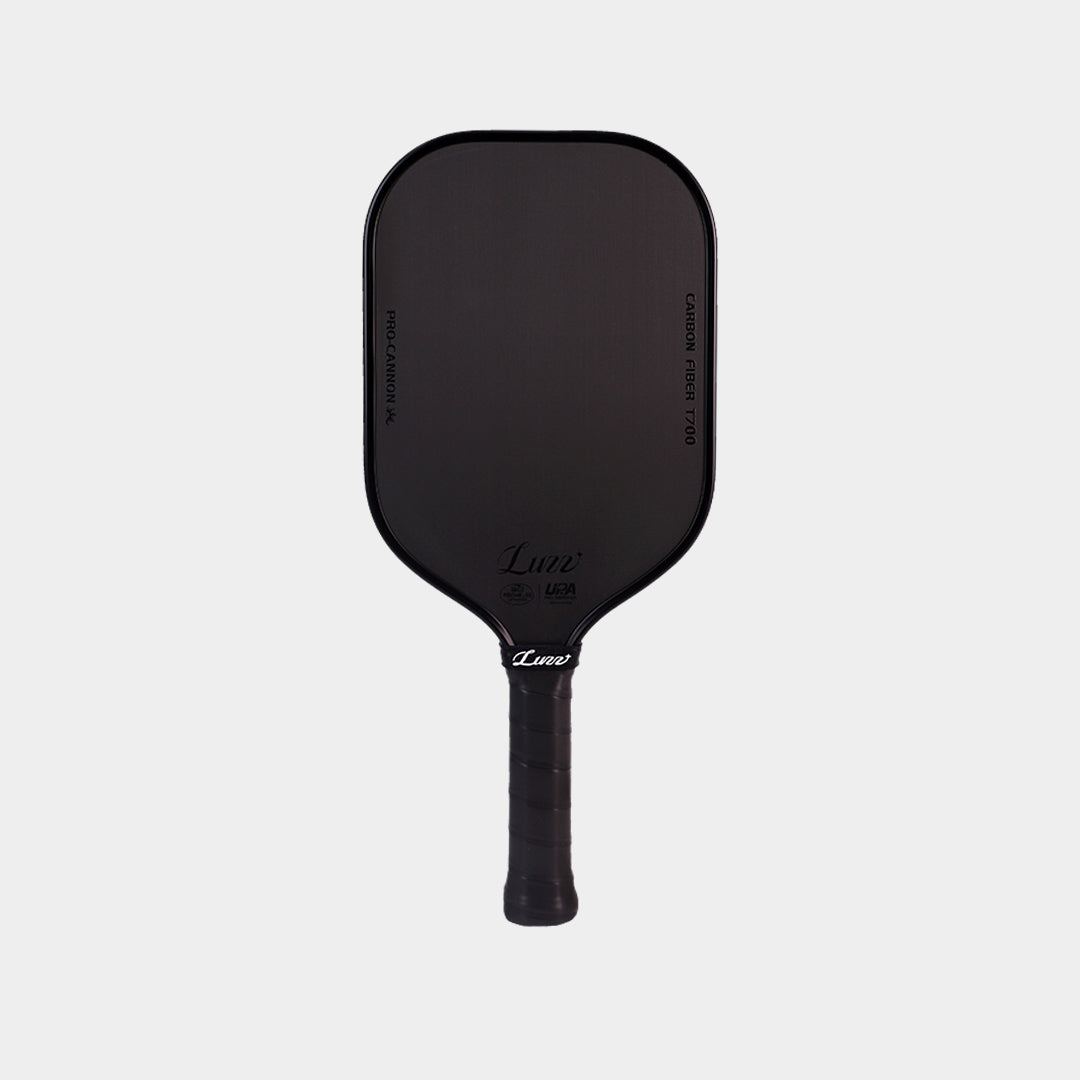
One honest equipment note: a head-heavy paddle makes paddle tracking and quick body defense harder, because the tip lags behind your hands. I've been playing with the Luzz Cannon, and the balance is a big part of why I like it - it stays quick in front of the chest without giving up put-away pop.
When the Chicken Wing Is Actually the Right Shot
Now the part most coaching content won't say: sometimes the chicken wing is the correct play, and trying to avoid it will lose you the point.
If a ball is already on you at chest height and slightly to your paddle side, contorting for a "proper" backhand is slower than just lifting the elbow and blocking with the wing. Pros hit deliberate chicken wings in exactly this situation - watch any high-level hands battle in slow motion and you'll see elbows fly. The difference is theirs is a chosen emergency shot with a firm wrist and a low trajectory, not a panicked flail.
So the goal was never "never hit a chicken wing." The goal is to stop being forced into one three times a game because your paddle started sideways. When the emergency block is genuinely the fastest paddle to the ball, hit it without shame, keep it low, and reset for the next ball. An ugly block that lands at their feet beats a beautiful backhand that never got there.
Use the Chicken Wing Target Against Your Opponents
Everything that makes the chicken wing hard for you makes it a weapon for you. When you're choosing where to speed up, the paddle-side shoulder pocket should be your default target against almost everyone - it beats aiming for the sideline winner nine times out of ten, because the net is lower in the middle and a miss still forces a weak reply.
Do the scouting early. In the first few rallies, watch your opponent between shots: where does their paddle rest? If it drops to their thigh or points at the sideline, the shoulder attack is open all day. If they hold a disciplined backhand-ready position with the tip tracking the ball, pick a different fight - speed-ups into a ready paddle come back faster than they went in.
For the full framework on picking which ball to attack in the first place, see the guide on when to speed up in pickleball - the two articles are really one system: that one picks the ball, this one picks the target.
A Simple Drill to Stop Getting Jammed
You need a partner and ten minutes. Stand at opposite kitchen lines. Your partner dinks two or three balls, then speeds up at your body without warning - shoulder, hip, or sternum, their choice. Your only job is to block it back low with your elbow staying down. Don't try to counterattack. Just survive with a firm backhand block out in front.
Two rules make the drill work. First, between every dink, exaggerate the paddle-tip tracking - make it feel almost silly how deliberately your paddle follows the ball. Second, have your partner call out "elbow" any time they see the wing come up. Instant, annoying, effective feedback.
Ten minutes of this twice a week rewires the habit faster than a hundred open-play games, because in games the body ball only shows up a handful of times a night. In the drill it shows up forty times in ten minutes. That rep density is the entire point.
Key Takeaways
The chicken wing in pickleball is a preparation problem disguised as a hand-speed problem. Track the ball with your paddle tip, default to a backhand-first ready position with your elbow down, and stay low enough to make contact out in front, and the jam ball mostly stops working against you. Then flip it around and aim at everyone else's paddle-side shoulder, because at rec level almost nobody defends it. Slow hands were never the issue - a sideways paddle was.
Frequently Asked Questions
What does "chicken wing" mean in pickleball?
It's the jammed shot you're forced to hit when a fast ball attacks your paddle-side shoulder or hip - your elbow lifts up and out (like a wing) and you make weak, cramped contact. It usually produces a pop-up that your opponent can put away.
How do I stop getting chicken winged in pickleball?
Fix your preparation, not your reaction. Point your paddle tip at the ball at all times, hold a backhand-first ready position at chest height with your elbow down, and stay low so you can block the ball out in front of your body. All three fixes happen before your opponent hits the ball.
Should I use my forehand or backhand on a ball hit at my body?
Backhand, almost every time. One compact backhand block covers everything from your off-side hip to your paddle-side shoulder, while the forehand can only cleanly handle balls outside your paddle-side hip. This is why a backhand-first ready position is standard at the kitchen line.
Is it bad to hit a chicken wing on purpose?
No. When the ball is already on you at chest height, the deliberate chicken wing block is often the fastest paddle to the ball - pros hit it regularly in hands battles. Keep the wrist firm and the ball low. The goal is to stop being forced into it by poor preparation, not to never hit it.
Keep reading
- How to Counter a Speed Up in Pickleball Once your paddle is ready, this is what to do with the fast ball when it actually arrives.
- Pickleball Ready Position: Prepare to Attack, Not Dink The full breakdown of the backhand-first, paddle-up stance that keeps you out of the chicken wing.
- How to Get Faster Hands in Pickleball: 4 Real Fixes Why "slow hands" is usually a setup problem - and the drills that make body balls feel slower.