

Most of the pickleball drills you can do alone are a waste of forty minutes. Not because solo practice does not work - it does, and it is the cheapest improvement available to anyone with a wall and a bucket of balls. It is a waste because the drill people default to, standing three feet from a wall dinking as fast as they can, trains a ball that no opponent will ever hit you.
Here is the short version. Solo practice is excellent for two things: mechanics you are deliberately rebuilding, and shots where the opponent has zero input. It is nearly useless for decision-making, which is where most of your points actually go at 3.5 and 4.0. So the drills below are sorted by how much of each one shows up in a real game, and every one of them has a specific rule attached - because the rule is what makes it transfer, not the reps.
I practice alone a lot. I also wasted most of my first year of it. The difference between a solo session that moves your game and one that just makes you sweat is not effort, it is whether the drill reproduces the ball, the position, and the choice you actually face on court.
Watch: I have been training hands battle in the wrong way.. - Backpaddle Pickleball
Why Most Solo Pickleball Practice Does Not Transfer
Three things are missing when you practice alone, and knowing which one a drill is missing tells you how much to trust it.
The ball is wrong. A wall returns the ball flatter, faster, and from the same spot every single time. Real dinks arc, die short, change pace, and come at your feet from three different angles. Groove a stroke against a wall ball and you have grooved it for a ball that does not exist in doubles.
The position is wrong. Against a wall you stand still and rally with your arms. In a game almost every shot is preceded by a split step, a slide, or a reset of your base. If your feet never move in practice, the stroke you built will not survive the first ball hit away from you. That is the same problem behind most missed shots in general, which I went into in detail in the piece on pickleball footwork.
The decision is missing entirely. This is the big one. Hitting 300 clean dinks against a wall does not train the only question that matters at the kitchen line: is this ball attackable or not. The wall never gives you a choice, so it never trains one.
That is not an argument against practicing alone. It is an argument for being honest about what each drill buys you.
The Transfer Test: Three Questions Before You Do 200 Reps
Before you commit a whole session to a drill, ask three questions about it.
Does it reproduce the ball I actually get? Does it put me in the position I am actually in when that ball arrives? Does it require the decision I actually have to make?
Score the drill out of three. Three out of three is rare when you are alone - serving is the only drill that gets there. Two out of three is a very good drill. One out of three is still worth doing if that one thing is a mechanic you are deliberately changing. Zero out of three is exercise.
Run the default wall-dink drill through it. Right ball? No. Right position? No. Right decision? No. That is why people do it for a year and never dink better in games.
1. Serve Targets: The Only Drill With Perfect Transfer
The serve is the one shot in pickleball where the opponent contributes nothing. Nobody is feeding you, nobody is pressuring you, and the ball sits in your hand until you decide to hit it. That makes the solo version identical to the game version. Three out of three on the transfer test, and it is the drill almost nobody does.
Put a towel deep in each service box, one on the backhand side and one at the middle T. Hit 50 serves. Count two numbers only: how many landed in, and how many landed within a paddle length of the towel. Write both down.
Do not practice a bigger serve. Practice a deeper one. A serve that lands within two feet of the baseline pushes the returner back and buys your partner time on the third shot, which matters far more than pace. If you want the strategic side of this, the article on pickleball serve strategy covers what to do with the depth once you have it.
Fifty serves takes about eight minutes and is the single highest-return thing you can do without a partner.
2. Wall Dinks From Eight Feet, Not Three
Wall dinks are worth doing. Just not the way most people do them.
Stand seven or eight feet off the wall and let the ball bounce once between every hit. That one change rebuilds the drill. From eight feet with a bounce, the ball drops below net height and you have to lift it with a low-to-high swing and an open-ish face - which is what a real dink is. From three feet with no bounce you are hitting fast volleys with a flat face, which is not a dink at all, no matter how good the rally looks.
Draw or tape a line on the wall at 34 inches, the height of the net at the sidelines. Every ball has to land above it. Count how many you get in a row before you either miss the line or the ball pops up over your head.
The honest limit here: this drill is one out of three on the transfer test. It buys you contact consistency and face control, not kitchen strategy. Do it for ten minutes, not forty.
3. The Wall Reset Drill
This is the drill where the wall's biggest flaw becomes its biggest asset. The wall hits the ball back harder and flatter than a human - which is exactly the ball you are trying to survive when you are stuck in the transition zone.
Stand roughly where the mid-court line would be, 14 or 15 feet off the wall. Drive the ball hard into the wall, then catch the rebound and absorb it: soft hands, paddle out in front, no backswing at all, and try to land the ball short - inside a towel you have thrown a few feet from the base of the wall.
The whole skill is the absence of a swing. If you feel yourself taking the paddle back, you have already failed the rep. Get low, let the ball come to the paddle, and let the paddle give a little on contact. I wrote up the full mechanics of this shot in how to reset in pickleball, and the wall is honestly the best training partner you will find for it, because it never gets tired of hitting hard at you.
Two out of three on the transfer test - right ball, right position, no decision. One of the best solo drills in the sport.
4. Close-Range Hands Battles Against the Wall
Here the wall's speed is also the point, and here is where I had it wrong for a long time, which is what the video above is about.
Stand four or five feet from the wall and hit flat, firm, no-bounce volleys as fast as you can control. The goal is not to win a rally with a wall. The goal is paddle position: can you keep your paddle out in front of your body, at chest height, with your eyes ahead of your hands.
The mistake I was making was training speed instead of position. I would go as fast as possible, my paddle would drift back toward my chest, my elbows would collapse, and I was essentially practicing being late with faster arms. Now I go about 80 percent and the rule is that the paddle never comes behind the plane of my front foot. If it does, the rep does not count.
Fifteen seconds on, fifteen off, eight rounds. It is the closest thing to a real hands battle you can get without a human, and it pairs with the counter side of it in how to get faster hands in pickleball.
5. Shadow Footwork With No Ball
No wall, no balls, no court required. This is the drill that fixes the "position is wrong" problem in every other drill on this list.
Three patterns, one minute each. Split step and freeze: from the kitchen line, hop into a split step, land balanced with the paddle up, hold for a second, reset. Lateral slide: shuffle four steps along the kitchen line and back without crossing your feet, paddle out front the whole way. Transition ladder: from the baseline, take two steps in, split step, two more steps, split step, until you reach the kitchen.
It looks silly and feels like nothing. It is also the only part of a solo session that trains the thing that precedes every shot you hit. One minute of each, three rounds, five minutes total.
6. Self-Fed Third Shot Drops to a Target
Drop a ball at the baseline, let it bounce, and hit a third shot drop at a towel sitting in the kitchen. Twenty from the right side, twenty from the left.
The self-feed is the compromise: a real third shot comes off a return that is moving, deep, and sometimes at your feet, so this drill is grooming the swing shape and not the read. That is fine, because the swing shape is what most people's drop is missing - they decelerate and push with the shoulder instead of lifting from the legs with a quiet paddle face.
Here is the rule that keeps it honest. A drop only counts if it would have landed in front of the kitchen line and below net height on the way down. If it lands in but at shoulder height, it is a free putaway in a game, so it is a miss here. Count makes out of forty and write the number down.
7. Paddle Face Control: Brush, Do Not Push
Spin is the one mechanic where feel is almost everything, and feel is exactly what you can build alone.
Self-feed a ball, let it bounce to about knee height, and hit it with a deliberate low-to-high brush, paddle tip down, face slightly closed, aiming to clear the net by two feet and drop hard. You are not trying to hit it anywhere in particular. You are trying to feel the ball travel up the face rather than off it.
Twenty of those, then twenty flat pushes for contrast. The contrast is the drill - you are teaching your hand the difference, so that in a game you can choose. The topspin dink article goes deeper on the brush mechanic if you want the full breakdown.
This is also the drill where equipment actually shows up. A paddle with a grittier face and some flex in the core gives you more feedback on whether you brushed or pushed, which makes the reps worth more.
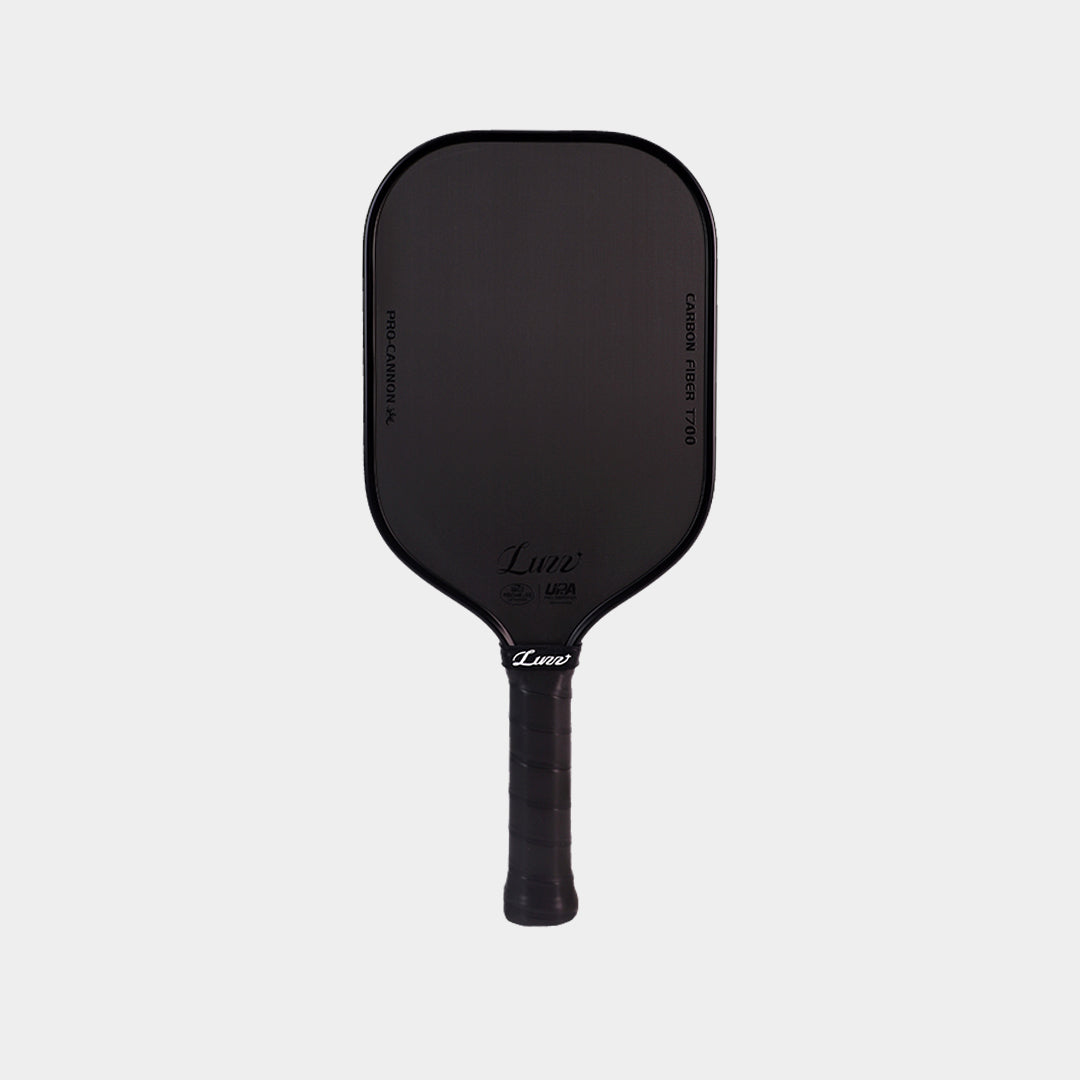
I have been playing Luzz paddles, and for this kind of feel work the texture on the face makes a real difference - you can tell a clean brush from a push immediately, which is exactly what you want when you are practicing alone with nobody there to tell you.
Film One Minute of It
This is the step that separates practice from repetition, and almost nobody does it.
Prop your phone against the fence and film one minute of each drill. Then watch it once. You are looking for one thing only: is the stroke you are doing the stroke you think you are doing. The answer is usually no, and the gap is almost always bigger than you expect.
The risk of solo practice is that it is extremely good at making whatever you are doing permanent. Four hundred reps of a flawed drop makes the flawed drop automatic. Thirty seconds of video is the only error-correction you have when there is no coach and no partner telling you the ball keeps popping up. Film it, fix one thing, then go back to reps.
How to Structure a 30-Minute Solo Session
Order matters. Put the high-transfer work first, while you are fresh, and the mechanical work after.
Five minutes: shadow footwork. Eight minutes: 50 serves to targets, counted. Six minutes: wall resets from mid-court. Four minutes: close-range hands with the paddle-position rule. Five minutes: self-fed drops, forty counted. Two minutes: film and watch one clip.
Write down two numbers at the end - serves within a paddle length of target, and drops out of forty. That is the whole tracking system. The numbers are what turn a solo session into practice, because they tell you whether last week's forty minutes did anything. Without them you are just guessing, and in my experience guessing always reports that you are improving.
When you do get a partner, spend that time on the things the wall cannot give you: live dink exchanges, speed-up decisions, resets off a real drive. There is a separate list of those in the article on pickleball drills for intermediate players.
Key Takeaways
The pickleball drills you can do alone are worth real time, but only if you pick them by transfer instead of by habit. Serve targets, wall resets, and shadow footwork are the three that move your game most, and all three are things people skip in favor of fast wall dinks that feel productive and change nothing. Attach a rule to every drill, count two numbers, and film one minute. Then save your partner time for the decisions, because the decisions are the part a wall will never teach you.
Frequently Asked Questions
Can you actually get better at pickleball practicing alone?
Yes, for mechanics and for the serve. Solo practice builds contact consistency, paddle face control, footwork patterns, and serve accuracy, all of which transfer directly. What it cannot build is shot selection and reading an opponent, so use solo time for the physical skills and partner or game time for the decisions.
What is the best pickleball drill to do alone?
Serve targets. The serve is the only shot where the opponent contributes nothing, so practicing it alone is identical to doing it in a game. Fifty serves at a towel in each service box, counting how many land in and how many land close, is the highest-return eight minutes you can spend without a partner.
How far should I stand from the wall for pickleball wall drills?
It depends on the shot. Seven to eight feet with one bounce between hits for dinks, because that forces the ball below net height and makes you lift it. Fourteen to fifteen feet for resets. Four to five feet with no bounce for hands and paddle position. Standing three feet away and dinking with no bounce is the common default, and it trains a ball nobody hits.
How long should a solo pickleball practice session be?
Thirty minutes, done well, beats ninety minutes of rallying with a wall. Quality drops fast once your mechanics get sloppy, and sloppy reps are worse than no reps because solo practice makes whatever you repeat permanent. If you only have fifteen minutes, do serves and shadow footwork.
Are wall drills bad for your game?
Not bad, just limited and easy to do wrong. The wall's flat, fast, repeatable return is wrong for dinks and right for resets and hands. Use it where its flaws are features, add a rule to each drill, and do not let it become the only practice you do.
Keep reading
- 7 Pickleball Drills for Intermediate Players - The partner drills to graduate to once your solo reps are grooved.
- How to Reduce Unforced Errors in Pickleball - Where the misses your solo practice should target actually come from.
- Pickleball Dinking Strategy - What to do with the wall-grooved dink once you are back at the kitchen line.